Indigenous Language Revitalization: Why It Matters & How It Works
Boozhoo / Yá’át’ééh / Háu (Hello)
Greetings like these come from different Nations and languages—there is no single “Native greeting.” The diversity itself is part of the story: every language carries a distinct way of seeing the world.
What is Indigenous language revitalization?
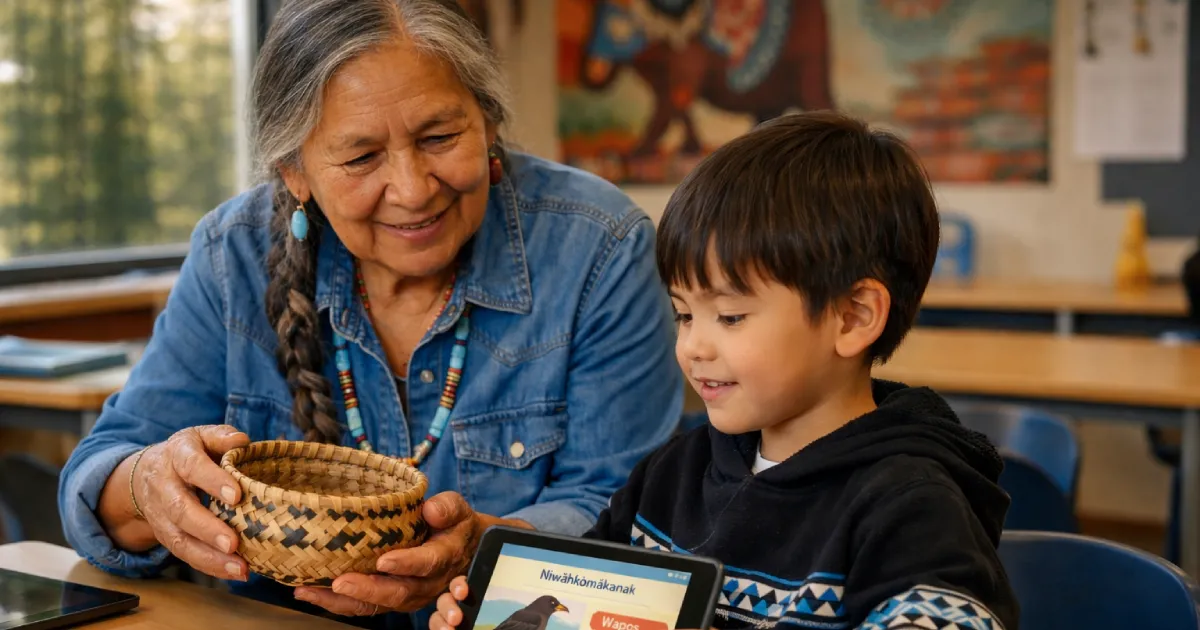
Indigenous language revitalization is the community-led work of stopping the decline of ancestral languages and restoring them to daily use—at home, in school, in ceremony, in governance, and online. It works through a mix of immersion education (language nests), digital preservation/archives, and intergenerational mentorship between fluent speakers (often Elders) and learners. This matters because language is a primary vessel for identity, land-based knowledge, kinship systems, and community wellness.
The United Nations declared 2022–2032 the International Decade of Indigenous Languages, reflecting the global urgency of revitalization.
Estimates cited by UNESCO note roughly 40% of the world’s 7,000+ languages are at risk—a loss with direct cultural and health consequences.
Why language revitalization matters (more than words)
1) Identity and worldview
Languages encode meanings English often can’t—relationships to place, responsibilities to relatives (human and more-than-human), humor, and ways of naming time and change. UNESCO describes Indigenous languages as carriers of worldviews and knowledge systems tied to land and food systems.
2) Health, healing, and belonging
Research consistently links cultural continuity—and community language knowledge—with protective outcomes for youth. A widely cited study of First Nations communities in British Columbia found lower youth suicide rates in communities with stronger Indigenous language knowledge, with especially striking differences at higher levels of conversational use.
More recent synthesis work continues to examine language as a determinant of health, including mental well-being and resilience.
In a mixed-methods study in Alberta First Nations, physical health was explored, with relationships between cultural continuity (including language) and diabetes prevalence reinforcing why communities often describe language as part of “whole-person” wellness—not a side project.
3) Sovereignty (in practice)
Revitalization strengthens self-determination: language supports governance, education, law, and the everyday functioning of Nations. In the U.S., federal policy has explicitly recognized Native language rights (e.g., the Native American Languages Act), and in Canada, the Indigenous Languages Act frames language rights as central to reconciliation and self-determination—while emphasizing that Indigenous peoples must lead this work.
How it works: the 4 pillars of success
Pillar A: Language nests & immersion schools (start where fluency grows fastest)
Language nests are early-childhood immersion environments where children hear and use the language all day—learning it naturally, like any first language. In the U.S., one of the best-known models is ʻAha Pūnana Leo, founded to restore ʻōlelo Hawaiʻi through family-led immersion; it has become a widely cited model for community-driven language education.
Practical resources like the Language Nest Toolkit stress early childhood immersion because young learners acquire pronunciation and grammar through daily interaction—not worksheets.
What makes immersion programs stick (in many Nations):
- fluent-speaker time with learners every day
- family commitment (language in the home, not only the classroom)
- clear “domains of use” (school, home, community events, media)
Note: Program design varies by Nation—some prioritize preschool nests, others build K–12 immersion, and others focus first on adult speakers to staff future schools.
Pillar B: Digital preservation & AI innovation (tools that serve community goals)
Digital tools can widen access—when they follow community protocols and data sovereignty.
Current tools and examples:
- FirstVoices: an Indigenous language revitalization platform for sharing language and oral culture; it also supports mobile apps and keyboards for community use.
- FirstVoices Keyboards: Indigenous language keyboards (100+ language keyboards noted in app descriptions), supporting everyday texting and posting in-language.
- SkoBots: wearable language-learning robots described as Anishinaabemowin-speaking and built with an emphasis on ethical, community-centered AI approaches.
- Masheli (Choctaw-English): a bilingual chatbot designed as a conversational partner to supplement Choctaw language learning.
A practical “AI” rule of thumb:
If a tool doesn’t increase real conversation time (with people or high-quality interactive practice), it won’t create speakers—only “app users.”
Pillar C: Adult learning & master–apprentice programs (rebuilding the “missing generation”)
Many communities describe a “missing generation” created by earlier assimilation pressures—people who want the language but didn’t receive it. Master–apprentice approaches pair fluent speakers with adult learners for sustained, real-life language use.
In the U.S., federal funding streams explicitly support immersion pathways such as language nests and survival schools, reflecting how adult capacity-building is tied to education pipelines.
The Cherokee Nation’s language infrastructure includes programs such as master–apprentice, housed alongside immersion efforts—showing how Nations build a full ecosystem rather than a single class.
Pillar D: Archiving & documentation (record now, teach forever)
Documentation is urgent and emotionally tender: recording fluent speakers protects pronunciation, stories, and grammar for future generations—while respecting what is not meant for public distribution.
- The Smithsonian’s Recovering Voices initiative explicitly focuses on reconnecting communities with linguistic traditions through archival materials and community collaboration.
- Many Nations also build community-controlled archives so language materials remain under Indigenous governance (access rules can be as important as the recordings).
Current challenges (and why communities still keep going)
The shadow of boarding/residential schools (trauma-informed note)
Language loss is not an “accident.” For many families, the pain includes internalized shame created by policies that punished Indigenous language use. Naming that history—without forcing survivors to relive it—is part of creating safe learning spaces today. (If this topic brings up distress, skip ahead to the support section.)
Funding gaps and “project-to-project” burnout
Language revitalization needs consistent staffing, curriculum time, and multi-year funding—not one-time pilots. Policy frameworks exist, but communities often still fight for stable implementation (U.S. Native language policy and Canada’s Indigenous Languages Act both emphasize supporting revitalization, with Indigenous leadership at the center).
Recent federal planning in the U.S. has also outlined long-term national investments for revitalization, reflecting growing acknowledgement of chronic underinvestment.
Global pressure (English everywhere)
UNESCO and partners warn of large-scale language endangerment worldwide—making digital presence, youth engagement, and community use critical.
Success stories (what’s possible)
1) Wampanoag (Wôpanâak): bringing a “sleeping” language back
The Wôpanâak Language Reclamation Project is widely cited as a powerful example of language reclamation—reviving language use through documentation, teaching, and community commitment.
2) Cherokee Nation: investing at scale
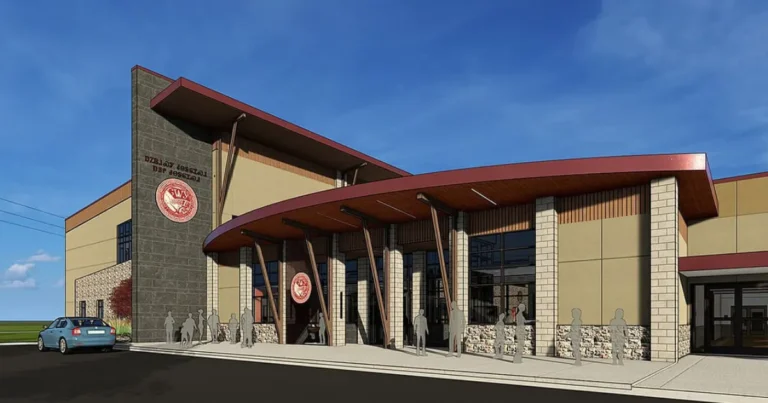
The Cherokee Nation opened the Durbin Feeling Language Center, reported as a major investment designed to house immersion and language programs (including master–apprentice and translation work).
What these examples share: community control, long-term planning, and a focus on producing speakers—not just learners.
How readers can support (without centering themselves)
If you’re Indigenous and reconnecting:
- Start with one safe domain: a bedtime routine, cooking vocabulary, greetings with relatives.
- Choose a program that honors your Nation’s protocols (some materials are family-specific or ceremonial).
If you’re a non-Native ally:
- Fund what communities ask for (teacher salaries, childcare, transportation, recording equipment).
- Support legal and policy work that protects sovereignty and cultural rights (including donating to organizations such as NARF and—when invited—local Nation-led language programs).
- Use correct Nation-specific identification and respect boundaries around sacred knowledge.
Frequently Asked Questions
Why are Indigenous languages becoming extinct?
Most language loss stems from colonial policies that disrupted intergenerational transmission—especially schooling systems that punished or stigmatized Native language use. Today, globalization and English-dominant digital spaces add ongoing pressure.
Can a “dead” language be brought back?
Yes. This is often called language reclamation. Wôpanâak is a leading example of revitalization built from records and community-led teaching.
What is a language nest?
A language nest is an early-childhood immersion program where children are surrounded by their ancestral language in a natural, relationship-based environment—often guided by fluent speakers and family participation.
How is AI helping Native languages?
AI can help with tools like interactive chatbots, speech tech, and practice companions—when designed ethically and governed by communities. Examples include SkoBots and Choctaw language-learning chatbots described in research and reporting.