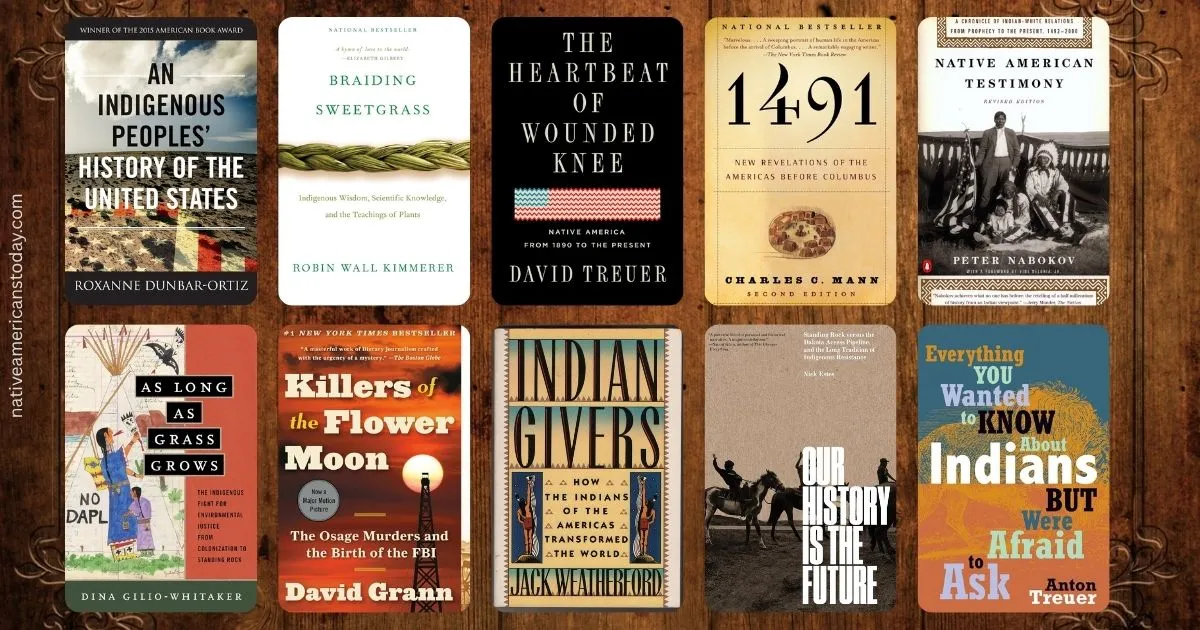
10 Books to Understand Native History
Essential Reading for Deeper Understanding of Indigenous Peoples in North America
Understanding Native history requires listening to Native voices, honoring oral traditions, and recognizing the complexities often erased from mainstream narratives. Whether you’re a student, ally, or member of a tribal community looking to reconnect, these 10 books offer crucial insights into Indigenous histories, resistance, and resilience across what is now known as North America.
Below are 10 powerful books—many written by Native authors—that explore Native history through storytelling, scholarship, and lived experience.
1. “An Indigenous Peoples’ History of the United States”
by Roxanne Dunbar-Ortiz
A foundational book that reframes U.S. history through the lens of Native resistance, colonial violence, and Indigenous survival. It’s widely used in schools and universities for a reason—clear, unapologetic, and essential.
Why read it?
It disrupts the myth of America’s founding and centers Native sovereignty from day one.
2. “Braiding Sweetgrass”
by Robin Wall Kimmerer (Citizen Potawatomi Nation)
Part memoir, part botany, part spiritual reflection, this bestselling book weaves together traditional ecological knowledge with scientific observation.
Why read it?
It shows how Indigenous relationships with land, plants, and water are deeply tied to history and sustainability.
3. “The Heartbeat of Wounded Knee”
by David Treuer (Ojibwe)
This book picks up where traditional textbooks often end. It tells the modern story of Native America—from the 1890s to the present—with nuance and hope.
Why read it?
It challenges the “vanishing Indian” narrative and shows the vibrancy of Native life today.
4. “1491: New Revelations of the Americas Before Columbus”
by Charles C. Mann
Before Columbus, the Americas were home to vast, complex civilizations. This book dives into the rich and sophisticated societies that existed across the continent.
Why read it?
It corrects outdated assumptions about “primitive” cultures and centers Indigenous innovation and urbanization.
5. “Native American Testimony”
Edited by Peter Nabokov
A powerful collection of Native voices across centuries, telling their stories in their own words—from speeches and letters to interviews and oral histories.
Why read it?
It’s one of the most direct ways to hear Indigenous perspectives across different eras.
6. “As Long as Grass Grows”
by Dina Gilio-Whitaker (Colville Confederated Tribes)
This book explores Native resistance to environmental injustice and land theft, from Standing Rock to early treaty violations.
Why read it?
It links Native history with ongoing fights for land, water, and sovereignty.
7. “Killers of the Flower Moon”
by David Grann
A true crime narrative that exposes the murder of Osage Nation members in 1920s Oklahoma—and the birth of the modern FBI.
Why read it?
It highlights a rarely told story of greed, systemic racism, and justice denied.
8. “Indian Givers: How Native Americans Transformed the World”
by Jack Weatherford
From government structure to agriculture, Native peoples shaped the modern world in countless ways. This book breaks down their global influence.
Why read it?
It flips the script and shows how the world owes more to Indigenous knowledge than most realize.
9. “Our History Is the Future”
by Nick Estes (Lower Brule Sioux Tribe)
A history of Indigenous resistance through the lens of the Dakota Access Pipeline protests and the long fight for Native sovereignty.
Why read it?
It connects past struggles with present activism in a way that inspires action and solidarity.
10. “Everything You Wanted to Know About Indians But Were Afraid to Ask”
by Anton Treuer (Ojibwe)
A straightforward, Q&A-style book that addresses common misconceptions and questions about Native history and life today.
Why read it?
It’s accessible, educational, and perfect for beginners looking to learn respectfully.
How to Support Native Authors and Bookstores
Whenever possible, buy these books from:
- Native-owned bookstores
- Independent booksellers
- Tribal museums or cultural centers
Frequently Asked Questions
Are these books appropriate for high-school curricula?
Yes—most appear on AP U.S. History or ethnic-studies reading lists. “1491,” “An Indigenous Peoples’ History,” and “Heartbeat of Wounded Knee” have YA adaptations if you need shorter texts.
Why include a novel in a history list?
Fiction like “There There” conveys emotional truths and modern realities that statistics alone can’t capture, grounding policy discussions in lived experience.
Where can I find Indigenous-owned bookstores?
Check Birchbark Books (MN), Red Planet Books & Comics (NM), and Title VI Books (online). Many tribes also operate cultural-center gift shops with robust book sections.
What about regional histories?
After these 10, explore region-specific works such as “We Are the Middle of Forever” (Pacific NW) or “Killers of the Flower Moon” (Osage). Your local tribal college library is a treasure trove.
I’m short on time—where should I begin?
Read “An Indigenous Peoples’ History” for a fast paradigm shift, then “Heartbeat of Wounded Knee” for the modern era.
Final Thought
No single shelf can contain the full scope of Indigenous histories, but this starter set equips you with the foundational narratives, critical analyses, and human stories required to move beyond stereotypes toward deeper understanding. Happy reading—and remember, every turn of the page is a step toward acknowledging and respecting the First Peoples of this continent.