Interior Reverses Scotts Valley Band’s Vallejo Gaming Approval
The U.S. Department of the Interior has reversed its earlier approval of gaming by the Scotts Valley Band of Pomo Indians in Vallejo, California, prompting the Tribe to suspend a preview casino only one week after it opened.
Assistant Secretary for Indian Affairs William H. Kirkland III issued the 39-page determination July 31. He concluded that the Tribe had not established the “significant historical connection” required for the property to qualify under the restored-lands exception to the Indian Gaming Regulatory Act.
The ruling withdraws the federal gaming-eligibility determination for the approximately 160-acre parcel. It does not, according to the available accounts of the decision, remove the property from federal trust status.
Scotts Valley Chairman Shawn Davis said the administrative record supports the Tribe’s eligibility and announced that it intends to challenge Interior’s decision in federal court. As of August 9, a newly filed complaint had not been publicly confirmed.
Gaming at the temporary facility remains suspended while the Tribe considers its legal options, according to Tribal Business News’ August 2 report.
A narrow legal exception with major consequences
The Indian Gaming Regulatory Act generally restricts gaming on land placed into trust after October 17, 1988. Congress created several exceptions, including one for land acquired as part of the restoration of a federally recognized Tribal Nation.
Federal regulations require a restored Nation seeking to use that exception to demonstrate modern, historical and temporal connections to the property.
Scotts Valley regained federal recognition through a 1991 settlement after the federal government had terminated its status during the 1950s. Recognition was restored without a reservation or replacement land base.
The Tribe applied in 2016 to have the Vallejo property taken into trust for gaming, Tribal administration, housing and environmental protection. Interior denied an earlier gaming proposal involving North Richmond in 2012, finding an insufficient historical relationship with that property.
A federal court ruled in September 2022 that the government’s treatment of the Vallejo application had been arbitrary and capricious and returned the matter to Interior for further consideration.
On January 10, 2025, Interior approved the trust acquisition and determined that the Vallejo land qualified for gaming. Departmental records identify that approval in the agency’s public Freedom of Information Act log.
The new administration reopened the gaming determination in March 2025 following objections from other Tribal Nations. Interior temporarily rescinded the approval while reconsideration proceeded.
Scotts Valley challenged that action. In October 2025, the U.S. District Court for the District of Columbia concluded that Interior could reconsider its decision but had violated the Tribe’s due-process rights in the way it initially withdrew the approval. The court required the department to complete a final process rather than leaving the Tribe in administrative limbo.
The July 31 ruling is the resulting final agency determination.
Preview casino closes after seven days
Scotts Valley opened a small, invitation-only Class II gaming facility on the Vallejo property July 25. Class II gaming generally includes bingo and certain electronically assisted bingo games rather than the full range of casino games governed by state-Tribal Class III compacts.
The modular facility was intended as a preview of a much larger development. It operated for seven days before Interior issued its reversal.
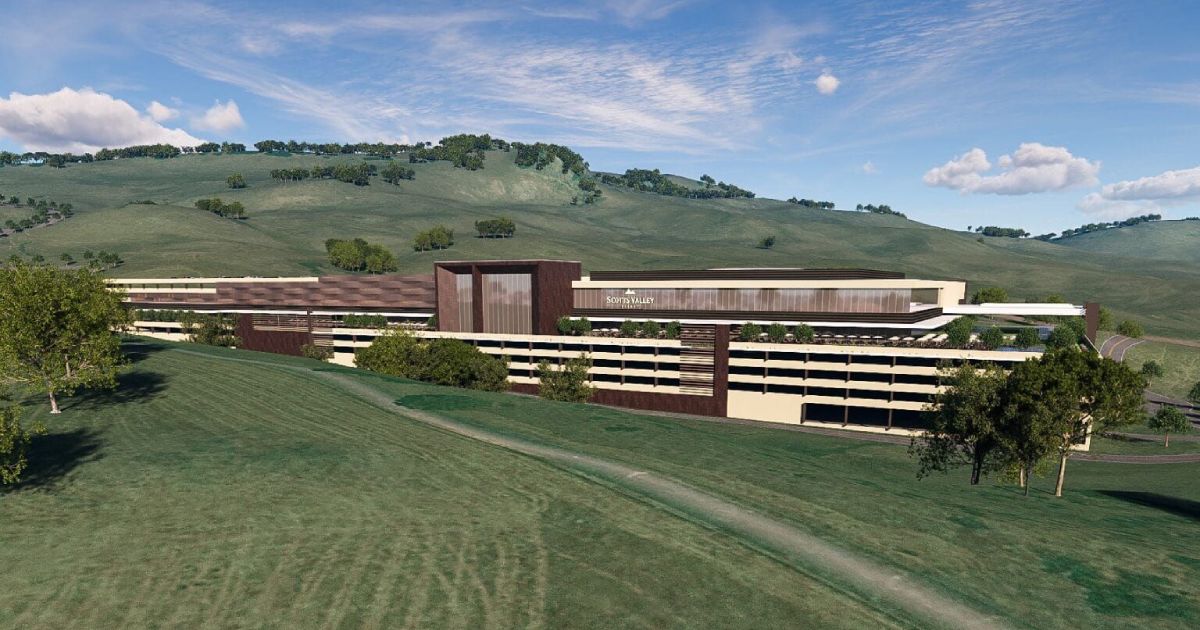
The permanent project has been valued by its proponents at approximately $700 million. Environmental and planning documents describe an eight-story gaming and entertainment complex, restaurants, bars, a ballroom, parking facilities, 24 Tribal homes, an administration building and a 45-acre biological preserve.
Those features remain proposed. No final complex has been constructed, and Interior’s ruling means the parcel currently lacks gaming eligibility under the restored-lands provision on which Scotts Valley relied.
The decision does not necessarily resolve every possible route under federal gaming law. A separate legal theory or another statutory exception would require its own analysis and approval.
Other Tribal Nations dispute the historical connection
The project has generated strong opposition from several California Tribal Nations, including the Yocha Dehe Wintun Nation, Kletsel Dehe Wintun Nation, Lytton Rancheria and United Auburn Indian Community.
Yocha Dehe and Kletsel Dehe identify the Vallejo area as part of Patwin ancestral territory. They have argued that Scotts Valley, whose government is based in Lake County, has not demonstrated the historical connection required to operate gaming at the site.
Scotts Valley disputes that conclusion and says the record documents its people’s relationship with the broader region.
The disagreement should not be reduced to a simple conflict between a Tribe and casino competitors. It involves distinct sovereign Nations asserting different histories, territorial relationships and governmental interests. Economic competition is part of the context, but so are questions about whose ancestral lands are being used and how the federal government evaluates Indigenous history.
Interior’s latest decision accepts the position that Scotts Valley’s evidence does not satisfy the specific federal restored-lands test. It does not constitute a judicial ruling on the full history or identity of any Nation.
A federal challenge is expected
Scotts Valley can ask a federal court to review the decision under the Administrative Procedure Act. A likely complaint could argue that Interior acted arbitrarily, misread the evidence or failed to explain adequately why it departed from its January 2025 conclusion.
The federal government and opposing Nations could respond that the earlier approval misapplied the restored-lands regulations and understated Patwin historical evidence.
Until a complaint is filed, those arguments remain prospective. A court could uphold the reversal, vacate it or return the matter to Interior for further explanation.
The immediate consequences are clearer: the preview casino is closed, the permanent development cannot proceed as planned and a restored Tribal Nation’s effort to build a substantial economic enterprise has returned to court-bound uncertainty.