The Legacy of Boarding Schools: Understanding Intergenerational Trauma & Healing
Content note: This article discusses state violence, family separation, and abuse in Indian Boarding Schools and Canadian Residential Schools. If at any point you feel overwhelmed, it’s okay to pause, reach out to someone you trust, or go straight to the Support Resources section below.
For more than a century, U.S. officials openly embraced a policy summed up in the notorious phrase attributed to Captain Richard Henry Pratt, founder of the Carlisle Indian Industrial School: “Kill the Indian, and save the man.”
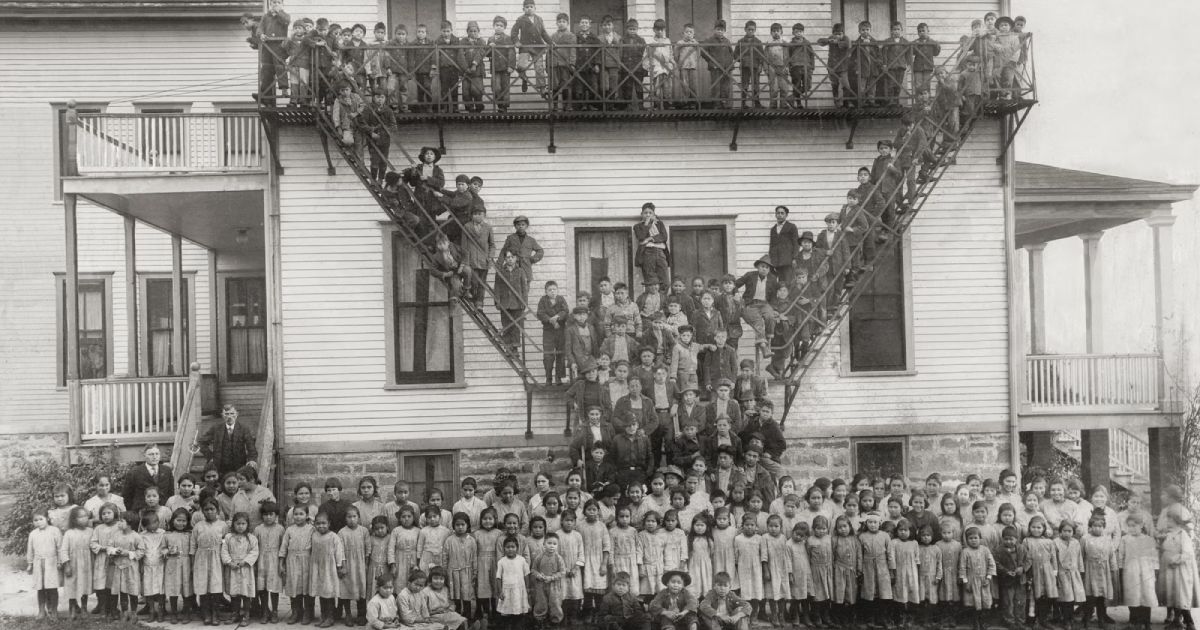
That slogan wasn’t just rhetoric. It became the guiding philosophy behind an entire system of Indian Boarding Schools in the United States and Residential Schools in Canada—institutions designed not to educate, but to erase Indigenous identities.
In 2021, the U.S. Department of the Interior (DOI) launched the Federal Indian Boarding School Initiative, led by Secretary Deb Haaland (Laguna Pueblo). Volume I of its investigative report was released in May 2022, and Volume II—the final report—was released in July 2024.
Together, they document both the scale of these schools and the ongoing harm they caused. In tandem, Secretary Haaland and Assistant Secretary Bryan Newland traveled across Indian Country on “The Road to Healing,” a 12-stop listening tour where survivors shared their stories with the federal government, many for the first time.
For many Native families, this is not distant “history.” It is the story of grandparents, aunties, uncles, and parents. It lives in the silences at the dinner table, the languages that were almost lost, and the grief that sometimes has no words.
This article looks at:
- The history of forced assimilation in Boarding and Residential Schools
- The psychological and intergenerational effects—what some Elders call a “soul wound”
- The healing and revitalization work led by survivors and their communities
- Practical support resources for survivors and descendants
Even as we name the harm, the focus here is not on voyeurism or graphic detail. It’s on truth, dignity, and the strength of Indigenous peoples who, despite everything, kept culture alive.
The Architecture of Erasure: History of Forced Assimilation
The scale of the Boarding School system
According to Volume I of the Federal Indian Boarding School Initiative Investigative Report, the U.S. federal boarding school system operated from 1819 to 1969 and included 408 federally supported schools across 37 states or then-territories, including 21 in Alaska and 7 in Hawai‘i.
Volume II expands that picture. By cross-referencing archival sources, the DOI identified:
- 417 federal Indian boarding schools
- 1,025 additional institutions (such as orphanages, day schools, and asylums) that also housed Native children
- At least 973 documented deaths of Native children at these institutions, with burials at 74 sites in 65 locations—numbers the report notes are likely undercounts.
The system was not limited to the continental U.S. It extended into Alaska and Hawai‘i and often sent children hundreds or even thousands of miles away from their homelands.
In Canada, a separate but parallel network of Indian Residential Schools was created under the Indian Act. Ceremonies such as the Potlatch on the Northwest Coast and the Sun Dance on the Plains were criminalized between the 1880s and 1951, specifically to break Indigenous social and spiritual life.
How forced assimilation worked in practice
The DOI’s own description of U.S. Indian Boarding Schools makes it clear: this was not a neutral education project. It was a system built to sever Indigenous children from their families, languages, and nations.
Key elements included:
- Forced removal from home: Children were taken from their families—sometimes coerced by threats of withholding rations or jailing parents if they refused to send their children.
- Cutting of hair and renaming: Hair—often spiritually significant—was cut. Children were assigned English names and punished for using their given names.
- Bans on language and ceremony: Policies forbade Native languages, traditional clothing, and religious practices. Children could be punished for speaking their own language or participating in a ceremony.
- Military-style discipline: Schools used regimented daily schedules, uniforms, marching, and drills. Obedience and submission were emphasized over learning.
- Compulsory labor: Students spent large portions of each day doing unpaid labor—farming, laundry, construction, domestic service—that kept the schools running rather than focusing on academic education.
The DOI is explicit: these policies had two intertwined goals—cultural assimilation and territorial dispossession. By attempting to break the bond between children and their nations, the government sought to undermine tribal sovereignty itself.
Understanding the “Soul Wound”: Psychological & Intergenerational Effects
What is “historical” and “intergenerational” trauma?
Lakota social worker and scholar Dr. Maria Yellow Horse Brave Heart developed the concept of Historical Trauma to describe what happened to Native communities under colonization, including massacres, land theft, and Boarding Schools. She has described it as:
“Cumulative emotional and psychological wounding over the lifespan and across generations, emanating from massive group trauma experiences.”
Historical trauma is intergenerational: it doesn’t stay confined to the people who directly experienced it. It shapes how stress, grief, parenting, and identity are passed down to children and grandchildren.
Researchers and Indigenous clinicians describe two main pathways:
- Social and behavioral pathways
- Children raised in institutions instead of families often grew up without being held, comforted, or parented in traditional ways.
- Survivors who had to “be tough” to survive were rarely given a chance to process their own pain, which can make it harder to be emotionally available to the next generation.
- Survival strategies—numbing, silence, mistrust—can be passed down, even when people deeply love their children.
- Biological (epigenetic) pathways
- Trauma doesn’t change the DNA sequence itself, but it can affect how genes are turned on or off, especially genes related to the stress response (like NR3C1 and FKBP5).
- Studies of trauma survivors and their children have found similar patterns of DNA methylation in these genes, suggesting that severe stress can leave a biological “echo” in future generations.
- Recent research with Alaska Native peoples has begun documenting links between experiences of historical trauma and epigenetic changes, supporting what communities have said for generations: that the impact of Boarding and Residential Schools lives in the body as well as the mind.
The cycle of disconnection
For many survivors, the Boarding School experience meant growing up without parents—and often without affection or safety. Testimonies from The Road to Healing listening sessions and the NABS Oral History Project describe childhoods shaped by fear, loneliness, rigid punishment, and deep homesickness.
When those children became adults, they often had to figure out parenting without ever having seen healthy parenting modeled for them. That legacy can show up as:
- Emotional distance or difficulty expressing love
- Harsh discipline, mirroring what was seen in school
- Shame around language and ceremony, from being told those things were “wrong” or “primitive”
- Reliance on substances as a way to cope with unresolved grief
The Indian Health Service (IHS) and other federal agencies now recognize that American Indian and Alaska Native communities experience disproportionately high rates of suicide, PTSD, depression, and substance use disorders, tied in part to this historical trauma.
None of this means Indigenous peoples are “broken.” It means that responses many people blame themselves for—anxiety, anger, numbing out, difficulty trusting—are understandable reactions to generations of organized harm.
Naming the “soul wound”
Many Elders and healers talk about these harms as a “soul wound”—an injury to spirit, community, and identity. Dr. Brave Heart’s work emphasizes that healing requires both:
- Grieving what was lost: the children who never came home, the languages nearly taken, the ceremonies driven underground.
- Reclaiming what remains: traditional parenting, kinship systems, spiritual practices, and community responsibilities.
In other words, the story of Boarding Schools cannot only be about trauma. It also has to be about the power of survival and resurgence.
From Trauma to Triumph: Healing & Revitalization Efforts
Truth-telling as the first step: Federal Indian Boarding School Initiative
The Federal Indian Boarding School Initiative was launched in 2021 by Secretary Deb Haaland with the explicit goal of recognizing the legacy of federal Boarding School policies and their intergenerational impact.
Key milestones so far include:
- Volume I (2022): Documented 408 federal schools in 37 states and identified at least 53 schools with marked or unmarked burial sites.
- Volume II (2024): Expanded the list to 417 federal schools and 1,025 related institutions, with at least 973 confirmed child deaths and 74 burial sites, and linked Boarding School policy to at least 127 treaties.
- “The Road to Healing” Tour (2022–2023): A 12-stop listening tour across Indian Country, Alaska, and Native Hawaiian communities where survivors shared their experiences directly with federal officials, supported by trauma-informed staff.
These are not just bureaucratic steps. For many survivors, being heard by someone in power—particularly by a Native Cabinet Secretary—has been described as both painful and relieving. Truth-telling opens old wounds, but it also makes it harder for the wider public to look away.
The Truth and Healing Commission on Indian Boarding School Policies Act
Alongside the DOI effort, advocates and survivors have pushed for a Truth and Healing Commission on Indian Boarding School Policies Act. The bill (S.1723 / H.R. 7227) would create an independent federal commission to:
- Fully investigate and document Boarding School policies and abuses
- Identify burial sites and avenues for repatriation
- Recommend policy changes and reparative actions
- Center survivor and Tribal testimony in the process
As of mid-2024, the Senate bill had been released from committee with bipartisan support, and the House companion bill advanced out of committee—described by the National Native American Boarding School Healing Coalition (NABS) as the most significant progress yet.
For communities, such a commission isn’t just about documentation. It’s about acknowledgment, accountability, and setting the groundwork for healing, much like Truth and Reconciliation processes in other countries.
Language reclamation: Undoing a core tool of assimilation
Because Boarding and Residential Schools targeted Indigenous languages, many communities see language reclamation as a direct act of healing and resistance.
Language immersion “nests” and schools—originally modeled after Māori kōhanga reo—are now being adapted across Turtle Island:
- The Cherokee Language Immersion School in Oklahoma teaches children from preschool through middle school entirely in Cherokee, with the explicit goal of creating new fluent speakers and strengthening tribal sovereignty.
- Programs like Waadookodaading Ojibwe Language Institute and Gookonaanig Endaawaad (Grandmas’ House) create Ojibwe immersion spaces for young children and families, where elders and learners share language, stories, and land-based activities together.
Research on language nests shows that they do more than produce speakers: they deepen cultural knowledge, community ties, and self-esteem in youth.
For many parents and grandparents whose own language was punished, hearing their children speak it freely is profoundly healing. It interrupts the Boarding School message that “our ways are wrong” and replaces it with “our ways are precious and needed.”
Cultural reintegration: Ceremonies returning to the open
Where Boarding and Residential Schools pushed ceremonies into hiding, communities have worked for decades to bring them back into the open:
- In Canada, the Potlatch and Sun Dance—central ceremonies for many Nations—were formally banned in law for decades and only fully legal again after 1951.
- Today, these and many other ceremonies have been revived as acts of sovereignty, remembrance, and community care.
For some survivors, the first time they were able to attend a Sun Dance, a sweat lodge, a feast, or a potlatch without fear of punishment was later in life. Participating in these ceremonies, or watching their grandchildren participate, is often described as a form of spiritual reunification—a way of mending that “soul wound” created when institutions tried to sever ties to land and spirit.
Reframing survivors as warriors and culture keepers
It is important not to speak of survivors only as victims. Many kept songs, stories, and prayers alive in secret, whispering in the dark or sharing what little they could with classmates and siblings.
Organizations like NABS talk about survivors as protectors of culture, whose courage to endure—and now to speak—has made today’s reclamation possible.
That reframing matters. Calling survivors “warriors,” “knowledge holders,” or “aunties and uncles who carried the fire” shifts the story from one of pure damage to one of resistance, creativity, and love under impossible conditions.
Solidarity and Awareness: The Orange Shirt Movement
Phyllis Webstad’s orange shirt
The Orange Shirt movement began with the story of Phyllis Webstad, a Northern Secwépemc (Shuswap) woman from Stswecem’c Xgat’tem First Nation in what is now British Columbia. As a six-year-old, she arrived at St. Joseph’s Mission Residential School wearing a bright new orange shirt her grandmother had bought for her. On arrival, staff took the shirt away and never returned it.
For Phyllis, that moment symbolized the way Residential Schools tried to take away not just clothes, but identity, family connection, and the right to feel special as a child. She later turned her story into a teaching tool, leading to the creation of Orange Shirt Day in 2013, with the message “Every Child Matters.”
September 30: National Day for Truth and Reconciliation
In Canada, September 30 is now the National Day for Truth and Reconciliation, formally linked with Orange Shirt Day. The day honors:
- Children who were taken from their families
- Those who never came home
- Survivors and the ongoing impacts on communities
Orange Shirt Day has since spread far beyond Canada. Many Native communities and allies in the U.S. now observe September 30 to remember both Residential Schools (Canada) and Boarding Schools (U.S.), recognizing that the systems were distinct but deeply connected.
On that day, people wear orange shirts, host community walks and teach-ins, and hold ceremonies and memorials. The message is simple but powerful: the attempted erasure of Indigenous children is not a “sad chapter of the past.” It is an ongoing responsibility for everyone to confront and repair.
Contemporary Support Resources
Reading about Boarding and Residential Schools can bring up intense emotions—even if you’ve “heard it all before.” If you or someone you love is struggling, support is available.
If you are in immediate danger or considering self-harm, please seek emergency help right away (911 or your local emergency number).
Crisis support
United States
- 988 Suicide & Crisis Lifeline
- Call or text 988, or chat via 988lifeline.org, for free 24/7 support from trained counselors.
- In Washington State, Native callers can choose the “Native & Strong Lifeline” by pressing 4, connecting them with counselors specifically trained to support American Indian and Alaska Native people; this line is operated in partnership with the 988 Lifeline.
- StrongHearts Native Helpline – domestic and sexual violence support
- Phone: 1-844-7NATIVE (1-844-762-8483)
- 24/7, anonymous and confidential, for Native Americans and Alaska Natives facing domestic or sexual violence, with culturally grounded advocacy and safety planning.
Canada
- Hope for Wellness Help Line (not in outline, but important for readers north of the border)
- Call 1-855-242-3310 or use online chat for Indigenous-specific mental health support, available in English, French, and several Indigenous languages.
Advocacy and healing organizations
- NABS – National Native American Boarding School Healing Coalition
- Works to advance truth, justice, and healing for Boarding School survivors and descendants.
- Maintains a List of Indian Boarding Schools, an Interactive Digital Map, a Truth & Healing curriculum, and leads advocacy for the Truth and Healing Commission on Indian Boarding School Policies Act.
- Through a DOI-funded Oral History Project, NABS is recording video interviews with survivors that will be preserved at the Library of Congress and the Smithsonian, ensuring their voices are protected for future generations.
- Federal Indian Boarding School Initiative – U.S. Department of the Interior
- Hosts the full text of Volumes I and II of the investigative report, as well as transcripts and resources from The Road to Healing listening sessions.
- Center for Native American Youth (CNAY)
- An education and advocacy organization based at the Aspen Institute, focused on improving the health, safety, and overall well-being of Native youth.
- Hosts the Generation Indigenous (Gen-I) National Native Youth Network, leadership opportunities, and fellowships for Native youth.
Clinical and community-based care
- Indian Health Service (IHS) & Tribal Health Clinics
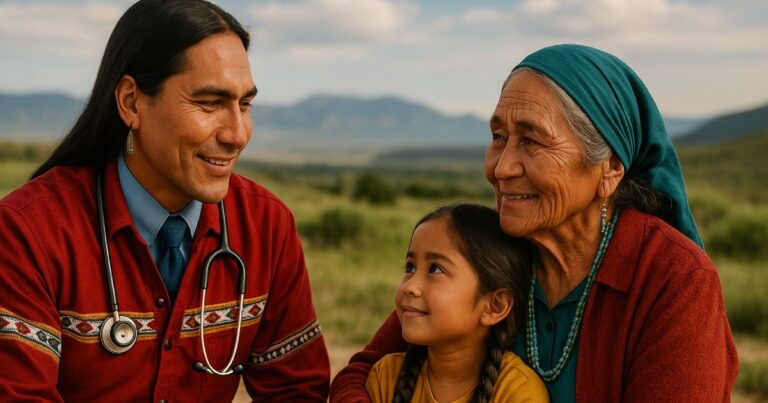
- Many IHS and tribally operated clinics are incorporating trauma-informed and culturally grounded care for survivors and descendants, including talking circles, traditional healers, and evidence-based therapies adapted for Native communities.
- Community “healing circles” and talking groups
- Look for circles hosted by:
- Tribal health departments
- Urban Indian health organizations
- Cultural centers or language programs
- Churches or community groups that partner with Native counselors or Elders
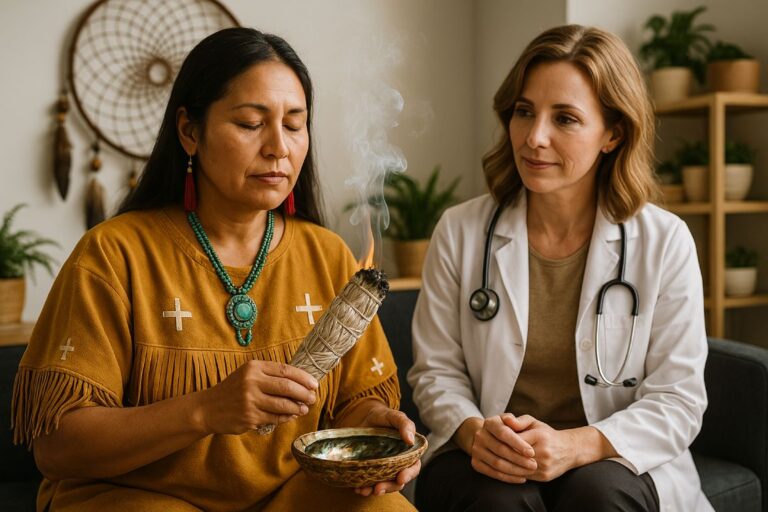
- These spaces often blend Indigenous practices (song, prayer, smudging, food) with peer support and, sometimes, Western mental health tools.
- Look for circles hosted by:
If you’re unsure where to start, calling StrongHearts, checking your tribe’s website, or looking at NABS’s resource database can help you locate local groups and healing events.
Frequently Asked Questions
What is the main psychological effect of boarding schools on Indigenous communities today?
The primary effect is intergenerational trauma. This manifests as higher rates of PTSD, depression, anxiety, and substance abuse in descendants of survivors, largely due to the loss of culture, language, and traditional parenting models.
How are communities healing from forced assimilation?
Communities are healing through cultural revitalization—bringing back languages, ceremonies, and traditional foods. Additionally, the “Road to Healing” initiative allows survivors to share their stories publicly, breaking the silence that fueled the trauma.
Are there resources specifically for boarding school survivors?
Yes. The National Native American Boarding School Healing Coalition (NABS) provides extensive resources. Additionally, the Indian Health Service (IHS) now incorporates trauma-informed care specifically designed to address historical grief.
What was the purpose of the slogan “Kill the Indian, Save the Man”?
Coined by Captain Richard Henry Pratt, the founder of the Carlisle Indian Industrial School, it summarized the government’s goal: to eradicate Indigenous culture and identity (the “Indian”) so that the individual could be assimilated into Euro-American society (the “Man”).
Conclusion: Toward “Two-Eyed Seeing” and Collective Healing
The scars of Boarding and Residential Schools are woven into the fabric of North America. They shape borders, family trees, census data, and the languages most people hear in public spaces. But they do not define the future.
Indigenous thinkers often speak of “Two-Eyed Seeing” (Etuaptmumk), a concept articulated by Mi’kmaw Elder Albert Marshall. It means learning to see with:
- One eye through the strengths of Indigenous knowledge and ways of being, and
- The other eye through the strengths of Western knowledge,
- And using both eyes together, for the benefit of all.
Applied to Boarding School trauma, Two-Eyed Seeing might look like:
- Using Western psychology and neuroscience to understand PTSD, depression, and epigenetics—so that services are better funded and better tailored.
- Using Indigenous wisdom and ceremony to actually heal: rekindling language, land-based practices, kinship structures, and spiritual life.
For survivors and descendants, healing is not about “getting over it.” It’s about being fully seen—by governments, by neighbors, and within one’s own community—and about reclaiming what assimilation policies tried to destroy.
If you take one action after reading this, consider:
- Reading the DOI Boarding School reports (Volumes I & II) to understand the official record.
- Supporting language and cultural programs—through donations, advocacy, or simply showing up when invited.
- Backing legislation like the Truth and Healing Commission on Indian Boarding School Policies Act and other bills that fund language revitalization, cultural reclamation, and survivor support.
For many Indigenous peoples, Boarding Schools are not just something their ancestors endured. They are a grief they carry in their bodies, in their families, and in their homelands. But they are also part of a story in which, against all odds, the people are still here, the languages are still spoken, and the songs are still being sung.