Native Mental Health 2026: Traditional Healing & Modern Wellness Models
Content note: This article discusses mental health and suicide. If that feels heavy, please go gently, take breaks, and reach out to support if you need it.
From “Treatment” to Reconnection
As we move into 2026, mental health in many Native communities is no longer framed as simply “treating symptoms.” It’s about reconnection—to land, language, ancestors, and each other.
In 2025, federal conversations around stigma and culturally grounded care gained new attention with the Stop Mental Health Stigma in Our Communities Act of 2025, which directs federal agencies to develop culturally and linguistically appropriate anti-stigma campaigns for communities of color, particularly Asian American, Native Hawaiian, and Pacific Islander populations. Although not specific to Native nations, it signals a broader federal shift toward community-specific mental health outreach—a shift Native advocates have been calling for over generations.
At the same time, Native-led initiatives like Pathways to Wellness—a program of the Urban Native Collective providing free therapy, fitness, and community-based wellness in Kansas City—have expanded funding through a 2025 Pathways to Wellness Fund, aiming to make Indigenous-centered mental health care more accessible in urban settings.
Thesis: By rejecting a one-size-fits-all Western clinical model and embracing Two-Eyed Seeing—holding both Indigenous and Western knowledge together—Native communities are building mental health systems where culture is not an “add-on” but the heart of healing.
Redefining “Therapy”: Culturally-Based Counseling
Two-Eyed Seeing in Psychology
“Two-Eyed Seeing” (Etuaptmumk), a Mi’kmaw concept, invites us to look at the world with one eye on Indigenous knowledge and one eye on Western science, using both together for the benefit of future generations.
In mental health care, this means:
- Western clinical tools (diagnosis, medication when needed, evidence-based therapies)
- Plus traditional teachings, ceremony, and community roles
- Without asking the person to leave their Indigeneity at the door
The Society of Indian Psychologists (SIP) has been central in defining what ethical, culturally grounded care looks like. SIP’s mission is to advocate for the psychological well-being of American Indians and other Indigenous peoples and to advance Indigenous psychology.
SIP has even written a full commentary on the APA Ethics Code, bringing Indigenous values—like relationality, community responsibility, and respect for land—into mainstream ethical discussions.
Leaders like Dr. Art Blume (Cherokee/Choctaw) have shown how addiction treatment and counseling can center community, equality, and care for the earth, not just individual pathology.
Case Study (Urban): Urban Native Collective’s “Pathways to Wellness”
In many cities, Native people are far from their home territories but still carry the weight of historical and ongoing trauma. Urban Native Collective’s Pathways to Wellness initiative in Kansas City is one response:
- Provides no-cost or low-cost mental health services, including therapy and wellness classes, for Indigenous relatives
- Combines clinical counseling with traditional movement, community events, and cultural spaces
- Launched a Pathways to Wellness Fund (2025) to sustain free therapy, fitness programs, and a climbing/wellness initiative for Native relatives.
Here, counseling may include:
- Talking about depression and anxiety
- And also reconnecting with identity, community history, and movement practices that carry cultural meaning
Case Study (Telehealth): United Natives
For relatives in rural or reservation communities, travel, cost, and provider shortages can make care nearly unreachable. That’s where telehealth and Native-led platforms like United Natives step in:
- Provides free mental health therapy sessions via telehealth for Native relatives in partner states, with licensed therapists who understand Native contexts.
- Offers telehealth counseling and traditional healing, recognizing that wellness is both clinical and spiritual.
- Launched a mobile app (supported by tech partners and universities) so relatives can access tele-mental health, suicide prevention tools, and community programs directly from their phones—even in remote areas.
Federal guidance recognizes that telebehavioral health is critical for American Indian and Alaska Native communities, where suicide, depression, and substance-related deaths are higher than the national average.
This combination of Native-led telehealth and federal support is reshaping access to care—without forcing people to choose between home and healing.
Traditional Practices as Clinical Interventions
Many practices that were once dismissed as “hobbies,” “religion,” or “unscientific” are now recognized—even by researchers—as powerful mental health interventions. These practices vary by tribe and region, but common examples include:
Sweat Lodges & Purification Ceremonies
For many Plains and other Nations, sweat lodge ceremonies (each with their own protocols) have long been used for purification, prayer, and emotional release. Research with Native veterans shows:
- Many veterans experiencing PTSD prefer traditional ceremonies like sweat lodges over conventional therapy
- Participants report reduction in nightmares, “ghost sickness,” and feelings of spiritual imbalance when ceremonies are offered alongside or instead of standard PTSD treatments
Clinicians now describe sweat lodge in trauma-informed terms: controlled exposure to stress in a safe, prayerful environment, supported by song, medicine, and community, which can help the nervous system remember what safety feels like.
Talking Circles as Group Therapy
Across many Nations, talking circles are a non-hierarchical way to share stories, grief, and solutions:
- The Intertribal Talking Circle model for Native youth has shown reductions in substance use risk and increases in cultural identity and self-efficacy
- Circles emphasize respect, equality, and listening, which can feel safer than clinical group therapy where one person “runs” the room
Instead of, “You have a diagnosis and a treatment plan,” the message is, “We all have medicine inside us, and we heal together.”
Beading, Crafting, Drumming, and Dance as Mindfulness
Many tribes have long recognized that creative work is medicine:
- Beading and regalia-making require slow, intentional focus; Indigenous scholars describe beading as a mindfulness practice that grounds the body and calms the mind.
- Therapeutic drumming programs like DARTNA (Drum-Assisted Recovery Therapy for Native Americans) combine drumming, talking circles, and 12-Step principles and have shown promise in treating substance use disorders.
- Recent research in 2025 at the Wabano Centre for Aboriginal Health in Canada is investigating how Indigenous drumming improves connection, mood, and social resilience.
These practices regulate breathing, rhythm, and attention—key ingredients in many Western therapies—while strengthening cultural pride and belonging.
The Evidence: Culture as a Protective Factor
Programs funded through initiatives like Tribal Practices for Wellness in Indian Country and the First Nations Mental Wellness Continuum project show that when cultural activities are integrated into treatment, participants experience:
- Higher engagement and program completion
- Better substance use outcomes
- Greater sense of purpose and connection to community
Different tribes may use different ceremonies—Sun Dance for some Plains Nations, longhouse ceremonies for others, canoe journeys for coastal Nations—but a common thread is clear: culture itself is a clinical intervention.
Community Wellness Models: The Indigenous Wellness Framework
Beyond “Absence of Illness”
Western systems have often defined health as “the absence of disease.” Many Indigenous frameworks instead define wellness as balance:
“Mental wellness is a balance of the mental, physical, spiritual, and emotional.” — Thunderbird Partnership Foundation
The Indigenous Wellness Framework (IWF), developed by Elders and Knowledge Keepers and used in the First Nations Mental Wellness Continuum (Canada), describes four core outcomes:
- Hope
- Belonging
- Meaning
- Purpose
While this framework comes from First Nations contexts, the underlying teaching—balance of Mind, Body, Spirit, and Emotion, rooted in land and language—resonates with many Indigenous communities across Turtle Island.
Purpose & Belonging for Youth
Many tribes are building youth programs around roles, not labels:
- Youth serve as fire-keepers, singers, drummers, language learners, or cultural mentors in training
- These roles create purpose (you are needed) and belonging (you are part of us), which are protective against depression and suicide
The White Mountain Apache “Celebrating Life” program is often cited as a model. The tribe created a community-based system where any concerning behavior (self-harm, suicidal thoughts, heavy substance use) triggers outreach, safety planning, and follow-up—not in isolation, but through family and community support. Studies show this approach contributed to meaningful long-term decreases in suicide attempts and deaths among Apache youth.
Land-Based Healing
Many Indigenous Wellness Framework implementations emphasize land-based programs:
- Youth and adults heal while hunting, fishing, trapping, gathering medicines, or farming
- Land is understood as a living relative—healing comes not only from talking about stress, but from moving, listening, and working on the land
Thunderbird’s Land for Healing guide documents how First Nations treatment centers use land-based camps, seasonal activities, and on-the-land sobriety programs as core parts of mental wellness and substance use recovery—not optional “extras.”
In U.S. tribal communities, similar land-based wellness camps, horse programs, and seasonal gatherings are integrated into behavioral health programs, often funded through Good Health and Wellness in Indian Country and related initiatives.
Overcoming Stigma: Changing the Narrative
When Silence Was Survival
For many families, especially boarding-school and relocation survivors, silence was a survival skill. Talking openly about fear, grief, or hearing voices could invite punishment, institutionalization, or further harm.
That history still echoes today as:
- Shame about “having a mental illness”
- Fear that seeking help means “not being strong”
- Worry that talking about suicide will “put ideas into someone’s head”
Clinical experts in the Society of Indian Psychologists, including Dr. Art Blume and others, highlight that what is often called “stigma” is deeply rooted in histories of colonization, forced assimilation, and racism within health systems—not some flaw in Native communities themselves.
Policy Shifts: The Stop Mental Health Stigma in Our Communities Act (2025)
The Stop Mental Health Stigma in Our Communities Act of 2025 focuses on culturally and linguistically tailored outreach for Asian American, Native Hawaiian, and Pacific Islander communities, calling on HHS and SAMHSA to fund community-led anti-stigma campaigns.
While the bill is not AI/AN-specific, Native organizations see it as part of a broader movement:
- Recognizing that one generic PSA cannot reach every community
- Opening space to push for tribal-specific, Indigenous-designed stigma-reduction campaigns
Community Movements: Hope for Life Day
One of the strongest Native-led responses to suicide is National American Indian and Alaska Native Hope for Life Day, held every year on September 10, the same day as World Suicide Prevention Day.
Created by the American Indian/Alaska Native Task Force of the National Action Alliance for Suicide Prevention, Hope for Life Day:
- Centers love, care, and connection as prevention
- Encourages communities to host culturally grounded events—feasts, runs, talking circles, drum groups—focused on “good medicine” messages, not just risk statistics
- Marked its 10th anniversary in 2025, with updated toolkits offering tribally adaptable ideas for youth engagement, social media campaigns, and local resolutions.
Youth & Social Media: Decolonizing Mental Health Language
Across Indian Country, many Gen Z and Millennial Native creators are using TikTok, Instagram, and community platforms like We R Native to:
- Talk honestly about anxiety, depression, and sobriety
- Share traditional teachings alongside coping skills
- Challenge the idea that therapy is “a white thing” and instead frame it as just one tool among ceremony, kinship, and land-based healing
The narrative is shifting from “mental illness is weakness” to “taking care of your mind, body, spirit, and community is traditional responsibility.”
Where to Find Support Right Now
If any part of this article feels activating, you deserve immediate, compassionate support. Options will vary by region and tribe, but here are key starting points in the U.S.:
Crisis Support
- 988 Suicide & Crisis Lifeline (U.S.)
- Call or text 988 or use chat at the 988 website for free, confidential support 24/7.
- In some states (such as Washington), callers from local area codes can choose the Native & Strong Lifeline option to reach Native counselors; in other areas, you can still ask to speak to someone familiar with Indigenous communities.
- StrongHearts Native Helpline
- A 24/7, culturally appropriate helpline for Native people experiencing domestic and dating violence; advocates can also offer emotional support and referrals to counseling and shelter resources.
If you are in immediate danger, contact local emergency services or tribal law enforcement.
Native-Specific Mental Health & Wellness Resources
- United Natives – Free telehealth counseling and traditional healing offerings for Native relatives in partner states, plus a mobile app with mental health and suicide prevention tools.
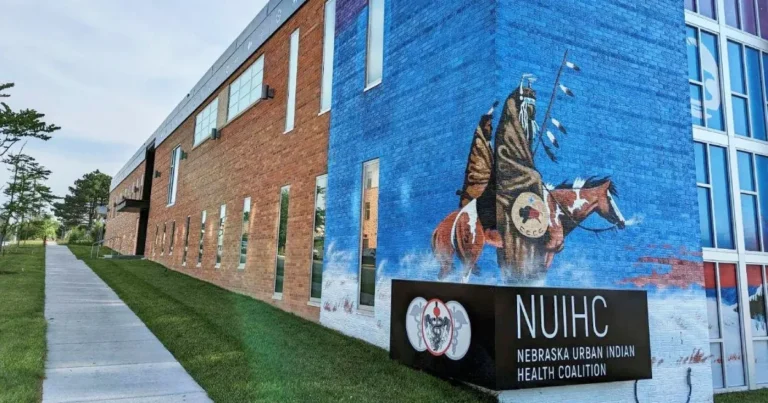
- National Council of Urban Indian Health & Urban Native Clinics – Many urban Indian health organizations offer behavioral health services with Native staff and elders involved. CDC+1
- NAMI (National Alliance on Mental Illness) – Indigenous Resources – Educational materials and support groups tailored for Indigenous/Native communities.
Finding an Indigenous-Informed Therapist
- Society of Indian Psychologists (SIP) – Maintains networks of Native and allied psychologists trained in Indigenous-centered care.
- United Natives & We R Native – Share directories, telehealth connections, and youth-friendly resources for Indigenous mental health.
- Tribal Health and Behavioral Health Departments – Many tribes host healing circles, cultural camps, and counseling directly through tribal clinics and wellness centers.
If contacting a helper feels overwhelming, you might start with a trusted elder, auntie, uncle, or friend who can reach out together with you.
Frequently Asked Questions
What is “culturally-based counseling”?
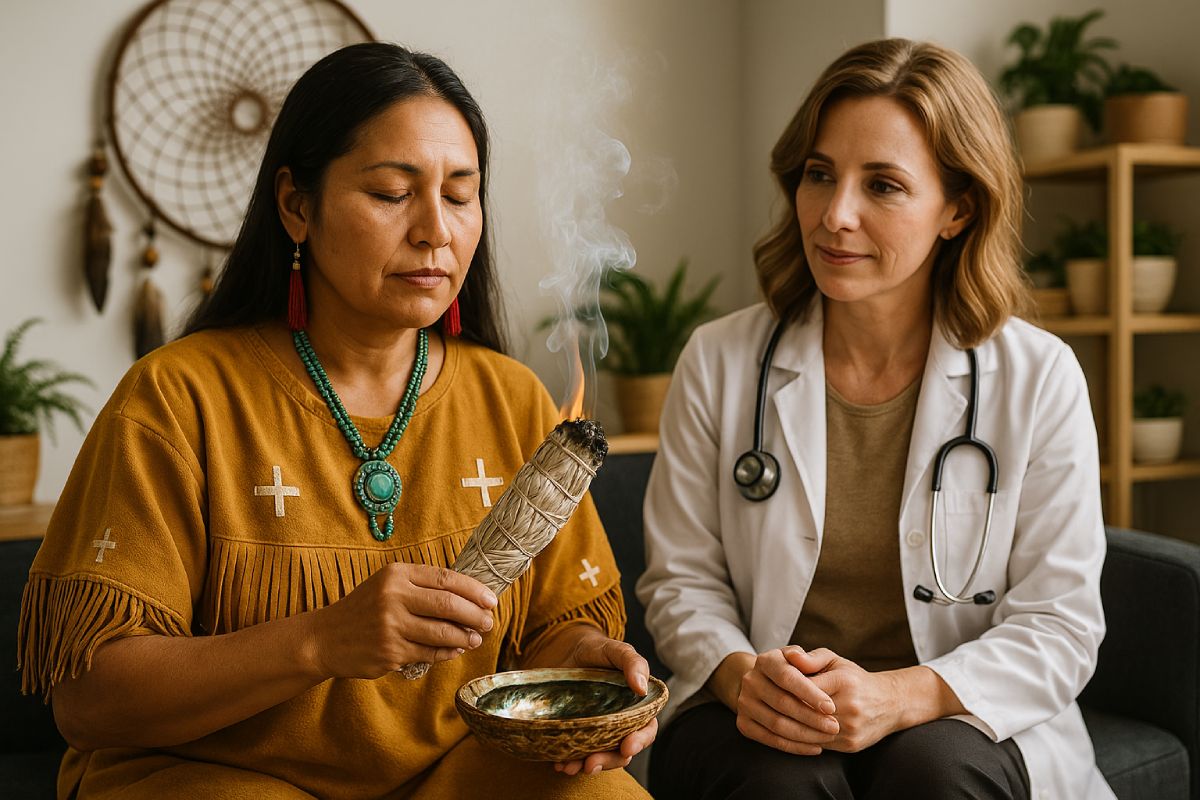
Culturally-based counseling is therapy that integrates Indigenous values, traditions, and spirituality into care. Instead of only talk therapy in an office, it may include:
– Smudging or other purification practices
– Involvement of elders or cultural mentors
– Storytelling, ceremony, or land-based activities
Clinical experts in the Society of Indian Psychologists emphasize that this approach honors relationships—to land, ancestors, and community—as essential to mental wellness.
How do traditional practices help with mental health?
Practices like drumming, singing, or sweat lodges regulate the nervous system and foster a sense of belonging. They treat “dis-ease” by restoring balance and connection to the community and Creator, rather than just treating symptoms.
What is the “Indigenous Wellness Framework”?
It is a holistic model that views health as the balance between the Mind, Body, Spirit, and Emotion. It emphasizes that you cannot treat the mind in isolation; you must also nourish the spirit and the body (often through connection to the land).
How can I find a Native American therapist?
Organizations like United Natives, We R Native, and the Society of Indian Psychologists maintain directories. Additionally, the 988 Lifeline now has specific protocols (press 4) to connect Native callers with culturally trained crisis counselors.
Conclusion – Toward Mental Health Equity Rooted in Culture
The push for “mental health equity” is not just about getting more Native people into standard clinics. True equity means:
- You can receive care without leaving your culture outside the door
- Ceremony, language, and land are seen as primary medicines, not side notes
- Indigenous psychologists, counselors, and elders guide what “best practice” means for their own Nations
Organizations like the Society of Indian Psychologists, Indigenous psychiatrists like Dr. Cornelia (Nel) Wieman, and community researchers working with the Indigenous Wellness Framework are building a future where care is by Native people, for Native people, in partnership with allies who respect Indigenous knowledge.
As we look beyond 2025 into 2026 and beyond, the most promising models are those that practice Two-Eyed Seeing:
- Using Western psychology to name, measure, and treat distress
- Using Indigenous wisdom to make life meaningful and connected again
Call to Action:
- Support Native-led initiatives like Urban Native Collective’s Pathways to Wellness or local tribal wellness centers.
- Encourage clinics and policymakers in your area to adopt the Indigenous Wellness Framework or similar models that balance Mind, Body, Spirit, and Emotion.
- Share information about Hope for Life Day and participate in community-based events that spread messages of connection and good medicine.