Addressing Indigenous Health Disparities
Resilience in the Face of Structural Inequity
Across Turtle Island, Indigenous communities carry a long memory: broken treaties, land theft, boarding schools, and underfunded services. And yet, what stands out just as strongly is resilience—tribal nations reclaiming language, lands, and health systems on their own terms.
The numbers show why this work matters. Recent federal data indicate that 24.4% of American Indian and Alaska Native (AI/AN) adults report their health as “fair or poor,” compared with about 13.7% of U.S. adults overall, a stark indicator of persistent health inequity. These patterns are the result of structural factors—chronic underfunding of the Indian Health Service (IHS), ongoing treaty violations, racism in healthcare—not any deficiency in Native peoples themselves.
At the same time, we are entering a new moment:
- Tribes are expanding self-governance over health services through “638 contracts” and compacts.
- The IHS is pursuing major budget increases and electronic health record modernization.
- Tribal nations are strengthening food sovereignty, culturally grounded mental health care, and traditional wellness programs.
While disparities in healthcare access, diabetes, and mental health remain severe, a shift toward tribal self-determination, culturally sensitive care, and modernized federal funding is driving a new era of Indigenous wellness.
The State of Healthcare Access: The Indian Health Service & Beyond
1. The Funding Gap: Treaties Without Full Payment
The Indian Health Service is not a “charity” program; it is part of the federal trust and treaty obligation to tribal nations. IHS provides care to nearly 2 million AI/AN people through a network of hospitals, health centers, and tribal/urban clinics, with a mission to raise the physical, mental, social, and spiritual health of Indigenous peoples to the highest level.
Historically, however, IHS has been funded far below need, with per-person spending lower than many other federal health programs. Multiple reviews have tied this underfunding to preventable disease and shorter life expectancy among AI/AN communities.
For FY 2025, the Administration requested approximately $8.2 billion for IHS—about a $1.1 billion (roughly 16%) increase over FY 2023 enacted funding. Advocacy groups such as the National Indian Health Board emphasize that this is an important step, but still below what full treaty honoring and “mandatory” IHS funding would require.
Key point: The funding gap is not about “inefficient use of services by Native patients”; it’s about Congress not fully paying the bills set out in treaties and federal law.
2. Modernization: EHRs, Data, and Telehealth
New Electronic Health Record (EHR) System
For decades, many IHS and tribal facilities have relied on the aging Resource and Patient Management System (RPMS). The 2025 IHS budget justification includes substantial investments for EHR modernization (around $435 million) to transition to a modern, interoperable commercial EHR across IHS, tribal, and urban facilities.
Why it matters:
- Better continuity of care between IHS, tribal facilities, and outside hospitals
- More accurate tracking of diabetes, mental health, cancer, and maternal health outcomes
- Stronger data for tribes to negotiate policy and funding
Telehealth: Bridging the “Distance Penalty”
Many Native communities are hours away from specialty care. Telehealth is increasingly used to overcome that “distance penalty”:
- IHS has a Telehealth Program and Telebehavioral Health Center of Excellence providing remote psychiatry, counseling, and specialty services to rural sites.
- Telebehavioral health programs have found that patients are about 2.5 times more likely to keep telepsychiatry appointments than in-person visits, a huge deal for continuity of mental health care.
Federal telehealth guidance specifically for AI/AN communities stresses cultural humility, local control, and using telehealth to reduce social and economic barriers to care.
3. Tribal Self-Determination: 638 Contracts and Tribal Health Systems
“638 contracts” come from the Indian Self-Determination and Education Assistance Act (ISDEAA). Under these agreements:
- Tribes contract or compact with IHS to take over management of health programs and facilities that the federal government used to run.
- Title I “self-determination contracts” and Title V “self-governance compacts,” give tribes varying levels of control and flexibility over programs and funding.
This shift is not merely administrative. Tribal health systems using the 638 authority can:
- Redesign clinic schedules to match community rhythms (e.g., evening hours during fishing or ceremonial seasons).
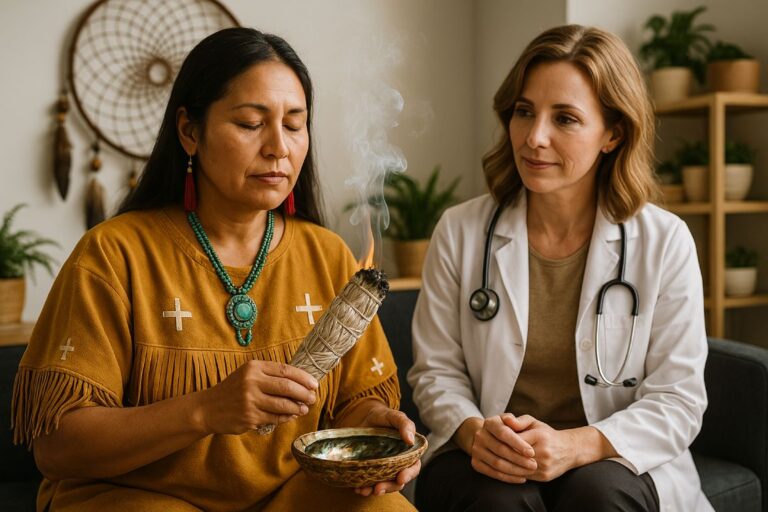
- Integrate traditional healers, ceremonies, and community health workers into care teams.
- Increase third-party billing (Medicaid, Medicare, private insurance) and reinvest revenues locally.
In other words, self-determination in health services is itself a form of medicine—replacing one-size-fits-all federal control with culturally grounded tribal governance.
Combating the Diabetes Epidemic
1. The Statistics: Hard Truths, Structural Causes
According to the CDC’s 2024 National Diabetes Statistics data, American Indian and Alaska Native adults have the highest rates of diagnosed diabetes of any U.S. racial or ethnic group—around 13–16% depending on the data series, compared with about 11.3% of U.S. adults overall.
his means:
- Diabetes is significantly more common in AI/AN communities—not because of biology alone, but because of:
- Displacement from traditional lands and food systems
- Federal commodity foods high in flour, sugar, and lard
- Reservation “food deserts” where fresh produce is limited or overpriced
- Chronic poverty and underfunded infrastructure
Framing diabetes as an “individual lifestyle failure” is not accurate and risks blaming victims for structural harm.
2. Food Sovereignty as Medicine
Many tribes now talk about “food is medicine” and “food sovereignty”: the right of Indigenous peoples to define their own food systems.
The “Reclaiming Indigenous Food Relationships” framework, developed with the American Indian Cancer Foundation, places food at the center of a medicine wheel connecting stages of life, seasons, and physical, mental, emotional, and spiritual health.
Key ideas in this framework:
- Revitalizing traditional foods (corn, beans, squash, wild rice, salmon, bison, berries) as chronic disease prevention
- Emphasizing cultural practices, community resources, and intergenerational knowledge as the “root system” of health
- Recognizing historical trauma’s impact on food systems—and using culture to rebuild them
At the federal policy level, the Native Farm Bill Coalition (NFBC) has pushed Congress to:
- Expand tribal self-determination authority in USDA programs, including SNAP and food distribution programs
- Prioritize tribes in grants and technical assistance
- Explicitly link the Farm Bill to tribal food sovereignty, rural infrastructure, and traditional food systems.
These priorities aim to turn national policy into a tool for Indigenous food and health, not an obstacle.
3. Community-Led Diabetes Programs
Across Indian Country, tribal programs—often funded by the Special Diabetes Program for Indians (SDPI) and Good Health and Wellness in Indian Country (GHWIC)—combine Western diabetes care with traditional practices:
- Regular A1c and blood pressure checks
- Cooking classes using traditional ingredients
- Community gardens and seed-keeping projects
- Land-based activities like berry picking, fishing, and traditional games
GHWIC, a CDC initiative, funds tribes and tribal organizations to implement community-driven chronic disease prevention programs, often blending public health best practices with local cultural knowledge.
Rather than asking, “Why don’t people follow their diet?”, these programs ask:
What conditions do we need to restore—land, language, foods, community—to make health the easier, more natural choice?
Mental Health & Substance Use: Healing Historical Trauma
1. Historical Trauma: A Normal Reaction to Abnormal Violence
“Historical trauma” describes the cumulative emotional and psychological wounding over generations resulting from events like genocide, forced removals, and boarding schools. Scholars describe it as a collective injury that can manifest today as higher rates of depression, heart disease, and substance use.
For Native communities, this includes:
- Broken treaties and loss of land and sacred sites
- Federal policies aimed at erasing language and culture, including boarding schools
- Over-policing and environmental destruction of homelands
In this context, many mental health and substance use challenges are not personal failures, but understandable responses to multi-generational stress and loss.
2. Dr. Donald Warne: From “What’s Wrong” to “What’s Strong”
Dr. Donald K. Warne (Oglala Lakota), a leading Indigenous public health expert, has extensively documented how social determinants—poverty, racism, lack of infrastructure—drive AI/AN health disparities.
Warne argues for a strengths-based approach that shifts attention from “what is wrong with us” to “what is strong with us”:
- Culture, language, and ceremony as protective factors
- Community cohesion and kinship as buffers against stress
- Tribal self-governance in health systems as a structural intervention, not just a policy detail
This reframing is crucial for mental health: instead of pathologizing Native communities, it names resilience as a central part of the treatment plan.
3. Culturally Integrated “Two-Eyed Seeing” Care
Many Indigenous health programs draw on “Two-Eyed Seeing”—an approach (articulated by Mi’kmaq Elders) that encourages seeing the strengths of Indigenous knowledge with one eye and Western science with the other, and using both together.
In practice, this can look like:
- Trauma-informed therapy alongside sweat lodges, talking circles, beading circles, and language classes
- Medication-assisted treatment for opioid use combined with land-based healing, drumming, or traditional tobacco teachings
- Telebehavioral health that invites Elders or cultural mentors into the virtual space
A powerful example is the Center for Wabanaki Healing and Recovery, a program of Wabanaki Public Health & Wellness in Maine. It:
- Operates as a multi-acre, multi-site healing campus grounded in Wabanaki culture
- Provides intensive outpatient and medication-assisted treatment with Indigenous values at the core
- Connects people to land, ceremony, and language while addressing substance use and mental health
This is the opposite of a “one-size-fits-all rehab.” It is tribal, place-based, and relational.
The Critical Role of Cultural Sensitivity in Medicine
1. The Trust Deficit
Mistrust of mainstream healthcare is not irrational—it is evidence-based. AI/AN communities have faced:
- Segregated and racist care
- Involuntary sterilization of Native women in the 1970s
- Underfunded IHS facilities and long wait times
- Research abuses and misclassification in health data
These histories explain why some Native patients avoid early screening or delay care. Addressing Indigenous health disparities requires repairing relationships, not simply lecturing communities about “compliance.”
2. The RESPECT Model for Clinicians
Many medical schools and health systems now use frameworks like the RESPECT model in cross-cultural care training:
- R – Respect: Pronounce names correctly; honor tribal affiliations and pronouns.
- E – Explanatory model: Ask how the patient understands their illness and its causes.
- S – Sociocultural context: Consider history, community obligations, and discrimination.
- P – Power: Recognize power imbalances; share decision-making.
- E – Empathy: Acknowledge pain, grief, and historical trauma.
- C – Concerns: Ask about fears or worries, including about the system itself.
- T – Trust: Build trust over time through consistency, honesty, and follow-through.
When Indigenous patients are treated with genuine respect and cultural humility, they are more likely to engage in preventive care, follow up, and stay connected.
3. Workforce Representation: Growing Native Doctors and Nurses
Representation is critical. As of 2022, only about 0.3% of active U.S. physicians identified as American Indian or Alaska Native, even though AI/AN people make up around 2–3% of the population.
Programs such as:
- Indians into Medicine (INMED) at the University of North Dakota, described by Dr. Warne as one of the most successful Indigenous medical training programs in the world
- New medical schools and residency programs on or near tribal lands
are working to “grow our own” Native health workforce, improving racially concordant care and trust.
Dr. Patricia Nez Henderson (Diné), a prominent Indigenous physician and public health researcher, has consistently stressed that health research and clinical care must account for the “intimate relationship” between tradition, land, and health—for example, distinguishing between sacred traditional tobacco and commercial tobacco in anti-smoking campaigns. Her work underscores that effective interventions must align with cultural meanings, not erase them.
Wellness Programs: Returning to Tradition
1. Prevention Over Cure: Good Health and Wellness in Indian Country
The Good Health and Wellness in Indian Country (GHWIC) initiative channels CDC funding directly to tribes, tribal organizations, and urban Indian health programs to:
- Prevent chronic diseases such as diabetes, heart disease, and obesity
- Support tribal policy, systems, and environmental changes that make healthy choices easier
Examples of GHWIC-supported strategies include:
- Adopting tribal resolutions promoting healthy traditional foods at community events
- Building walking trails and playgrounds informed by tribal design
- Integrating traditional dance and cultural activities into physical activity curricula for youth
The underlying philosophy: Culture is prevention.
2. Movement is Medicine: Traditional Games and Youth Wellness
Many tribes are reviving traditional games and physical activities as anti-diabetes and anti-depression strategies for youth:
- Lacrosse, stickball, canoe racing, powwow dancing, snowshoeing
- Youth programs that combine sports with language lessons and teachings on respect, humility, and teamwork
These programs treat movement not as a chore, but as a way to live culture with the body, strengthening identity and connection.
3. Elder-Led Initiatives: Language, Protocol, and Protection Against Despair
Elders are key protectors of mental health. Federal initiatives around long-term services and supports (LTSS) for tribal elders have highlighted how:
- Elders who are supported to age in place, stay active, and remain involved in teaching language and protocol provide a buffer against youth suicide and depression.
- Tribal elder programs that integrate traditional foods, storytelling, and ceremony strengthen both elder health and youth resilience.
Supporting Indigenous health isn’t only about clinics and hospitals—it’s about making sure elders can keep teaching, and youth can keep listening.
Frequently Asked Questions
Who is eligible for healthcare through the Indian Health Service (IHS)?
Generally, members of federally recognized tribes and Alaska Native villages are eligible for IHS services. Eligibility can extend to certain descendants of enrolled members and, in limited situations, to non-Native household members or pregnant non-Native spouses when necessary for public health reasons (for example, to control infectious disease).
Why are diabetes rates so high in Native American communities?
It is not just genetics. Major drivers include:
– Loss of land and traditional food systems, disrupting hunting, fishing, gathering, and agriculture
– Reliance on federal commodity foods that were historically high in refined flour, sugar, and lard
– Food deserts on many reservations, where fresh produce is limited and expensive
– Chronic poverty, stress, and lack of built infrastructure for safe physical activity
CDC data show that AI/AN adults have the highest prevalence of diagnosed diabetes in the United States, significantly above the national average.
What is “Historical Trauma” in the context of Indigenous health?
Historical trauma refers to collective emotional and psychological injury that spans generations, resulting from massive group trauma such as colonization, forced relocation, and boarding schools. Scholars describe it as a long-term consequence of genocide and systemic violence that can be passed down through families and communities.
How can I support Indigenous health equity?
You can support the Native Farm Bill Coalition, advocate for full funding of the IHS (which is not an entitlement program like Medicare but a treaty obligation), and support organizations like the National Indian Health Board.
Conclusion: Health Equity as Sovereignty and Culture
Indigenous health disparities in the United States are not inevitable. They are the predictable result of colonization, underfunding, and broken promises—and they are being challenged every day by tribal governments, community organizers, clinicians, and culture-keepers.
Key levers of change in 2025 include:
- Modernized IHS funding and EHR systems that can better support coordinated care
- Tribal self-determination through 638 contracts and compacts, allowing tribes to design their own health systems
- Food sovereignty frameworks that treat traditional foods as central to diabetes prevention and wellness
- Culturally grounded mental health and substance use programs, informed by leaders like Dr. Donald Warne and rooted in historical truth and resilience
- Workforce development efforts that grow Native doctors, nurses, and researchers
Ultimately, achieving Indigenous health equity requires honoring sovereignty, repairing historical harms, and investing in culture-as-care.
How You Can Support Indigenous Health Equity
- Support legislative efforts such as the Truth and Healing Commission on Indian Boarding School Policies Act of 2025 (S.761), which would formally investigate the impacts of boarding school policies and promote healing.
- Back organizations working on food sovereignty and Farm Bill equity, including the Native Farm Bill Coalition.
- Advocate for full, mandatory funding of the IHS, recognizing it as a treaty obligation, not a discretionary favor.
- Support Indigenous-led organizations like the National Indian Health Board (NIHB) and regional tribal health boards that shape policy from the ground up.
- Whenever possible, buy from Native farmers, food producers, and artisans, strengthening the economic base behind food sovereignty and community wellness.