FCC Delays FM Translator Filing Window, Giving Tribal Broadcasters More Time
The Federal Communications Commission has postponed a first-of-its-kind application window for new noncommercial FM translator stations, giving Tribal Nations and other community broadcasters nearly three additional months to prepare.
The filing window will now open at 12:01 a.m. Eastern Time on November 4, 2026, and close at 6 p.m. Eastern Time on November 17, 2026. It was originally scheduled for August 11–25.
The FCC said the revised schedule would give interested organisations sufficient time to prepare applications and participate in what it described as the first filing window dedicated to new noncommercial educational, or NCE, reserved-band FM translator construction permits.
The agency also warned that the November 17 deadline will be strictly enforced. Applications submitted before the window opens or after it closes will be dismissed without further consideration, according to the FCC’s July 6 public notice.
Tribal organizations pushed for more time
The delay followed requests from the Pala Band of Mission Indians, Native Public Media, the National Congress of American Indians and several community and college broadcasting organisations.
Native Public Media and NCAI told the FCC that an August filing period would not provide Tribal Nations with enough time to complete engineering studies, evaluate costs and obtain the necessary approvals from Tribal governments.
“A November filing window better aligns with Tribal governmental processes,” the organisations wrote in their request, as cited by the FCC.
The FCC agreed that the summer schedule could make it difficult for Tribal communities, rural broadcasters, educational institutions and volunteer-led stations to participate effectively.
NCAI welcomed the decision, saying the additional preparation time gives Tribal Nations a more realistic opportunity to expand community-controlled media.
“Because NCE translator filing windows are rare, this extension is a massive victory,” NCAI said in its July 10 announcement.
What is an FM translator?
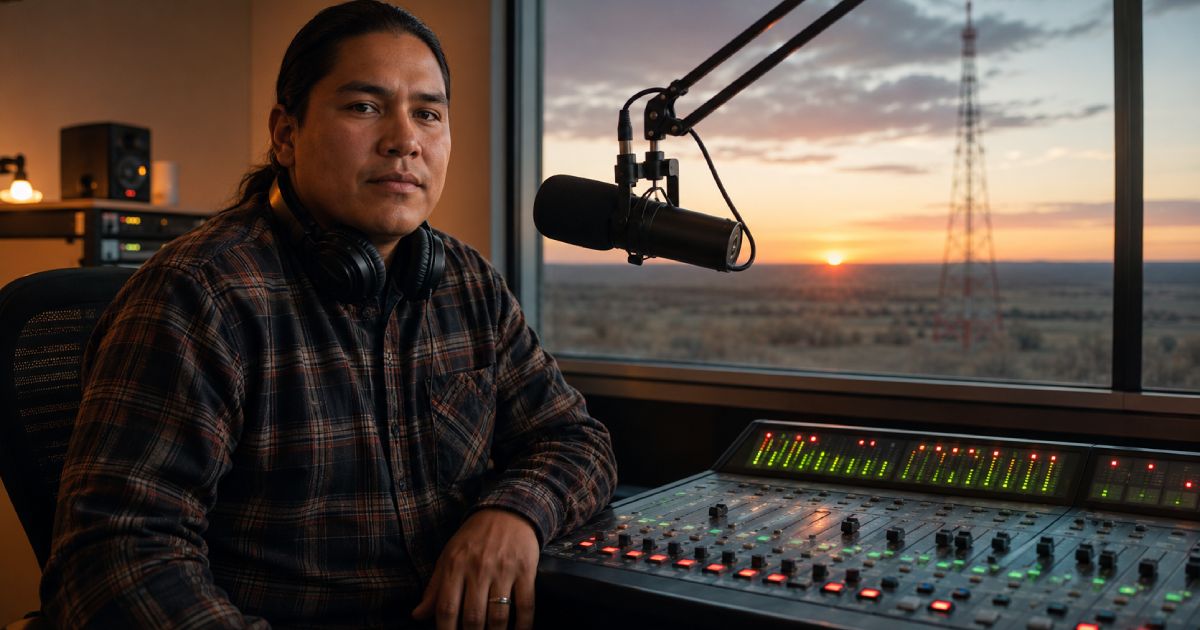
An FM translator is a relatively low-powered station that rebroadcasts the signal of an existing radio station. Translators can extend a station’s coverage into communities where terrain, distance or other obstacles make the original signal difficult to receive.
For Tribal broadcasters, expanded radio coverage can support locally controlled news, Native language programming, cultural education and emergency communication.
Radio remains especially important in rural areas where broadband and cellular coverage may be unreliable. A translator can help an existing Tribal station reach citizens living beyond its primary signal area without requiring the broadcaster to establish an entirely separate full-power station.
The upcoming window covers frequencies reserved for noncommercial educational broadcasting: FM channels 201–220, or 88.1–91.9 MHz.
Who can apply?
The window is not open to organisations seeking to establish a completely new primary radio service. An applicant must already be the licensee or permit holder of one of the following:
- A noncommercial educational FM station
- A noncommercial AM station
- A low-power FM station
The proposed translator must rebroadcast the applicant’s existing primary station.
The FCC has established a general limit of 10 applications per eligible entity. However, Tribal low-power FM applicants covered by the relevant FCC ownership rule may submit no more than four applications nationally. Other low-power FM applicants are generally limited to two.
The restrictions are intended to discourage speculative filings and preserve opportunities for smaller broadcasters. Translator authorisations granted through this window will also be subject to a four-year holding period that restricts changing the primary station or transferring the translator independently.
Full eligibility and application restrictions are detailed in the FCC’s May 28 notice.
What should Tribal broadcasters do now?
Although applications cannot formally be submitted until November 4, prospective applicants will be able to begin entering information into the FCC’s Licensing Management System on August 3.
Applications must be submitted electronically using FCC Form 2100, Schedule 349. No application filing fee is required.
Preparing an application may involve:
- Identifying communities that need improved radio coverage
- Conducting an engineering study
- Selecting an available frequency and transmitter location
- Evaluating construction and operating costs
- Securing Tribal Council or other governing-body approval
- Confirming that the proposed translator will not cause prohibited interference
- Completing the required ownership and comparative-selection information
The FCC encourages applicants to work with a qualified broadcast engineer because channel selection, antenna coordinates and interference calculations are important parts of the application. Errors in the technical information can result in dismissal.
A related filing freeze will begin at 11:59 p.m. Eastern Time on October 2. During the freeze, the FCC will stop accepting certain minor-modification applications involving low-power FM, FM translator and FM booster stations. The freeze will continue until the translator window closes on November 17.
The FCC said it does not anticipate granting another extension, making early preparation especially important.