New Federal Housing Law Opens Opportunities for Tribes but Leaves Major Reform Unfinished
A sweeping federal housing package became law on July 11, creating new opportunities for Tribal governments while stopping short of the dedicated reforms Native housing advocates have sought for years.
The 21st Century ROAD to Housing Act took effect after President Donald Trump neither signed nor vetoed the legislation during the constitutional review period. Congress had approved the measure with broad bipartisan support: the Senate voted 85–5 on June 22, followed by a 358–32 House vote on June 23, according to the official House roll call.
The law contains more than 45 provisions intended to increase housing construction, lower development costs and expand access to financing. Its broader measures include streamlined federal environmental reviews, support for manufactured housing, new home-repair and planning programs, and limits on purchases of single-family homes by large institutional investors.
For Indian Country, however, the result is mixed.
Programs that include Tribal governments
Several new or expanded programs expressly make federally recognized Tribes, Tribal governments or Tribally Designated Housing Entities eligible to participate.
The law creates a Whole-Home Repairs pilot program that can support Tribal initiatives offering grants or forgivable loans for repairs and accessibility modifications. It also establishes competitive planning assistance for Tribal governments seeking to improve permitting, inspection capacity and coordination between housing and transportation development.
Other provisions include:
- An Innovation Fund through which Tribes and local governments may compete for support after demonstrating measurable housing-supply increases.
- Grants to adopt pre-reviewed housing designs, potentially reducing the time and expense required to construct duplexes, townhouses and other affordable homes.
- Expanded authority for the Department of Housing and Urban Development to delegate certain environmental reviews to Tribal governments.
- Greater inclusion of Section 184 Indian Home Loan Guarantee borrowers in housing counseling and foreclosure-prevention efforts.
A detailed section-by-section analysis from the Bipartisan Policy Center confirms that Tribal governments are eligible for several planning, repair and construction-related initiatives.
These provisions could help Tribes address deteriorating homes, administrative bottlenecks and the high cost of developing housing in rural or remote communities. Their ultimate value will depend on how HUD writes the implementing rules, how accessible the application processes are and whether Congress provides sufficient funding.
Program eligibility does not guarantee that every Tribal Nation will receive assistance.
No dedicated Tribal housing title
The law does not contain a standalone Tribal housing title. It primarily includes Tribes as potential participants in nationwide programs designed for state, local and Tribal governments.
More significantly, it does not reauthorize or modernize the Native American Housing Assistance and Self-Determination Act, commonly known as NAHASDA.
Enacted in 1996, NAHASDA consolidated several federal housing programs into block grants administered by Tribes or their designated housing entities. It remains the central federal law supporting affordable housing in many American Indian and Alaska Native communities.
The National American Indian Housing Council welcomed the broader housing law but said its treatment of Indian Country remains incomplete.
“The new law includes Tribes mostly as eligible potential participants in broader programs,” the organization said in its July 11 assessment. It noted that the package contains no NAHASDA reauthorization and does not fully recognize that federal Indian housing programs operate under different land, governance and financing systems.
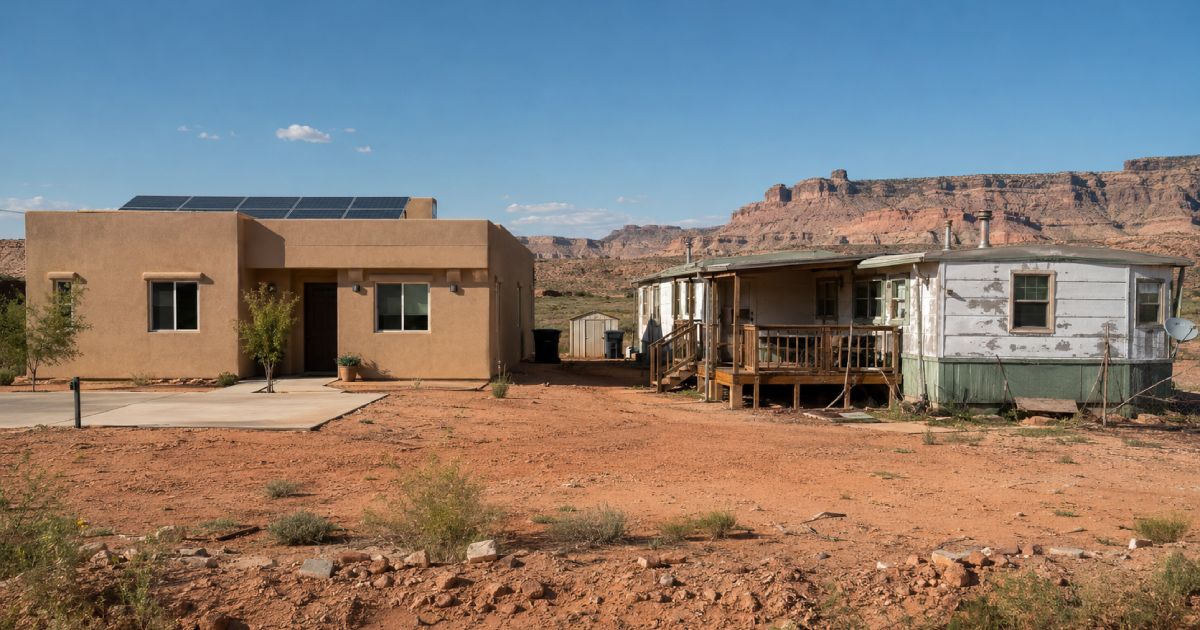
Those distinctions matter. Housing projects on trust land can require coordination among Tribal authorities, federal agencies, lenders and utility providers. Remote locations may have limited construction labor and significantly higher material and transportation costs. Some communities also lack the water, sewer, electricity and road infrastructure needed before homes can be built.
General housing programs may help with parts of those problems, but they do not necessarily address the legal and administrative conditions unique to Tribal lands.
Advocates turn to the NAHASDA Modernization Act
The National American Indian Housing Council is now urging Congress to pass the bipartisan NAHASDA Modernization Act of 2026, introduced as H.R. 8092 and S. 4276.
According to the council’s analysis of the proposed legislation, the measure would expand housing-development tools, improve administrative flexibility and reduce regulatory barriers affecting Tribal housing programs.
The legislation is sponsored by Representatives Troy Downing of Montana and Janelle Bynum of Oregon, along with Senators Lisa Murkowski of Alaska and Brian Schatz of Hawaii.
Native housing organizations estimate that American Indian, Alaska Native and Native Hawaiian communities currently need approximately 68,000 additional homes. Overcrowding, aging properties and inadequate infrastructure remain persistent problems in many communities.
Implementation will determine the impact
The ROAD to Housing Act is now law, but many provisions will require regulations, guidance or funding decisions before Tribes can use them.
Tribal housing departments will need to review forthcoming HUD notices carefully to determine eligibility, matching requirements and whether new programs accommodate development on trust land. Consultation will also be important as agencies decide how Tribal governments participate in environmental-review delegation and competitive grants.
The law represents meaningful movement after decades without comprehensive federal housing legislation. It gives Tribal governments access to several potentially useful tools and acknowledges them throughout the national housing framework.
But it does not replace the need for policy built specifically around Tribal sovereignty, trust lands and the distinct housing systems serving Native communities.
For Indian Country, the new law is an opening—not a complete solution.