MMIW Crisis Explained: Why Indigenous Women Face the Highest Rates of Violence
A national emergency hiding in plain sight
Native women, girls, and Two-Spirit relatives face disproportionate levels of violence—so severe that the Urban Indian Health Institute calls it “a nationwide human-rights crisis.” On some reservations, murder rates for Indigenous women are more than 10 times higher than the U.S. average. Murder is now the third-leading cause of death for Native women across the United States.
The Numbers at a Glance
| Statistic | Source | Why It Matters |
|---|---|---|
| 10× higher murder rate for Native women on some reservations | NIWRC | Demonstrates lethal risk beyond any other demographic. |
| 84 % of Native women experience violence in their lifetimes | Teen Vogue, quoting National Institute of Justice study | Shows that nearly every Indigenous woman is affected. |
| 5,712 missing Native girls/women reported in 2016, only 116 logged in DOJ database | Urban Indian Health Institute | Highlights data-collection failures. |
| 35+ states have at least one active MMIW task force (2025) | DOJ & state reports | Indicates growing—but uneven—government response. |
Why Are Indigenous Women at Such High Risk?
Jurisdictional gaps
- Non-Native perpetrators on reservations often evade prosecution because tribal courts lacked authority until 2013 (and still face limits).
Historical trauma & resource extraction
- Boomtown “man camps” near pipelines and mines correlate with spikes in sex trafficking and assault.
Under-funded policing
- Some tribal police departments patrol areas the size of Delaware with fewer than a dozen officers.
Data invisibility
- Misclassification of race on police forms leads to Indigenous victims being recorded as “White” or “Hispanic,” obscuring the true scale.
Socio-economic factors
- Colonial land dispossession feeds poverty, housing shortages, and dependence on distant law-enforcement, compounding vulnerability.
Milestones in the Fight for Justice
| Year | Action | Impact |
|---|---|---|
| 2013 | Violence Against Women Act (reauthorization) recognizes limited tribal criminal jurisdiction over non-Native domestic-violence offenders. | First modern crack in jurisdiction barrier. |
| 2017 | First National Day of Awareness for MMIW proclaimed for May 5—the birthday of slain North Dakota teen Savanna Greywind. (National Organization for Women –) | Annual rallies & red-dress installations amplify visibility. |
| 2020 | The Invisible Act Commission was launched. | The Invisible Act Commission launched. |
| 2022 | Savanna’s Act was signed into law (Public Law 116-165). | Brings together survivors, tribal leaders, and law enforcement for policy recommendations. |
| 2023–24 | 35+ states establish MMIW/MMIP task forces. | State-level cold-case reviews and training funds begin flowing. |
Grassroots & Cultural Movements
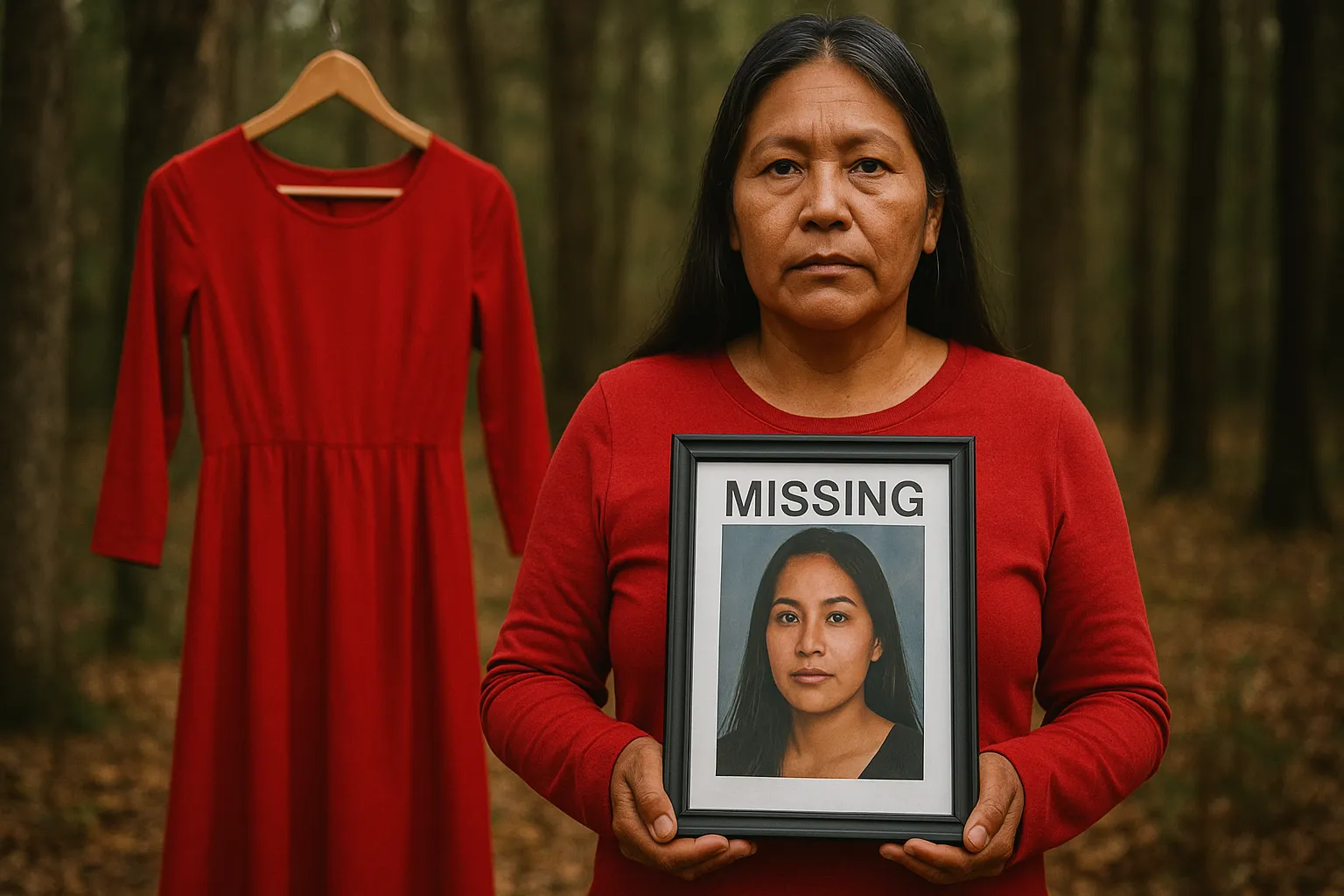
The REDress Project – Métis artist Jaime Black’s empty red dresses hang in public spaces to visualize stolen relatives. Vogue
MMIW ride and run events – Annual horseback relays and 5k runs raise funds for family searches.
Data Sovereignty initiatives – Tribal nations building their own missing-persons databases to bypass federal lag.
Frequently Asked Questions
Why May 5?
May 5 is the birthday of Savanna LaFontaine-Greywind (Spirit Lake/Dakota), whose 2017 murder in Fargo galvanized national outrage and led to Savanna’s Act.
What does the Savanna’s Act do?
It requires the U.S. Department of Justice to develop law-enforcement protocols, train officers to log tribal affiliation, and make annual reports to Congress on missing cases.
Are U.S. states or tribes prosecuting non-Native offenders now?
VAWA 2013 and 2022 give tribes limited power to prosecute certain crimes by non-Natives. More than 30 tribes have adopted this jurisdiction, but gaps remain for crimes like child abuse or trafficking.
How can I help families of the missing?
Donate to Indigenous-run organizations (NIWRC, Native Hope), share missing-person flyers on social media, and support legislation funding tribal victim services.
What role do man camps play?
Temporary workforce housing near oil and mining projects has been linked to higher rates of sexual violence and trafficking in nearby Native communities.
Key Takeaways
- Native women endure the highest homicide and disappearance rates in the United States.
- Jurisdiction gaps, under-resourced policing, and historical trauma fuel the crisis.
- Federal laws—Savanna’s Act, Not Invisible Act—are steps forward but rely on funding and data cooperation to succeed.
- Grassroots actions, red-dress symbolism, and the May 5 National Day of Awareness keep pressure on lawmakers and media to act.
Knowledge is power. Share these facts, uplift survivor voices, and hold officials accountable so that every Native woman and girl can live in safety and dignity.