Historic Native Senate Campaigns Draw Record Fundraising and Outside Spending
Two Native women seeking seats in the U.S. Senate are entering the most expensive phase of the 2026 election cycle, with record fundraising in Alaska and millions of dollars in outside spending shaping Minnesota’s closely watched Democratic primary.
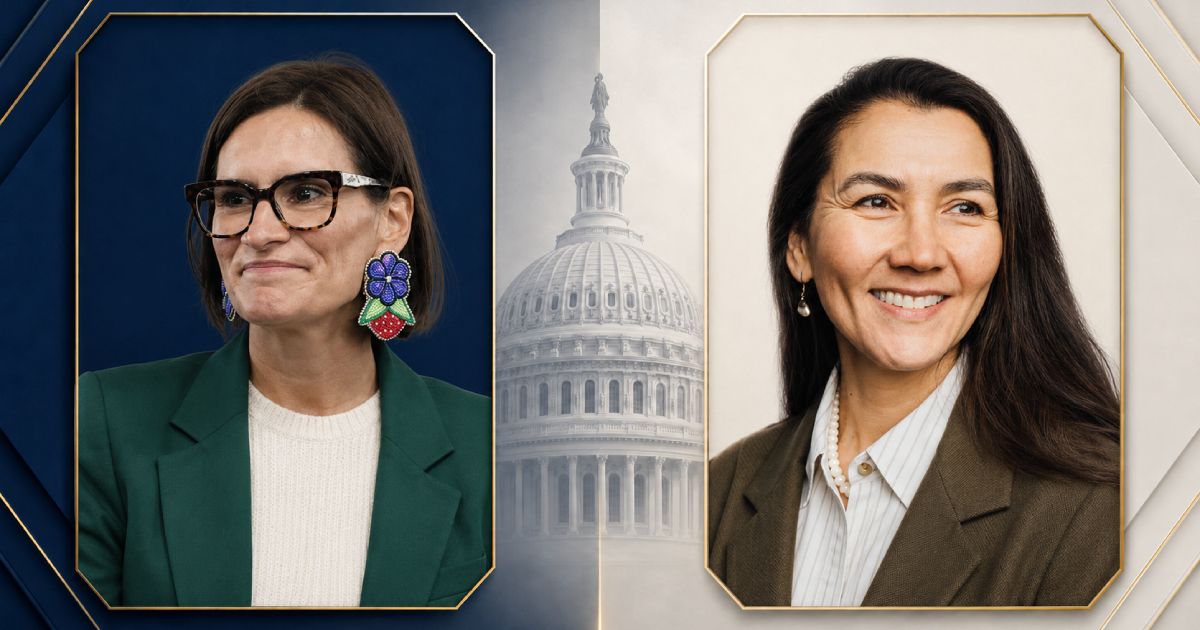
Minnesota Lieutenant Governor Peggy Flanagan, a citizen of the White Earth Nation, is competing for the Democratic-Farmer-Labor nomination in a race increasingly influenced by independent political groups. In Alaska, former U.S. Representative Mary Peltola, who is Yup’ik, reported raising $7 million during the second quarter as she campaigns against Republican Senator Dan Sullivan.
The two campaigns are unfolding differently, but both illustrate how Native candidates seeking historic representation must navigate a political system dominated by large donors, political action committees and increasingly expensive advertising.
No Native American woman has ever served in the U.S. Senate.
Outside groups pour money into Minnesota
Flanagan is seeking the Senate seat being vacated by retiring Senator Tina Smith. Her principal opponent in the Democratic primary is U.S. Representative Angie Craig.
Outside organisations have reportedly spent more than $12 million on the race, much of it on advertising opposing Flanagan or supporting Craig, according to Native News Online. That publication described it as the most expensive primary election in Minnesota history.
Flanagan’s campaign has criticised the spending and called for greater transparency about the organization’s funding of advertisements in the state. The outside groups and Craig’s campaign are legally separate, however, and federal law generally prohibits independent-expenditure organisations from coordinating their spending with a candidate.
The money reportedly comes from groups associated with several major policy interests, including cryptocurrency, healthcare and U.S. policy toward Israel.
One organization involved in the contest is North Star Dawn, which released an advertisement criticising Flanagan’s political record. Flanagan’s campaign disputed its claims and accused the group of using artificially manipulated media.
The description of political spending as “dark money” requires some care. Independent spending is not automatically dark money. Super PACs must disclose their donors to the Federal Election Commission, while certain nonprofit organisations can finance political activity without publicly identifying all of their original funding sources. Money becomes difficult to trace when it passes through such organisations before reaching a group that purchases political advertising.
The Federal Election Commission’s Minnesota Senate page provides candidate reports and independent-expenditure records, but the agency cautions that its summary totals can lag behind newly filed reports. Some spending disclosed through mandatory 24- and 48-hour notices may not immediately appear in its aggregated figures.
For that reason, estimates of total outside spending in the Minnesota race vary significantly depending on which filings, advertisements and organisations are included.
A potentially historic campaign
Flanagan has served as Minnesota’s lieutenant governor since 2019. She secured the state Democratic-Farmer-Labor Party endorsement in May and is campaigning on healthcare, workers’ rights, economic inequality and opposition to corporate influence in politics.
If elected in November, she would become the first Native American woman to serve in the Senate.
That possibility has given the Minnesota race national significance beyond the contest between Flanagan and Craig. Native women have won seats in the House of Representatives, state legislatures and executive offices, but representation in the Senate remains absent.
Flanagan’s supporters argue that outside spending could overwhelm grassroots participation in the primary. Her opponents and the organisations supporting Craig contend that they are exercising their right to promote the candidate they consider more competitive or better aligned with their policy priorities.
Minnesota voters will ultimately determine whether the advertising changes the direction of the primary or generates a backlash against outside involvement.
Peltola reports a $7 million quarter
In Alaska, Peltola’s campaign announced that it raised $7 million during the second quarter of 2026, which it described as a record second-quarter total for an Alaska U.S. Senate candidate.
Approximately 95% of contributions were $100 or less, with an average individual donation of about $50, according to figures released by the campaign and reported by Native News Online.
Because complete second-quarter filings were not yet fully reflected in the FEC’s public summary when the campaign announced the total, the $7 million figure should be understood as a campaign-reported amount pending confirmation through the full federal filing.
Peltola previously raised approximately $8.9 million during the first quarter, demonstrating the national attention surrounding her challenge to Sullivan.
The former congresswoman became the first Alaska Native elected to Congress when she won a 2022 special election for Alaska’s sole House seat. She served until January 2025 after losing reelection to Republican Nick Begich III.
Peltola entered the Senate contest in January 2026. Her campaign has focused on the cost of living, fisheries, food security and the economic challenges facing rural and urban Alaskans.
Sullivan, first elected to the Senate in 2014, is seeking a third term. The race is expected to attract substantial national spending because it could affect control of the closely divided Senate.
Alaska will hold its primary election on August 18, according to the Alaska Division of Elections.
Money does not guarantee victory
Large fundraising totals can help campaigns purchase advertising, employ organisers and reach voters across geographically challenging states. Alaska presents particularly high logistical costs because many communities are accessible only by air or water.
Outside spending can also dominate a race’s public narrative, particularly when advertisements are funded by groups that do not have an obvious connection to the state.
But financial advantages do not guarantee electoral success. Candidates must still persuade voters, build local organisations and respond to policy concerns that may differ substantially between Native Nations and communities.
For Flanagan and Peltola, the financial stakes are accompanied by a broader question of representation. Their campaigns are testing whether Native women can break a barrier that has remained in place throughout the Senate’s history—and how much influence outside political money will have over that decision.