The Haudenosaunee Confederacy: Six Nations, Government and Living Culture
The Haudenosaunee Confederacy is an alliance of six distinct Nations: the Mohawk, Oneida, Onondaga, Cayuga, Seneca and Tuscarora. Its traditional government is guided by the Great Law of Peace, with responsibilities shared among Nations, clan mothers and chiefs.
The Confederacy’s history begins long before the United States and Canada. Its present includes governing councils, language programs, artists, food traditions and international lacrosse teams. Understanding it requires attention to both the alliance and the distinct peoples who sustain it.
In this guide: The name · The Six Nations · Government · Clan mothers · Wampum · Treaties · Communities today · Living cultures
What does Haudenosaunee mean?
The Confederacy’s own account translates Haudenosaunee as “People of the Longhouse.” The longhouse expresses a political relationship: distinct Nations maintaining their own places within a shared home.
“Iroquois Confederacy” is another name readers will encounter. The Confederacy explains that French sources used “Iroquois,” while English sources called the alliance the League of Five Nations. “Six Nations” reflects its later expansion.
This article uses Haudenosaunee, following the Confederacy’s self-description. Iroquois still appears in historical records, scholarship and some organizations’ names. When referring to a particular person, Nation or institution, use its own name and preferred terminology rather than assuming a single preference applies everywhere.
Which Nations belong to the Confederacy?
The founding Nations were Mohawk, Oneida, Onondaga, Cayuga and Seneca. Tuscarora became the sixth member in the early eighteenth century; the Smithsonian’s Haudenosaunee educational guide gives 1722 as the joining date.
The traditional Grand Council’s 50 chiefly titles belong to the five founding Nations. The table follows the east-to-west order of those five Nations, with Tuscarora listed separately as the later member. It describes council roles, not all present-day communities or governments.
| Nation | Founding chiefly titles | Traditional role |
|---|---|---|
| Mohawk | 9 | Eastern Door; Older Brothers bench |
| Oneida | 9 | Younger Brothers bench |
| Onondaga | 14 | Central council fire; Firekeepers bench |
| Cayuga | 10 | Younger Brothers bench |
| Seneca | 8 | Western Door; Older Brothers bench |
| Tuscarora | No additional titles among the original 50 | Sixth Nation; leaders participate with the Younger Brothers |
Sources: Onondaga Nation’s descriptions of the Hiawatha Belt and council structure. The Tuscarora’s later admission did not create a new set of founding titles; it did make them a member Nation.
When was the Confederacy founded?
No single modern calendar year should be presented as universally settled. The Confederacy describes its formation as belonging to time immemorial and says the exact date is unknown. Its history is carried through oral tradition, wampum and continuing institutions.
Haudenosaunee tradition credits the Peacemaker and his helper Aionwatha, often called Hiawatha in English, with bringing the founding Nations into peace. The Smithsonian’s public teaching materials also recognize Jigöhsahsë’, a woman who helped persuade the Nations to unite. These accounts place women’s leadership within the foundation of the alliance.
How the Great Law of Peace shapes government
The Great Law of Peace establishes a framework for shared deliberation and responsibility. Member Nations retain councils for internal affairs, while the Grand Council considers matters affecting the Confederacy. That division allows collective action while preserving the Nations’ distinct identities. The Confederacy explains this arrangement.
Onondaga Nation describes a three-bench process for reaching consensus:
- Firekeepers: Onondaga leaders bring an issue before the council.
- Older Brothers: Mohawk and Seneca leaders discuss it and convey their position.
- Younger Brothers: Oneida, Cayuga and Tuscarora leaders consider that position and respond.
- Further deliberation: Proposals move between the benches until agreement is reached, including agreement by the Firekeepers.
This is a simplified account of Onondaga’s public explanation. The aim is to reach one mind through discussion. A larger number of chiefly titles does not mean a Nation can simply outvote another. Chiefs must hear other positions and reconsider proposals when agreement is absent.
Council language needs context: some broad descriptions group Onondaga with the elder Nations, while the three-bench procedure distinguishes Onondaga’s Firekeeper role. Those descriptions operate at different levels; they should not be confused with a tally of competing voting blocs.
Clan mothers exercise political authority
Clan mothers hold substantive leadership responsibilities. In Onondaga Nation’s account, a clan mother selects the chief who represents her clan and can remove him after warnings if he fails to represent its people. The chief and clan mother work together.
This makes leadership accountable to relationships and responsibilities. The role is not simply honorary, and chiefly titles should not be understood as permission to rule without the community. Clan mothers also provide guidance within families and help sustain cultural knowledge across generations.
The traditional clan system is matrilineal: clan identity follows the mother. Onondaga’s public account of clan relationships explains that members of the same clan across different Nations are regarded as relatives, and that clans have obligations to help one another.
Matrilineal describes descent; it does not, by itself, explain every aspect of power or family life. Specific clans, titles and protocols differ among communities. An Onondaga explanation should therefore be identified as such, rather than applied automatically to every Mohawk, Oneida, Cayuga, Seneca or Tuscarora family.
Wampum records law, agreements and relationships
Wampum belts and strings use worked shell beads to carry and recall significant words, agreements and responsibilities. Onondaga Nation describes wampum as a living record: speakers use it to remember an agreement and its continuing history. Wampum can also be associated with leadership titles.
Calling wampum only “money” misses these legal, diplomatic and social functions. Its meaning depends on the words and responsibilities connected to it; a photograph of a belt cannot communicate that entire relationship.
What the Hiawatha Belt represents
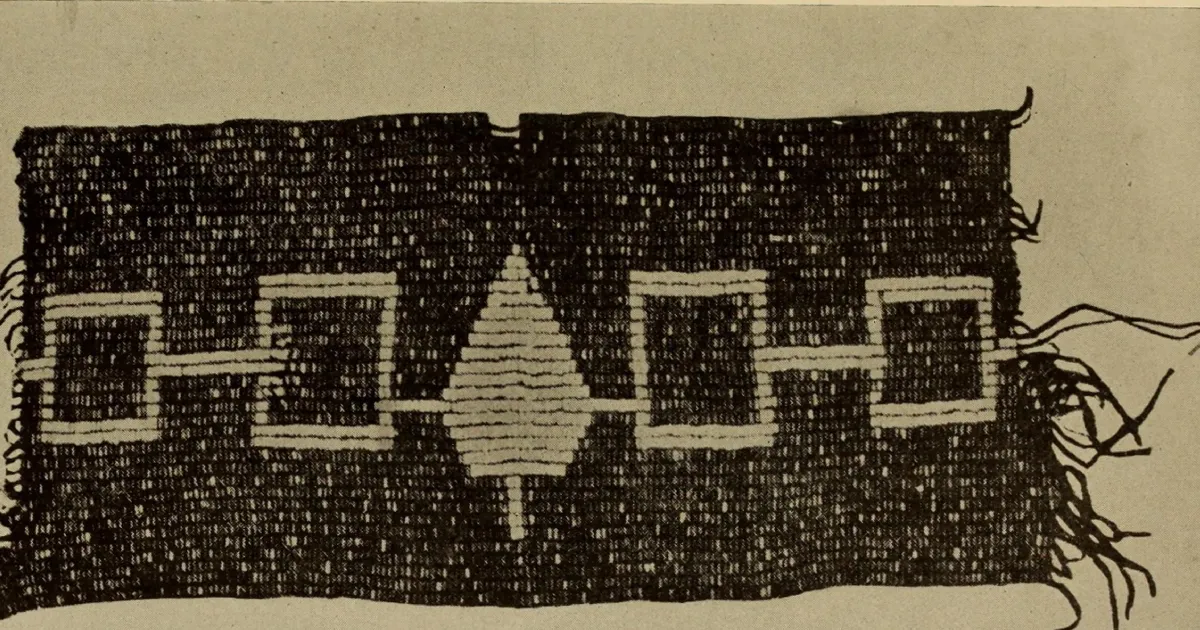
The Hiawatha Belt records the union of the five founding Nations. Its linked symbols represent Mohawk, Oneida, Onondaga, Cayuga and Seneca, with Onondaga represented by the central Tree of Peace. The design also appears on the Haudenosaunee flag.
Five symbols do not mean that the Confederacy has only five Nations today. They refer to the original union, which preceded Tuscarora membership. The belt’s historical subject and the alliance’s present membership answer different questions.
Treaties, conflict and the continuing political relationship
Haudenosaunee diplomacy includes agreements with other Indigenous Nations, European powers and the United States. Treaties must be understood alongside the conflicts and land losses surrounding them.
During the American Revolution, the Nations faced intense pressure and differing alliances. In 1779, the Sullivan-Clinton campaign, ordered by George Washington, destroyed Haudenosaunee towns and crops. The Smithsonian’s account of Haudenosaunee lands and the Revolution traces that destruction, displacement and subsequent land loss. A history of consensus government should not erase the strains imposed by war and colonization.
The Treaty of Canandaigua, 1794
The Treaty of Canandaigua, signed on November 11, 1794, confirmed peace between the United States and the Six Nations. Onondaga Nation’s treaty overview explains its importance for the political relationship and provides a link to the full text.
The National Museum of the American Indian’s description of the surviving treaty identifies the marks of Cornplanter, Red Jacket and Handsome Lake, as well as George Washington’s signature. The document’s signatures should not be read as evidence that everyone signed together at the negotiations.
Onondaga Nation maintains that these treaty commitments remain binding. Their significance continues in discussions of sovereignty, territory and obligations between governments. The meaning of a particular provision must be considered in its own context; one treaty does not provide a single answer to every present-day land, border or jurisdictional question.
The Confederacy and present-day governments are not interchangeable
Haudenosaunee communities live in both the United States and Canada. Their institutions and histories differ. Onondaga maintains its traditional council; Six Nations of the Grand River in Ontario includes people of all six Nations and has an elected council. The Haudenosaunee Confederacy Chiefs Council is a distinct institution.
Keep three levels separate when reading news or historical accounts:
- The Confederacy: the relationship and shared institutions of the Six Nations.
- A member Nation: a distinct people with its own history, identity and responsibilities.
- A specific community or government: the named institution or place involved in an event, decision or dispute.
“Six Nations” can refer to the alliance collectively or to Six Nations of the Grand River in a particular context. Always establish which is meant. Likewise, a statement from one council should not automatically be attributed to every Haudenosaunee government or citizen.
For broader background on the distinction between land, communities and governing authority, see our guide to Native American reservations.
Living cultures: languages, food, arts and lacrosse
The Six Nations share relationships without forming one undifferentiated culture. Specific examples make that diversity clearer than a single list of supposed universal customs.
Languages and learning
Mohawk, Oneida, Onondaga, Cayuga, Seneca and Tuscarora are distinct languages. Community-led teaching takes different forms. The Oneida Nation in Wisconsin publishes language lessons with text and audio and describes its language revitalization program. Six Nations of the Grand River describes support for Cayuga, Mohawk and Onondaga immersion learning on its community website.
These efforts connect learners with community knowledge and create opportunities to use languages in daily life. Follow the relevant language program’s spelling, recordings and guidance rather than treating one Nation’s words as interchangeable with another’s.
Foodways and the Three Sisters
Corn, beans and squash are widely known as the Three Sisters. Onondaga’s food history places them within a broader food system that also includes fishing, hunting and gathering. It emphasizes sharing food and taking only what is needed, with future generations in mind.
Art and contemporary creativity
At the Seneca Nation-operated Onöhsagwë:de’ Cultural Center, collections include raised beadwork, basketry, carving, pottery and contemporary artwork. The museum describes both techniques passed through families and artists’ individual approaches. Naming artists and their Nations recognizes creative work as the work of people, rather than an anonymous “tribal style.”
Lacrosse and Haudenosaunee nationhood
Lacrosse carries significance beyond competition. Onondaga Nation’s public explanation describes it as a gift from the Creator and a medicine game. The Haudenosaunee Nationals compete internationally under the sanction of the Haudenosaunee Grand Council, bringing the connection between sport and nationhood to a global audience.
Learning respectfully from Haudenosaunee sources
Start with material that Nations, cultural centers and community educators have chosen to share publicly. Name the source and the community it represents. An invitation to learn from a public exhibit or educational page is not permission to photograph ceremonies, reproduce every cultural item or describe private teachings.
When visiting, follow the host community’s guidance about access, photography and participation. When writing, distinguish a historical account from a current practice, and avoid presenting one community’s experience as the voice of all six Nations.
The Haudenosaunee Confederacy continues through the work of its people: deliberating, teaching, creating and maintaining relationships. Its history is essential to understanding that work, and its contemporary institutions and cultures deserve the same attention.
Sources checked September 24, 2026. This overview draws on publicly shared Confederacy, Nation, cultural institution and Smithsonian resources linked throughout the article.