Muscogee (Creek) Nation: Removal, Government and Sovereignty Today
The Muscogee (Creek) Nation is a sovereign Tribal Nation headquartered in Okmulgee, Oklahoma, with ancestral homelands in the Southeast. Its government operates courts and public services, supports education and language work, and exercises authority rooted in its own political history and treaties with the United States.
Removal is central to that history, but it does not define the whole Nation. Muscogee people rebuilt communities in Indian Territory, maintained their political identity through federal interference and continue governing today. The 2020 Supreme Court decision in McGirt v. Oklahoma recognized the continued existence of their reservation.
Muscogee, Mvskoke and Creek: understanding the names
Mvskoke is a name used by Muscogee people for themselves and their language. “Creek” is an English colonial name. The National Park Service’s Ocmulgee history account traces it to “Ochese Creek,” an English name for the Ocmulgee River, and the communities living nearby.
The Nation’s Constitution uses Muscogee (Creek) Nation. Its government also presents itself publicly as the Muscogee Nation, while Mvskoke appears throughout language and cultural institutions. These names should be used with attention to the source and community involved. This profile focuses on the Oklahoma-based Nation, rather than every community with Muscogee heritage.
Southeastern homelands and a confederacy of towns
Before removal, Muscogee homelands included large areas of present-day Alabama and Georgia. The Smithsonian’s Muscogee removal resource connects that history to the region’s Mississippian mound-building societies and includes Muscogee perspectives on relationships with ancestral places.
Political life developed through a confederacy of Tribal towns. Towns retained local leadership and authority while participating in wider diplomatic, military and cultural relationships. The confederacy brought together communities with distinct histories; it should not be imagined as a uniform population governed exactly like a modern centralized state.
Agriculture, trade and relationships among towns sustained Muscogee life. European colonization introduced new trade pressures, disease and competing imperial demands. Later U.S. expansion intensified pressure on both Muscogee land and the ability of towns and leaders to govern their own affairs.
Land cessions and forced removal
The Creek War of 1813–1814 began amid divisions within Muscogee society and expanded into war involving the United States and its Native allies. Following the defeat of Red Stick forces, the United States demanded enormous land cessions, including land belonging to Muscogee people who had fought alongside U.S. forces.
The Indian Removal Act of 1830 increased pressure to move west. Under the 1832 Treaty of Cusseta, the Muscogee ceded their remaining lands east of the Mississippi while obtaining provisions for individual land selections and the possibility of remaining. Those provisions did not protect many families from fraudulent transactions, dispossession and settler violence.
Large-scale forced removal followed renewed conflict in 1836. The NPS Muscogee removal account (PDF) describes thousands being sent to Indian Territory during 1836 and 1837. Families traveled with inadequate supplies and faced illness, hunger, exposure and death.
Muscogee removal, part of the broader history often called the Trail of Tears, involved different groups, routes and dates. The Smithsonian’s account of the journeys covers removals from 1827 through 1838 by land and water. Some people remained in the Southeast or dispersed elsewhere. One route or departure date cannot represent every family’s experience.
Rebuilding in Indian Territory
In Indian Territory, Muscogee people reestablished homes, farms, towns and councils. Rebuilding involved both practical survival and the continuation of relationships and responsibilities carried from their homelands.
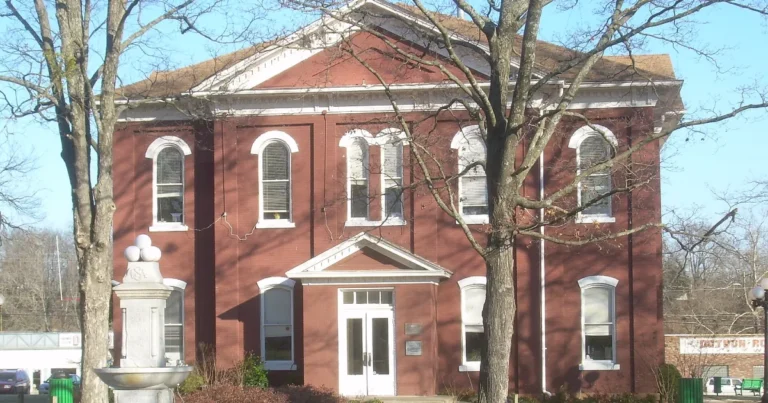
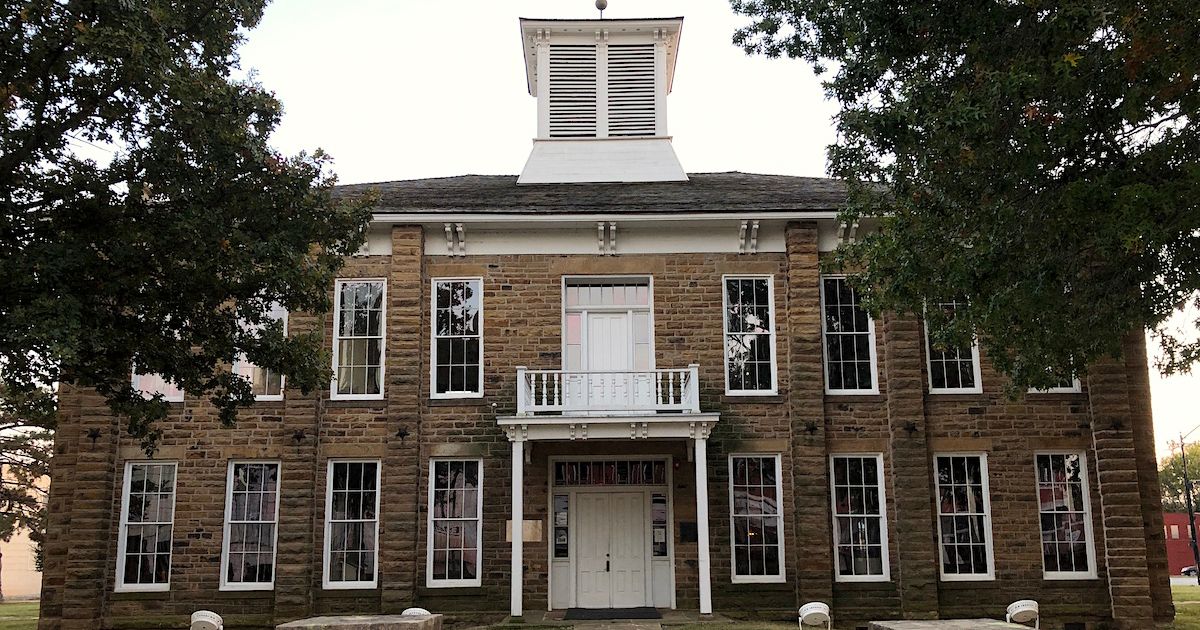
Okmulgee became the national capital. The Creek Council House’s history describes the stone building’s service as the seat of government from 1878 until Oklahoma statehood in 1907. It housed the principal chief, judicial and education offices, and the National Council’s legislative chambers. The Nation regained possession and control of the building in 2010.
Federal policy continued to restrict Muscogee government and landholding. Allotment divided communally held lands into individual parcels. The Curtis Act of 1898 abolished Tribal courts, and other measures curtailed legislative authority. As the Supreme Court later explained in McGirt (PDF), these serious intrusions did not amount to congressional disestablishment of the reservation.
The Nation’s continuity matters: Oklahoma statehood did not erase Muscogee people, their government or their treaty relationship with the United States.
How the Muscogee Nation government works today
Citizens ratified the modern Constitution on October 6, 1979. It establishes executive, legislative and judicial branches with separate responsibilities. The Muscogee Nation Supreme Court describes itself as the final interpretive authority on Mvskoke law.
| Branch | Responsibilities and structure |
|---|---|
| Executive | Citizens elect a principal chief and second chief. The principal chief leads the executive branch and administers government responsibilities under the Constitution and Muscogee law. |
| Legislative | The National Council enacts laws and appropriates funds. It has 16 elected representatives, with two seats associated with each of eight districts. |
| Judicial | The Nation’s courts decide matters within their jurisdiction. The Supreme Court hears appeals and interprets Muscogee law; its seven justices are nominated by the principal chief and confirmed by the National Council. |
As of October 2026, the Nation’s principal chief is David W. Hill, identified on its executive branch page. His July 25, 2026 State of the Nation address reported on health facilities, government infrastructure, economic development and language initiatives.
What McGirt v. Oklahoma decided
On July 9, 2020, the U.S. Supreme Court held in McGirt v. Oklahoma that Congress had not disestablished the Muscogee Reservation. The case asked whether the reservation remained Indian country for purposes of the federal Major Crimes Act.
Jimcy McGirt was an enrolled Seminole Nation citizen prosecuted by Oklahoma for crimes committed within the Muscogee Reservation. Because the reservation continued to exist, the state lacked jurisdiction to prosecute the offenses at issue under the governing federal law. The decision addressed the proper prosecuting authority, not a determination of innocence.
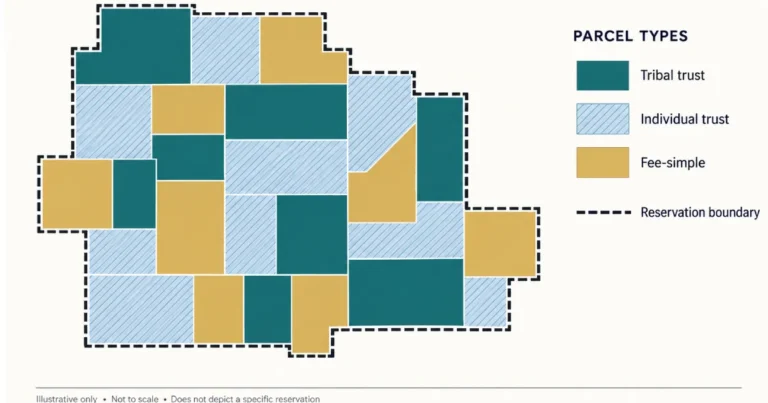
The ruling recognized an existing reservation. It did not transfer privately owned homes to the Nation, expel non-Native residents or give Tribal government unlimited authority over everyone within the boundaries. Reservation status and ownership of a particular parcel are different legal questions.
The distinction also explains why McGirt cannot answer every question about taxation, regulation or civil litigation. Those issues depend on the applicable laws, treaties, precedents and facts.
Criminal jurisdiction after McGirt
A later Supreme Court decision is essential to understanding the current framework. In Oklahoma v. Castro-Huerta (2022, PDF), the Court held that the federal government and the state have concurrent jurisdiction to prosecute crimes committed by non-Indians against Indians in Indian country. “Concurrent” means that both governments can have prosecutorial authority.
Castro-Huerta did not disestablish the Muscogee Reservation. It addressed a different jurisdictional question from the one presented in McGirt. The terms “Indian” and “non-Indian” here describe legal status under federal Indian law, not simply a person’s self-identification or appearance.
Determining jurisdiction requires attention to the location, offense, legal status of the accused and victim, and any applicable statutory exceptions. Tribal jurisdiction has its own rules. Readers should therefore avoid blanket claims that Oklahoma has no authority anywhere on the reservation or that every case involving a Native person belongs exclusively in Tribal court.
Treaty rights and Freedmen citizenship
Treaty obligations also shape questions within the Nation. Muscogee history includes the enslavement of people of African descent. The Treaty of 1866 addressed abolition and citizenship rights for Freedmen and their descendants.
On July 23, 2025, the Nation’s Supreme Court ruled in Citizenship Board v. Grayson that the 1866 treaty governed the citizenship claims of Rhonda Grayson and Jeffrey Kennedy. It rejected the constitutional “by blood” restrictions at issue. The decision appears in the court’s final-opinions collection; Associated Press reporting explains the ruling and its treaty basis.
Implementation became a separate dispute. In July 2026, Grayson and Kennedy filed a federal lawsuit seeking recognition and enforcement of their citizenship rights, as Mvskoke Media reported. The ruling and the later filing should not be presented as proof that every enrollment issue has been resolved. Citizenship information must be read alongside court decisions and current official procedures.
Public services, language and education
The Nation’s government serves people through health care, housing, public safety, education and other programs. Its Department of Housing provides housing opportunities and repair assistance for eligible citizens. The Lighthorse Tribal Police Department describes its mission as protecting the Nation and the communities within its jurisdiction. Programs have their own eligibility and service rules.
The Mvskoke Language Program offers learning materials, recorded lessons, grammar resources and opportunities to connect with speakers and teachers. These resources support the continued use and transmission of the language.
In his 2026 State of the Nation address, published by Mvskoke Media, Chief Hill reported that the Mvskoke Opunvkv Liaison Program had held its second annual Speakers Symposium. He also described expanding language classes and discussions about an immersion program for young children. These were reports of ongoing work and planning, rather than a claim that language revitalization was complete.
The College of the Muscogee Nation places Native culture, language and self-determination within its educational mission. It serves Tribal and non-Tribal students while connecting academic study with Muscogee values and community needs.
Public resources offer ways to learn, but families, ceremonial grounds and Tribal towns retain their own protocols for sharing knowledge. Visitors and writers should follow the guidance of the people responsible for a place or practice.
Muscogee sovereignty takes shape in legislation, court decisions, public services and the transmission of language between generations. Understanding the Nation requires attention to that daily work as well as the history of removal and the treaties that remain part of its political life.
Sources reviewed October 15, 2026. Leadership and legal developments are dated where relevant.