The Red Power Movement: Native Activism, Treaty Rights and Self-Determination
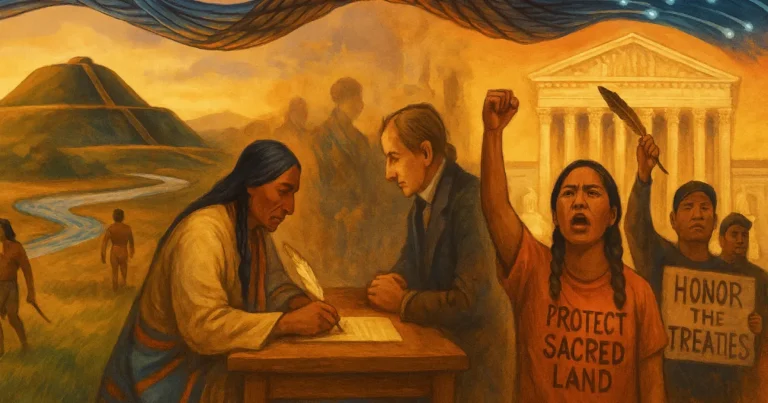
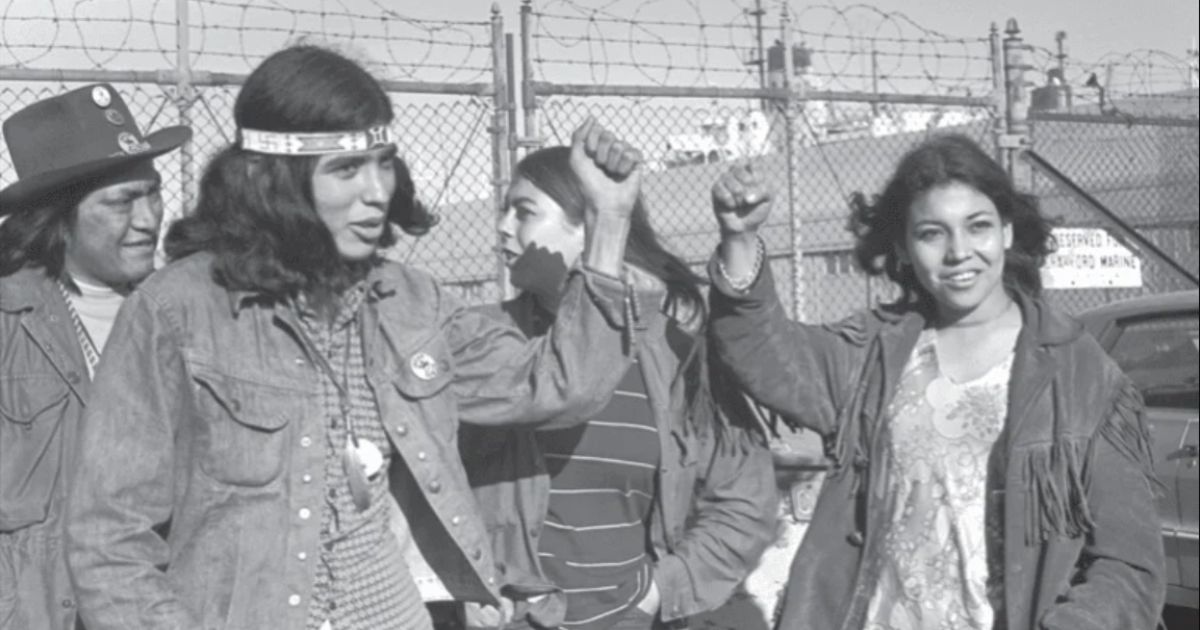
The Red Power movement was a broad wave of Native activism that gained national visibility during the 1960s and 1970s. Participants pressed for treaty enforcement, land rights, community control and Tribal self-determination while challenging police abuse, discrimination and federal policies that undermined Native governments.
Red Power was larger than the American Indian Movement, or AIM. It included students, fishers, families, community organizers and intertribal coalitions using occupations, marches, schools and other forms of political action. Its history also intersects with Tribal diplomacy, litigation and legislative campaigns whose participants did not necessarily share one label or strategy.
A central demand went beyond equal treatment as individuals: Tribal Nations had political authority and treaty relationships that the United States was obligated to respect. Activists sought recognition and enforcement of those rights, not the invention of sovereignty by a protest movement.
Why the Red Power movement emerged
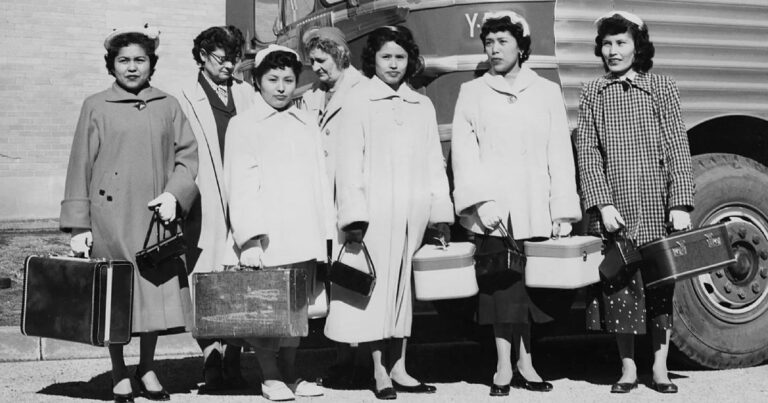
The movement grew amid resistance to termination and urban relocation. Termination laws targeted the federal relationship with particular Tribal Nations, affecting recognition, land protections and services. Relocation programs encouraged Native people to move to cities for employment and training. These were related policies with different effects, as our guide to termination and urban relocation explains.
Native resistance preceded the best-known occupations. Families and Nations challenged dispossession through their own institutions, legal work and organizing. In cities, community networks connected people from different Nations around housing, employment, education and policing. Moving to an urban area did not erase a person’s relationships with a Nation or homeland.
The National Indian Youth Council, established in 1961, helped bring a new generation into national organizing. The Albuquerque Museum’s NIYC history traces its beginnings to Native student networks and the American Indian Chicago Conference, followed by its involvement in the 1964 fish-ins in Washington state.
Fish-ins asserted treaty rights
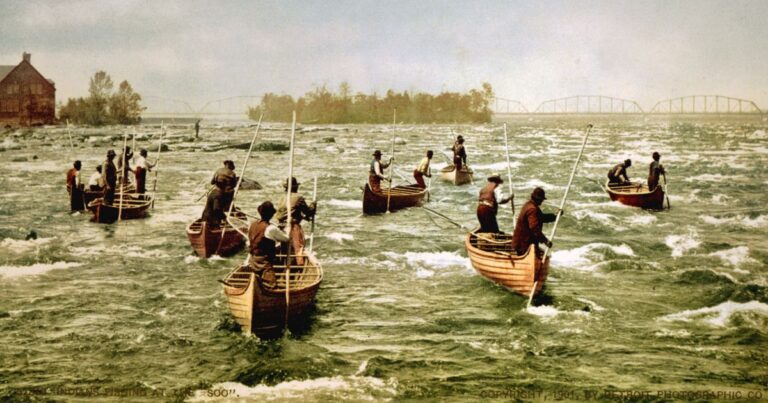
Pacific Northwest fishers challenged state restrictions by exercising fishing rights their Nations had reserved in treaties. Organizations including the National Indian Youth Council and the Survival of American Indians Association helped organize public demonstrations. The name “fish-in” echoed the sit-ins associated with the Black freedom movement, while the claims rested on specific Native treaty relationships.
The Northwest Indian Fisheries Commission’s treaty-rights history (PDF) describes arrests, confiscated equipment and violence against Native fishers. Nisqually activist Billy Frank Jr. was among those whose repeated resistance kept the issue visible. Fishing was a livelihood and a community responsibility as well as a political act.
Litigation also mattered. In 1974, Judge George Boldt’s decision in United States v. Washington affirmed treaty fishing rights, including a right to half the harvestable salmon passing through the treaty Tribes’ usual and accustomed fishing places. The ruling established a basis for Tribal and state co-management. It concerned particular treaties and fisheries, not a nationwide entitlement for every Native person.
AIM began with urban community organizing
AIM formed in Minneapolis in 1968. The Minnesota Historical Society’s overview identifies George Mitchell, Dennis Banks and Clyde Bellecourt among the early organizers. Participants addressed discrimination, police treatment, unemployment and poor housing, connecting those conditions to wider questions of land, treaty rights and federal policy.
Community patrols and survival schools were part of AIM’s work alongside the confrontations that attracted national coverage. Education and neighborhood organizing made community control a practical project, not simply a slogan.
AIM became one of Red Power’s most visible organizations, but it did not speak for every Native person or government. Tribal leaders, activists and residents could share concerns about federal policy while disagreeing over tactics, leadership and the consequences of an occupation.
Indians of All Tribes occupied Alcatraz
Indians of All Tribes organized the sustained Alcatraz occupation, which began on November 20, 1969, and ended on June 11, 1971. Native students and other Bay Area organizers, including Richard Oakes, played central roles. The action followed shorter occupations in 1964 and earlier in November 1969.
The occupiers sought the former federal prison island for a Native university, cultural center and museum. The National Park Service’s history of the occupations also documents the daily work of maintaining a community on the island, including schooling, child care and food preparation.
The roughly 19-month occupation did not secure title to Alcatraz. It nevertheless became a national symbol of intertribal organizing and demands for land and self-determination. Its influence on AIM and other activists does not make it an AIM operation.
The Trail of Broken Treaties carried demands to Washington
In 1972, a coalition of Native organizations organized the Trail of Broken Treaties caravans to Washington, D.C. Its Twenty Point Position Paper called for renewed treaty-making, enforcement of existing treaties, land restoration, reversal of termination and improvements in health, housing and education.
After canceled meetings and inadequate lodging intensified tensions, participants occupied the Bureau of Indian Affairs building for about a week in November. The National Park Service’s account describes both the coalition’s demands and the confrontation. Damage to the building and the handling and removal of records became sources of controversy, often overshadowing the proposals.
The administration agreed to consider the Twenty Points but subsequently rejected the demands. The action nonetheless made a clear political argument: federal obligations to Native Nations were current responsibilities requiring action.
Wounded Knee in 1973 involved local and national conflicts
On February 27, 1973, Oglala Lakota activists and AIM members occupied Wounded Knee on the Pine Ridge Reservation. They challenged Tribal chairman Richard Wilson’s administration and the federal government’s treatment of Native people. The National Museum of the American Indian’s archival record dates the 71-day occupation through May 8, 1973.
The confrontation joined local disputes over leadership and accountability with broader demands concerning treaties and federal power. Violence and community divisions were central to the experience. Oglala Lakota people did not hold a single position on the occupation, and national coverage could obscure the perspectives of residents living through it.
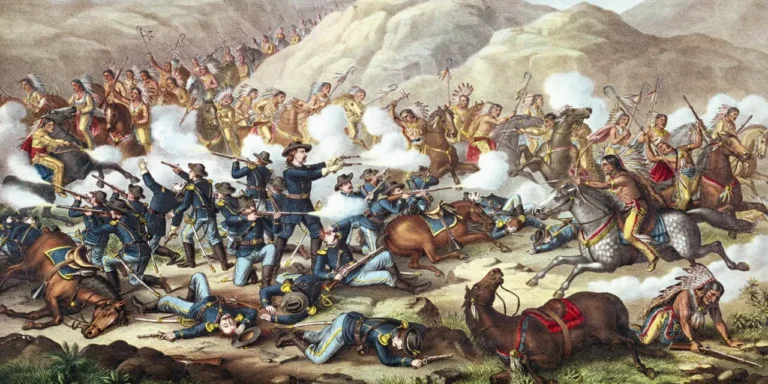
The 1973 Wounded Knee occupation must be distinguished from the 1890 Wounded Knee Massacre. The shared place name connects two different events; treating them as interchangeable confuses both histories.
Organizing also changed laws and institutions
Women’s leadership and work outside the major occupations belong in this history. Menominee organizer Ada Deer helped lead Determination of Rights and Unity for Menominee Shareholders, known as DRUMS, in the campaign to reverse termination. The Library of Congress account of Deer’s advocacy describes years of organizing and lobbying. The Menominee Nation’s historical timeline records the Restoration Act’s signing on December 22, 1973. This was a specific Nation’s campaign, not an automatic consequence of a national protest.
The broader federal policy shift also had several causes. Native advocacy, Tribal diplomacy, litigation and political decisions overlapped with direct action. In his July 8, 1970, message to Congress, President Richard Nixon rejected forced termination and advocated greater Native control of federally supported programs. That message preceded the Trail of Broken Treaties and Wounded Knee, and did not itself repeal every termination law.
The Indian Self-Determination and Education Assistance Act of 1975 authorized Tribal governments and eligible Tribal organizations to contract to administer certain federal programs. The Indian Health Service’s legislative history explains how the law expanded options for operating health services. Later amendments developed additional self-governance arrangements.
In its congressional findings, the law recognized that prolonged federal control had denied Native people an effective role in programs affecting their communities. It did not grant Nations their underlying sovereignty, restore every lost acre or settle every treaty dispute.
Red Power timeline: selected milestones
These dates provide reference points, not fixed boundaries for a movement rooted in earlier resistance and continued organizing.
| Date | Milestone |
|---|---|
| 1961 | The National Indian Youth Council is established. |
| 1964 | Fish-ins draw wider attention to treaty fishing rights in Washington state. |
| 1968 | AIM forms in Minneapolis. |
| November 20, 1969–June 11, 1971 | Indians of All Tribes sustains the Alcatraz occupation. |
| July 8, 1970 | Nixon calls for self-determination without forced termination. |
| 1972 | The Trail of Broken Treaties brings a coalition to Washington, D.C. |
| February 27–May 8, 1973 | Oglala Lakota activists and AIM members occupy Wounded Knee. |
| December 22, 1973 | The Menominee Restoration Act becomes law. |
| 1974 | The Boldt decision affirms treaty fishing rights in western Washington. |
| 1975 | The Indian Self-Determination and Education Assistance Act becomes law. |
The movement’s continuing significance
Red Power helped bring sovereignty, treaty enforcement and Native control of community institutions into wider public debate. Its legacy includes organizing networks, educational work and a stronger insistence that Native people define their own political futures.
That history includes achievements, losses and unresolved disagreements. Remembering the movement accurately means looking beyond its most photographed confrontations to the Nations, families and local organizations whose work made change possible—and whose rights were never confined to a single decade.