Senate Confirms Klamath Citizen Mark Cruz to Lead Indian Health Service
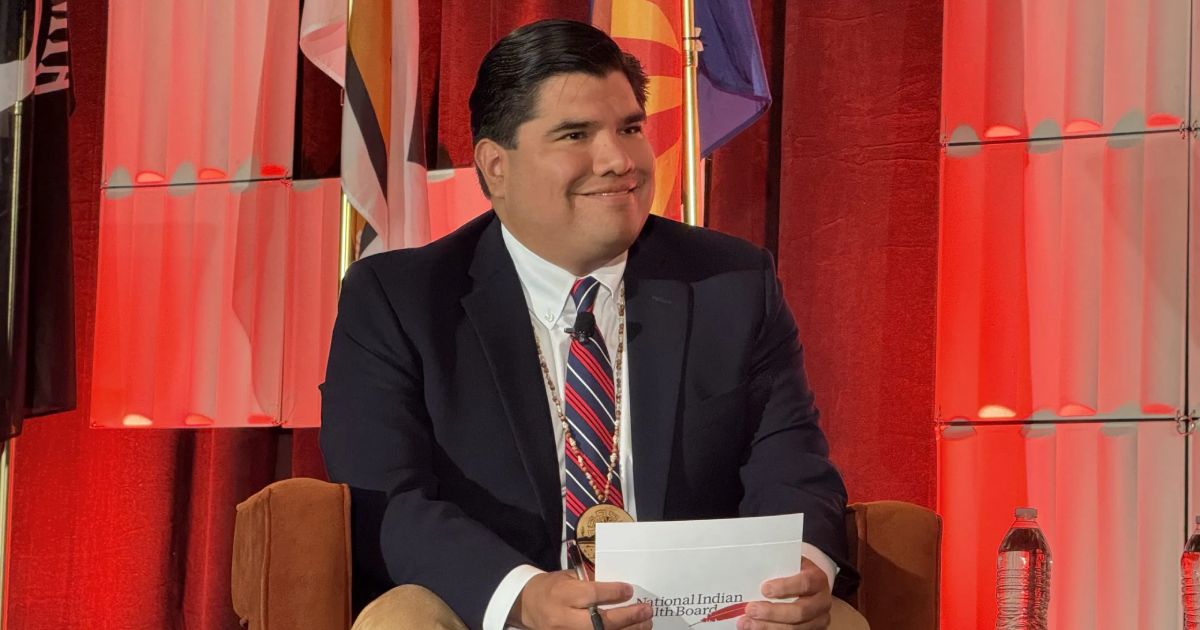
The U.S. Senate has confirmed Mark Cruz, a citizen of the Klamath Tribes, to lead the Indian Health Service during a period of severe workforce, infrastructure and funding challenges.
Cruz was confirmed August 7 as part of an en bloc package containing 74 presidential nominees. The package passed 51–47 shortly before the Senate began its August recess.
He will serve a four-year term as the 12th director of the Indian Health Service, an agency within the Department of Health and Human Services that provides or funds care for approximately 2.8 million American Indian and Alaska Native people.
Senate Indian Affairs Committee Chair Lisa Murkowski, R-Alaska, said Cruz demonstrated an understanding of the challenges facing Tribal communities and had committed to improving Native health outcomes, strengthening consultation and increasing accountability within the agency. Her official confirmation announcement was issued immediately after the August 7 vote.
A health system with longstanding gaps
Cruz inherits a system that includes federal facilities as well as health programs administered by Tribal Nations and urban Indian organizations.
The IHS says it serves members of 574 federally recognized Tribal Nations through hospitals, health centers, health stations and other programs. The agency’s own service overview estimates that its patient population represents about 2.8 million of the approximately 3.7 million American Indian and Alaska Native people eligible for IHS-funded services.
Those figures do not mean that every eligible person receives comprehensive care. Access varies widely by location, available personnel, facility capacity and whether a patient can obtain outside specialty care through the Purchased/Referred Care program.
Workforce shortages remain particularly serious. A Government Accountability Office assessment found that the IHS provider vacancy rate reached approximately 30 percent in fiscal 2024. Reported vacancy rates included 38 percent for physicians, 34 percent for nurses, 37 percent for dentists and 43 percent for mental-health providers.
Vacancies can mean longer travel, fewer appointments and greater dependence on temporary clinicians. They can also increase pressure on Tribal health programs that recruit from the same limited pool of professionals.
Many IHS facilities are also decades old. Aging buildings, inadequate space and deferred maintenance can limit the equipment and services available even where personnel have been recruited.
Cruz brings policy experience rather than a clinical background
Cruz is an Oregonian with experience in federal and Tribal policy. During President Donald Trump’s first administration, he led the Bureau of Indian Affairs’ Office of Indian Energy and Economic Development.
Since June 2025, he has served as senior Tribal health adviser to Health and Human Services Secretary Robert F. Kennedy Jr. Cruz is expected to retain that advisory role while leading the IHS, according to Associated Press reporting on his confirmation.
That dual position could give the IHS director more direct access to the HHS secretary. It could also raise questions about workload, independence and how Cruz will handle disagreements between Tribal health priorities and broader departmental policy.
Unlike many previous IHS directors, Cruz does not come from a clinical or hospital-administration background. His record is centered on law, economic development, federal policy and government relations.
His leadership will therefore depend partly on whether he can build an effective clinical and administrative team, retain career employees and translate Tribal consultation into decisions about budgets, staffing and services.
Commitments made during confirmation
During his June 24 nomination hearing, Cruz told the Senate Indian Affairs Committee that his personal connection to the IHS would shape his approach.
“My family, my friends and my tribal community will live with the consequences of the work I do for decades to come,” he said in his written testimony.
The National Indian Health Board says Cruz committed during the confirmation process to supporting advance appropriations for the IHS. Advance appropriations give the agency some protection against disruptions when Congress does not enact a federal spending bill before the beginning of a fiscal year.
He also committed to fully funding contract-support costs and leases under Section 105(l) of the Indian Self-Determination and Education Assistance Act. Those obligations arise when Tribal Nations assume responsibility for federal programs or provide facilities used to administer them.
Other commitments identified in the board’s confirmation statement include reducing staff vacancies, improving Purchased/Referred Care, completing the agency’s longstanding priority-facilities list and modernizing electronic health records.
Cruz has described consultation as “a process, not an event,” indicating that Tribal governments should have opportunities to shape decisions before they become final.
Whether the agency consistently applies that principle will be an important test of his tenure. Tribal leaders have repeatedly objected when federal departments treat informational meetings or requests for written comments as substitutes for government-to-government consultation.
Funding decisions will shape the four-year term
Congress provided approximately $8 billion for the IHS in fiscal 2026. The administration has proposed approximately $9.1 billion for fiscal 2027, according to the National Indian Health Board’s analysis, but that request is not an enacted appropriation.
Tribal health advocates maintain that considerably more is required to satisfy unmet medical, behavioral-health, public-health, construction and sanitation needs.
The director cannot independently determine the agency’s budget. Cruz can, however, influence what HHS requests, how the agency explains unmet needs to Congress and how available money is distributed and administered.
His confirmation fills an important leadership position, but it does not by itself resolve the conditions facing Native patients. The consequential work begins with the next budget, the next consultation and the next decision about whether a vacant position, deteriorating clinic or delayed referral receives attention.