Cherokee Nation: History, Government, Culture and Life Today
Cherokee Nation is a federally recognized, sovereign Tribal Nation headquartered in Tahlequah, Oklahoma. It is the largest of the three federally recognized Cherokee Tribal governments, with more than 470,000 citizens worldwide, according to the Nation’s official media kit reviewed in September 2026. Its government makes laws, operates public services and supports Cherokee language and cultural life.
Understanding Cherokee Nation today starts with three distinctions: Cherokee ancestry and Tribal citizenship are different; the three Cherokee governments are separate sovereign Nations; and a reservation boundary does not describe who owns every parcel of land inside it.
Cherokee Nation at a glance
| Topic | Key fact |
|---|---|
| Capital and government headquarters | Tahlequah, Oklahoma |
| Citizens | More than 470,000 worldwide, as reported in the official media kit reviewed September 7, 2026 |
| Reservation | Approximately 7,000 square miles in northeastern Oklahoma, covering all or parts of 14 counties |
| Government | Separate executive, legislative and judicial branches |
| Principal Chief | Chuck Hoskin Jr., as of September 7, 2026 |
| Deputy Principal Chief | Bryan Warner, as of September 7, 2026 |
| Citizenship basis | Documented direct descent from an eligible ancestor on the Cherokee Nation Dawes Rolls; no minimum blood quantum |
What are the three federally recognized Cherokee Tribes?
The three federally recognized Cherokee Tribal governments are Cherokee Nation, the United Keetoowah Band of Cherokee Indians in Oklahoma and the Eastern Band of Cherokee Indians. Each has its own government and citizenship laws. Source: Cherokee Nation’s common questions.
| Tribal government | Government location | Official source |
|---|---|---|
| Cherokee Nation | Tahlequah, Oklahoma | Cherokee Nation |
| United Keetoowah Band of Cherokee Indians in Oklahoma | Tahlequah, Oklahoma | United Keetoowah Band |
| Eastern Band of Cherokee Indians | Cherokee, North Carolina | Eastern Band of Cherokee Indians |
Their shared Cherokee heritage does not make their governments interchangeable. A citizenship rule, election result or service offered by one Nation should be identified by that Nation’s name. This article focuses on Cherokee Nation in Oklahoma.
Where is the Cherokee Nation Reservation?
The Cherokee Nation Reservation is in northeastern Oklahoma. It covers roughly 7,000 square miles and includes all or parts of Adair, Cherokee, Craig, Delaware, Mayes, McIntosh, Muskogee, Nowata, Ottawa, Rogers, Sequoyah, Tulsa, Wagoner and Washington counties. Tahlequah is its capital. Use the Nation’s official reservation maps to explore the boundary; the Nation advises checking directly with the relevant department when a specific address affects service eligibility.
Reservation status and land ownership answer different questions. Land within the boundary has different forms of ownership and legal status, including Tribal trust land, individual restricted land and fee-simple property. The Nation’s Real Estate Services department explains these categories. A map of the reservation should therefore not be read as a map of land owned entirely by the Tribal government.
What did McGirt and Hogner decide?
The U.S. Supreme Court’s 2020 decision in McGirt v. Oklahoma concerned the Muscogee (Creek) Reservation. In 2021, the Oklahoma Court of Criminal Appeals applied its analysis in Hogner v. State and upheld the finding that Congress had established the Cherokee Reservation and had not disestablished it. Source: Hogner v. State, 2021 OK CR 4.
The court recognized the reservation’s continuing existence in a criminal-jurisdiction case. Describing the ruling as the creation of a new reservation would misstate what it decided. The decision also should not be treated as a complete guide to which government has authority over every activity within the boundary.
Cherokee Nation history: Homelands, removal and rebuilding
Southeastern homelands and the fight to remain
Cherokee homelands extended across a broad area of the Southeast long before Oklahoma became the Nation’s governmental center. Successive land cessions reduced that territory. In 1827, Cherokee Nation adopted a written constitution while resisting Georgia’s attempts to impose state authority.
In Cherokee Nation v. Georgia (1831), the Supreme Court dismissed the Nation’s suit for lack of original jurisdiction, describing it as a “domestic dependent nation.” In Worcester v. Georgia (1832), the Court held that Georgia could not impose its laws within Cherokee territory. The litigation did not prevent forced removal. Source: Cherokee Nation’s official history.
The Treaty of New Echota and the Trail of Tears
A small group signed the 1835 Treaty of New Echota without authority under Cherokee Nation law. The United States nevertheless used it to pursue removal. In 1838, troops rounded up Cherokee people into camps; forced journeys to Indian Territory continued into 1839, using several land and water routes. Sources: Cherokee Nation history, National Park Service Trail of Tears history.
Cherokee Nation estimates that about 4,000 people died in camps or along the Trail of Tears. Survivors joined Cherokees who had moved west earlier. In 1839, the Nation adopted a new constitution and rebuilt its government in what is now Oklahoma. In Tahlequah, rebuilding included schools, businesses and the Cherokee Advocate, which began publishing in English and Cherokee in 1844. Source: Cherokee Nation history.
Allotment, statehood and renewed self-government
Federal allotment policies divided collectively held land into individual parcels and restricted the Nation’s governmental authority. Oklahoma statehood in 1907 and federal interference further obstructed self-government, but Cherokee political life continued.
In 1970, Congress authorized popular election of the principal chiefs of the Five Tribes. Cherokee Nation adopted a new constitution in 1976; citizens approved the constitution that replaced it in 2003. These changes strengthened institutions that citizens continue to use today. Source: Cherokee Nation history.
How does Cherokee Nation government work?
Cherokee Nation’s government has three separate branches. As of September 7, 2026, Principal Chief Chuck Hoskin Jr. and Deputy Principal Chief Bryan Warner lead the executive branch. The chief and deputy chief are elected by citizens and may serve up to two consecutive four-year terms. Source: Cherokee Nation executive branch.
The branches have distinct responsibilities:
- Executive: Carries out Cherokee Nation laws and administers government operations.
- Legislative: The 17-member Council of the Cherokee Nation makes laws. Fifteen councilors represent reservation districts, and two represent citizens living outside the reservation.
- Judicial: The Nation’s courts interpret and apply Cherokee law.
Sources: Executive branch, legislative branch and government overview.
Representation for citizens outside the reservation is one way the government serves a population spread beyond northeastern Oklahoma. The Nation also operates the Cherokee Nation Marshal Service, which works with more than 90 other law-enforcement offices through cross-deputization agreements. Sources: Council representation, Cherokee Nation public-safety overview.
Cherokee Nation citizenship: Ancestry, documentation and rights
Cherokee Nation determines citizenship under its own laws and treaty obligations. Applicants must document direct descent from an eligible person listed on the Cherokee Nation portion of the Dawes Rolls, including the Cherokee Freedmen rolls. The Nation does not require a minimum blood quantum. Sources: Tribal Registration, citizenship FAQ.
Family stories, appearance and consumer DNA ancestry estimates do not, by themselves, establish citizenship. A family-history question asks who someone’s ancestors were; a citizenship application asks whether documented relationships meet a sovereign Nation’s legal requirements.
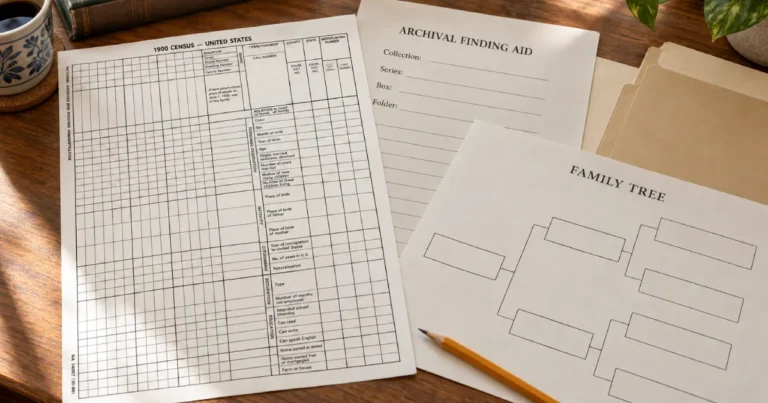
To begin researching eligibility, use the Tribal Registration office’s application and genealogy resources. Build the documented chain between generations and follow the office’s current requirements for submitting records. An ancestry estimate cannot replace that documentary connection.
Cherokee Freedmen and full citizenship
Cherokee history includes the enslavement of people of African descent. During the Civil War, Cherokees fought on both sides; the National Council repudiated its Confederate treaty and abolished slavery under Cherokee law in 1863. The Treaty of 1866 established citizenship rights for Cherokee Freedmen and their descendants. Source: Cherokee Nation history.
Those rights were contested in later citizenship disputes. A federal district court affirmed equal citizenship rights under the treaty in 2017, and the Cherokee Nation Supreme Court affirmed their binding force in 2021. Freedmen descendants have full citizenship rights, including eligibility to hold office. Sources: U.S. Department of the Interior’s account of the rulings, Cherokee Nation’s current history.
Cherokee language and culture today
Sequoyah’s syllabary and language revitalization
Sequoyah completed his Cherokee writing system in 1821. It is a syllabary: its characters represent syllables, rather than the individual sounds represented by letters in an alphabet. His work made reading and writing in Cherokee possible. Sources: National Park Service on Sequoyah, Cherokee Nation Language Department.
Today, the Language Department works to sustain everyday spoken Cherokee and develop proficient second-language speakers. Its programs include community and online classes, translation, the Cherokee Language Master Apprentice Program, immersion education, and digital resources such as fonts and keyboards. These efforts connect language learning with homes, classrooms and technology. Source: Cherokee Nation Language Department.
On August 17, 2026, Cherokee Nation celebrated the opening of the School of the Seven Directions in Tahlequah. The $30 million immersion middle school was designed for grades four through eight, with the new school year scheduled to begin August 27. The campus expands the places where students can learn through Cherokee. Source: Cherokee Nation’s opening announcement.
“Every time we create another place where Cherokee can be spoken, we strengthen the language,” Councilor Codey Poindexter said in the Nation’s announcement. Read more about the School of the Seven Directions and Cherokee immersion education.
Living traditions and cultural boundaries
Cherokee cultural life includes food, games, art, clothing, language and community relationships. The Nation’s public cultural guidance discusses foods such as bean bread and grape dumplings, games including stickball and Cherokee marbles, and ribbon shirts and tear dresses worn for some special occasions. Individuals and families participate in different ways. Source: Cherokee Nation cultural guidance.
Public cultural education does not make every practice public. The Nation asks people to respect traditional practitioners’ decisions about sharing beliefs and ceremonies. Visitors and writers should follow hosts’ instructions and ask before photographing, recording or reproducing cultural material. Source: Cherokee Nation cultural guidance.
Life in Cherokee Nation today: Services, work and community
Cherokee Nation’s government provides health care, education, housing assistance, child and family services, infrastructure, environmental stewardship and public safety. Its department directory connects visitors to these services. For citizens seeking a particular program, the responsible department is the place to check current requirements.
The Nation and its businesses are major employers in northeastern Oklahoma. Business activity includes gaming, manufacturing and federal contracting, alongside the work of government departments. Program funding comes from several sources: business dividends, grants and Tribal revenues, including motor-fuel and vehicle-tag programs. Gaming is one part of that funding picture. Sources: Cherokee Nation overview, Cherokee Federal, program-funding FAQ.
These institutions make sovereignty part of daily life: citizens elect representatives, families use services, teachers develop new speakers, and government and business decisions shape employment and community investment.
Learning about Cherokee Nation from Cherokee sources
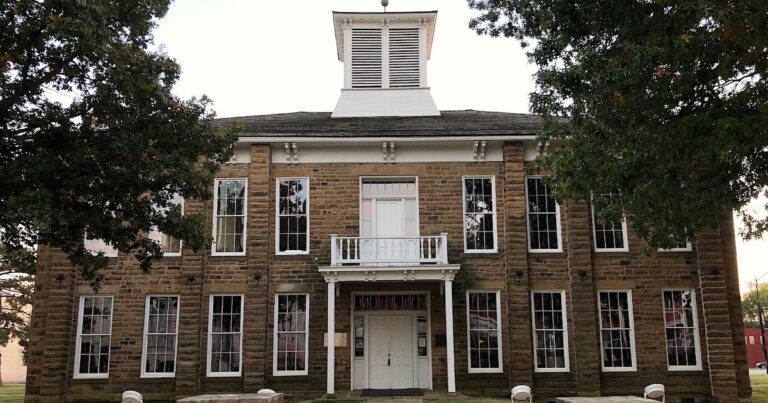
For a public introduction in Tahlequah, the Cherokee National History Museum occupies the historic Cherokee National Capitol building and presents history through the present day. Its website also offers a virtual tour.
For current information, begin with the Nation’s government departments, official announcements and cultural institutions. Use each of the three Cherokee governments’ own sources for questions about its citizens, laws or programs. This keeps contemporary Cherokee authority and community life at the center of the story.
Frequently asked questions about Cherokee Nation
Is Cherokee Nation the same as the Cherokee people?
Cherokee Nation is one specific sovereign Tribal government. Cherokee people are also citizens of the United Keetoowah Band and the Eastern Band of Cherokee Indians. These are three separate federally recognized governments.
Do all Cherokee Nation citizens live in Oklahoma?
No. Cherokee Nation has citizens around the world. Its Council includes two representatives for citizens living outside the reservation. Citizenship and residence within the reservation are different matters.
Can a DNA test qualify someone for Cherokee Nation citizenship?
A consumer DNA ancestry result cannot replace the documented line of descent required for citizenship. Applicants should follow Cherokee Nation’s current registration requirements; there is no minimum blood-quantum requirement.
Can someone be both a Cherokee Nation citizen and a U.S. citizen?
Yes. Cherokee Nation citizenship is compatible with U.S. citizenship. The Nation’s government describes its citizens as holding dual citizenship.
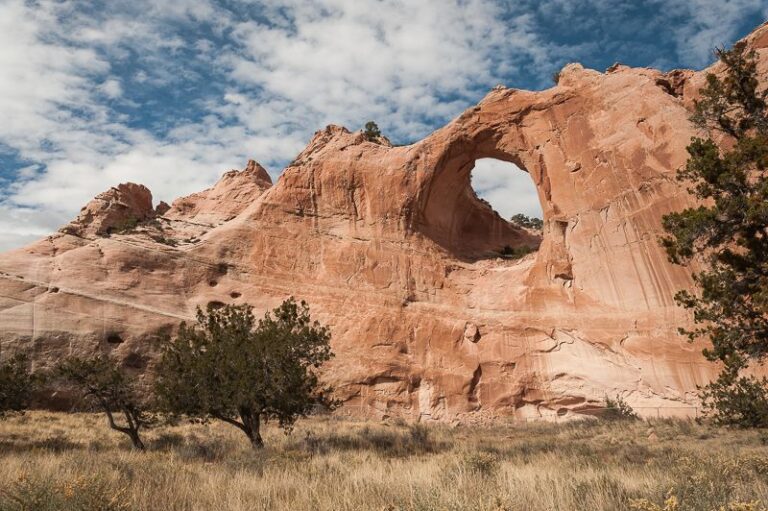
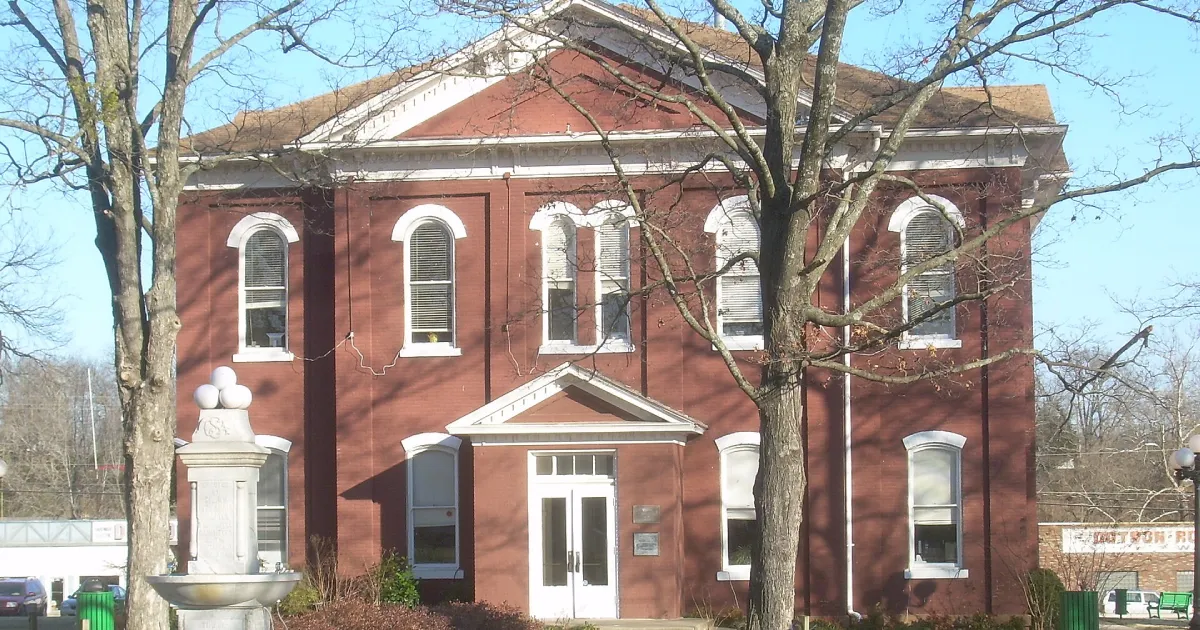
Image by Caleb Long, CC BY-SA 2.5, https://commons.wikimedia.org/w/index.php?curid=8047601
Source note: This independent overview draws on Cherokee Nation government information, the other Cherokee governments’ official websites, a published court opinion, and federal historical and administrative sources. Current leadership, enrollment reporting and the school announcement were checked on September 7, 2026.