Ojibwe Nations: Anishinaabe Names, Homelands, Treaty Rights and Life Today
Ojibwe people belong to many distinct Nations and communities across the Great Lakes region and beyond, in both the United States and Canada. They share historical, linguistic and cultural relationships, but there is no single government that speaks for all Ojibwe people.
Readers may encounter Ojibwe, Ojibwa, Ojibway, Chippewa and Anishinaabe. These names overlap in some contexts without being interchangeable everywhere. Understanding who is speaking and which Nation, language variety or treaty is involved, is the starting point for learning accurately.
Ojibwe, Anishinaabe and Chippewa: what the names mean
Ojibwe is a name for a people and their language. Ojibwa and Ojibway are other established spellings. Chippewa is an anglicized form associated with Ojibwe and remains in many official government names and treaty documents. The Smithsonian’s Leech Lake Ojibwe educational resource introduces these related usages.
| Name | How it is used | What to keep in mind |
|---|---|---|
| Ojibwe / Ojibwa / Ojibway | Names and spellings used for Ojibwe people and language. | Preserve a community’s preferred spelling rather than imposing one form everywhere. |
| Chippewa | A name used by many Nations, including in official names and legal records. | Do not replace it in a Nation’s name on the assumption that it is obsolete. |
| Anishinaabe | A self-name used by Ojibwe people and, in broader contexts, other related peoples. | Its scope depends on the community, speaker and context; it does not always mean only Ojibwe. |
The Anishinabek Nation in Ontario, for example, is a political advocacy organization representing 39 member First Nations. It traces its history to the Confederacy of Three Fires, involving Ojibway, Odawa and Potawatomi Nations. That relationship does not make Odawa and Potawatomi communities simply other names for Ojibwe, nor does this organization represent everyone who identifies as Anishinaabe.
Follow the name a person or government uses. The Sault Ste. Marie Tribe of Chippewa Indians and the Mille Lacs Band of Ojibwe both retain the wording they use publicly. A preferred public name and a name appearing in a historical treaty or legal record may differ; explain the distinction when it matters.
Many Nations, with different government arrangements
Minnesota’s Tribal Nations directory identifies seven Anishinaabe Nations: Bois Forte, Fond du Lac, Grand Portage, Leech Lake, Mille Lacs, Red Lake and White Earth. Each has a distinct community and government. These are Minnesota examples, not a complete list of Ojibwe Nations.
Their relationships also show why “separate” should not be confused with “unconnected.” The Minnesota Chippewa Tribe brings together Bois Forte, Fond du Lac, Grand Portage, Leech Lake, Mille Lacs and White Earth within a shared constitutional structure. Its constitution addresses membership and governing bodies. Red Lake is not one of its six member bands. It would therefore be misleading to describe every Minnesota Ojibwe Nation as having an entirely separate citizenship framework.
Canadian First Nations operate within a different constitutional, statutory and treaty setting. U.S. federal-recognition categories do not describe their status. Indigenous Services Canada distinguishes registration under the Indian Act from First Nation membership: depending on the arrangement, a membership list may be maintained by the First Nation or by the federal department. Some First Nations use the term citizenship.
For an individual inquiry, consult the relevant Nation’s enrollment, membership or citizenship office. Broad ancestry, residence and political citizenship are different questions. Our Native American ancestry research guide explains the distinction for researchers working with U.S. records.
Homelands extend beyond reservation and reserve boundaries
The Great Lakes are central to Ojibwe homelands, with communities and language varieties extending into other regions of the United States and Canada. Lakes, rivers, forests, fisheries, maple stands and manoomin waters connect places through family histories and continuing responsibilities.
Modern borders and land classifications describe only part of those relationships. A reservation or reserve is not the full extent of a people’s ancestral homeland. A ceded territory is an area addressed by a land-cession treaty; depending on the treaty and subsequent law, Nations may retain harvesting rights there even outside their present reservation boundaries.
Ojibwe people live on reservations and reserves, in nearby towns, in cities and elsewhere. An urban address does not make someone less Ojibwe. Likewise, a map of government offices cannot establish citizenship, define every community’s homeland or tell a visitor where harvesting is authorized.
Ojibwemowin is a living language with regional varieties
The Ojibwe language is often called Ojibwemowin or Anishinaabemowin. It belongs to the Algonquian language family, with regional differences in pronunciation, vocabulary and writing conventions. Those differences should not be treated as errors.
The Ojibwe People’s Dictionary focuses on Central Southwestern Ojibwe spoken in Minnesota, Wisconsin and Canadian border-lakes communities. It provides speaker recordings and examples, but it is not a dictionary of every Ojibwe variety. Learners should pay attention to the community and speaker associated with an entry.
Language loss did not happen in isolation. The Sault Tribe’s public language history describes punishment for speaking the language in mission schools and the lasting effects on families. Revitalization involves rebuilding opportunities to learn, speak and pass knowledge between generations.
Today, the Sault Tribe’s Anishinaabemowin Department offers live virtual lessons, recorded lessons and language material for its newspaper. Its program connects language use with sovereignty. Check the department’s current information for participation details, and use resources connected to the dialect and teachers of the community you are learning with.
Treaty rights remain living legal relationships
Treaties made by Ojibwe Nations are not one uniform agreement. Their parties, territories, promises and later legal histories differ. In the U.S. Great Lakes region, the treaties of 1836, 1837, 1842 and 1854 are important to particular hunting, fishing and gathering rights; they are not a checklist of rights held identically by every Ojibwe Nation.
The Great Lakes Indian Fish and Wildlife Commission (GLIFWC) supports 11 member Ojibwe Tribes in exercising treaty rights and managing resources in ceded territories in Wisconsin, Michigan and Minnesota. These are rights the Nations retained in treaty negotiations, not privileges later granted by a state. GLIFWC assists member governments; it is not a government for all Ojibwe people.
A specific example is the Mille Lacs Band’s 1837 Treaty relationship. Its treaty guide explains the continued right to hunt, fish and gather in the ceded territory and the U.S. Supreme Court’s 1999 decision affirming those rights. The Band also describes conservation rules, licensing and enforcement. Treaty harvesting is regulated; a broad ancestry claim does not authorize someone to fish or gather wherever they choose.
Canada has separate treaty histories. The 1850 Robinson-Huron Treaty, for example, was made between Ojibwe leaders and the Crown. Its continuing importance extends beyond harvesting: in its 2024 Robinson Treaties judgment, the Supreme Court of Canada held that the Crown had breached its duty to diligently implement the provision concerning increases to treaty annuities, or recurring payments. That decision concerns particular treaty obligations, not a single rule for all First Nations.
Anyone seeking to exercise harvesting rights should consult their Nation’s current guidance about eligibility, territory, permits, seasons, conservation rules and access. A historical overview cannot determine permission at a particular location.
Manoomin stewardship connects land, knowledge and government
Manoomin, often called wild rice in English, offers one example of how food, environmental care and community responsibilities remain connected. Its importance cannot be reduced to a historical food list.
White Earth Nation’s Wild Rice program manages harvest seasons, seeds lakes and works with other agencies on decisions affecting manoomin. GLIFWC’s manoomin program draws on rice chiefs, elders, Tribal natural-resource departments and research to understand the plant’s health and support decisions.
These are examples of contemporary stewardship by named institutions. Our Traditional Ecological Knowledge guide explores why environmental knowledge is connected to community authority and responsibilities, rather than being information outsiders can freely extract.
Learning about Ojibwe life today
Ojibwe Nations govern, educate, provide services, manage resources and support cultural work in the present. Citizens also build lives through families, jobs, businesses, literature, art, music and media. No person’s life can be summarized by a treaty date, a traditional practice or a single account of hardship.
To keep learning:
- Start with a named Nation. Read its public history, government information, news and educational materials.
- Match the source to the question. Use language teachers for language learning and the relevant government’s guidance for citizenship or treaty-rights questions.
- Keep context attached. Preserve preferred names and identify the community behind a teaching, program or work of art.
- Respect limits on sharing. Public educational material is not permission to reproduce private ceremonies, family knowledge or restricted recordings.
Specificity makes the picture fuller: related peoples and languages, distinct governments, different treaty relationships, and communities shaping their futures on their own terms.
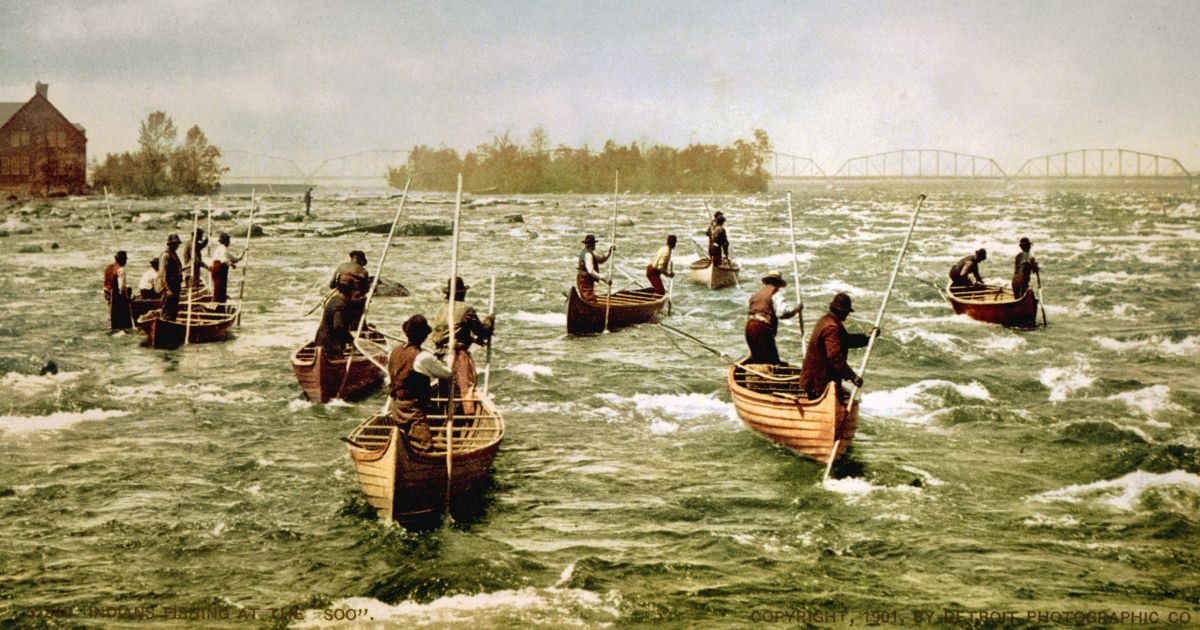
Image By Detroit Publishing Co. – This image is available from the United States Library of Congress’s Prints and Photographs divisionunder the digital ID cph.3g10207.This tag does not indicate the copyright status of the attached work. A normal copyright tag is still required. See Commons:Licensing., Public Domain, https://commons.wikimedia.org/w/index.php?curid=11160571