Guide to Native Arts: From Navajo Weaving to Haudenosaunee Beadwork
Native American art traditions are rooted in centuries of cultural, spiritual, and ecological connection. Far from being static relics, these art forms remain vibrant today, evolving while preserving ancestral knowledge. This guide highlights the history, symbolism, and living legacy of key Indigenous arts across North America.
Navajo Weaving (Diné Textile Arts)
History and Meaning
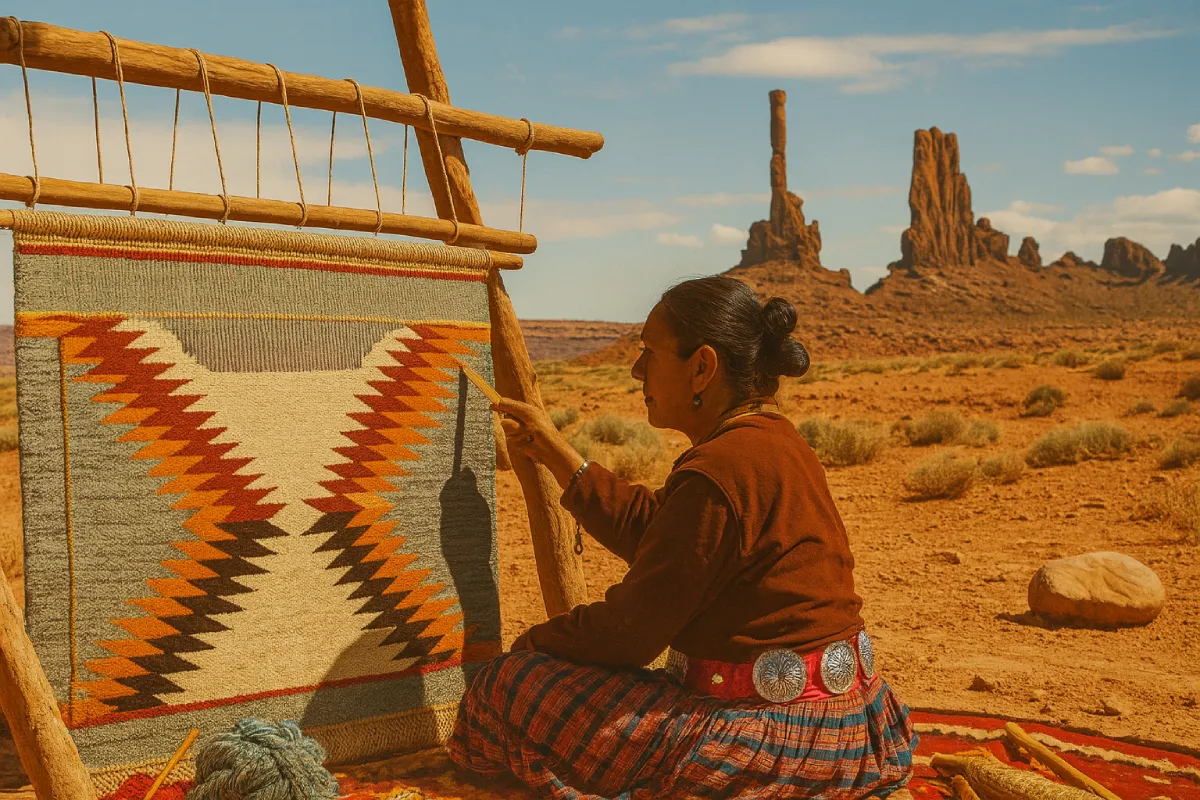
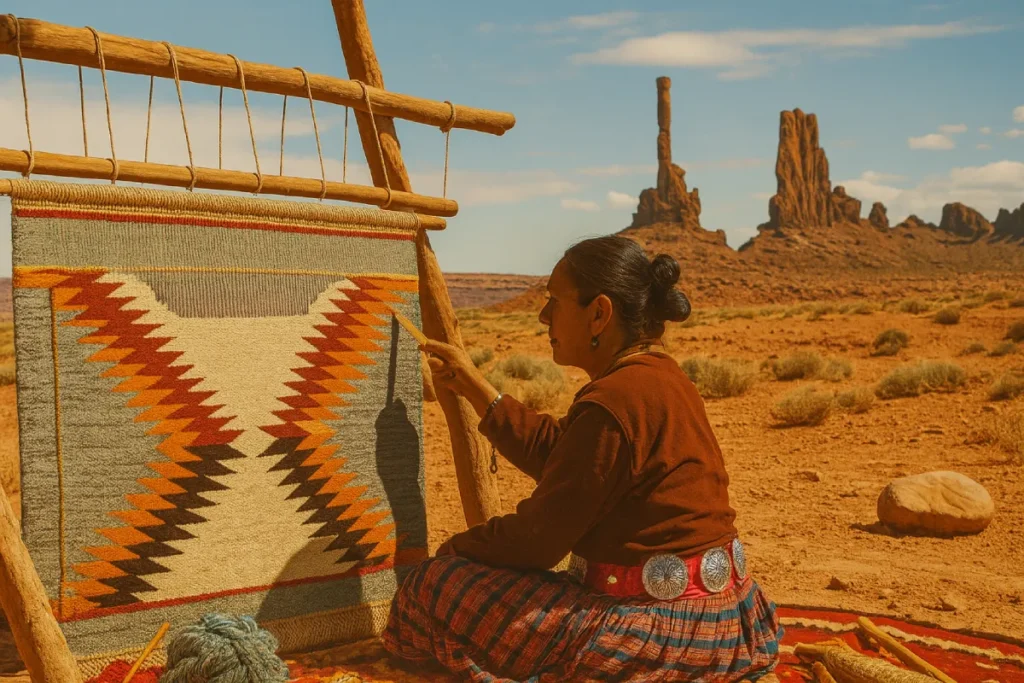
Navajo weaving dates back to the 1600s when the Diné (Navajo) people began working with sheep introduced by the Spanish. Early weavings were utilitarian, but evolved into distinct art forms known for geometric precision, vibrant dyes, and storytelling through design.
Symbolism
Patterns often represent sacred mountains, the four directions, and harmony with nature. The inclusion of a “spirit line” (a break in the border) allows the weaver’s spirit to exit the work.
Today
Renowned weavers like Clara Sherman and Melissa Cody have helped bring Diné weaving into global galleries. Contemporary artists blend tradition with modern narratives, ensuring the art form’s continued cultural relevance.
Haudenosaunee Beadwork
History and Meaning
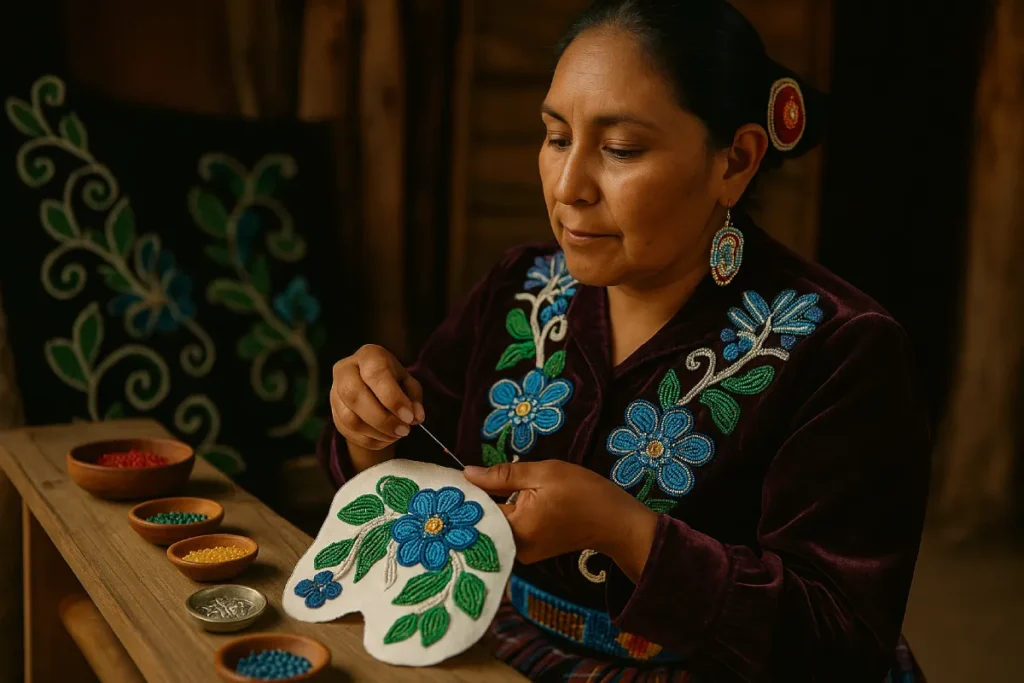
The Haudenosaunee (Iroquois Confederacy) have used beads for centuries, incorporating shell, bone, and later glass beads from European trade. Beadwork adorns clothing, sashes, moccasins, and ceremonial objects.
Symbolism
Designs often reflect celestial bodies, clan animals, and natural patterns. Wampum belts (made from quahog shell beads) serve as living documents, recording treaties and stories.
Today
Artists like Karen Ann Hoffman (Oneida Nation) are bringing Haudenosaunee beadwork into national museums. Cultural centers and community programs continue to teach this sacred craft to younger generations.
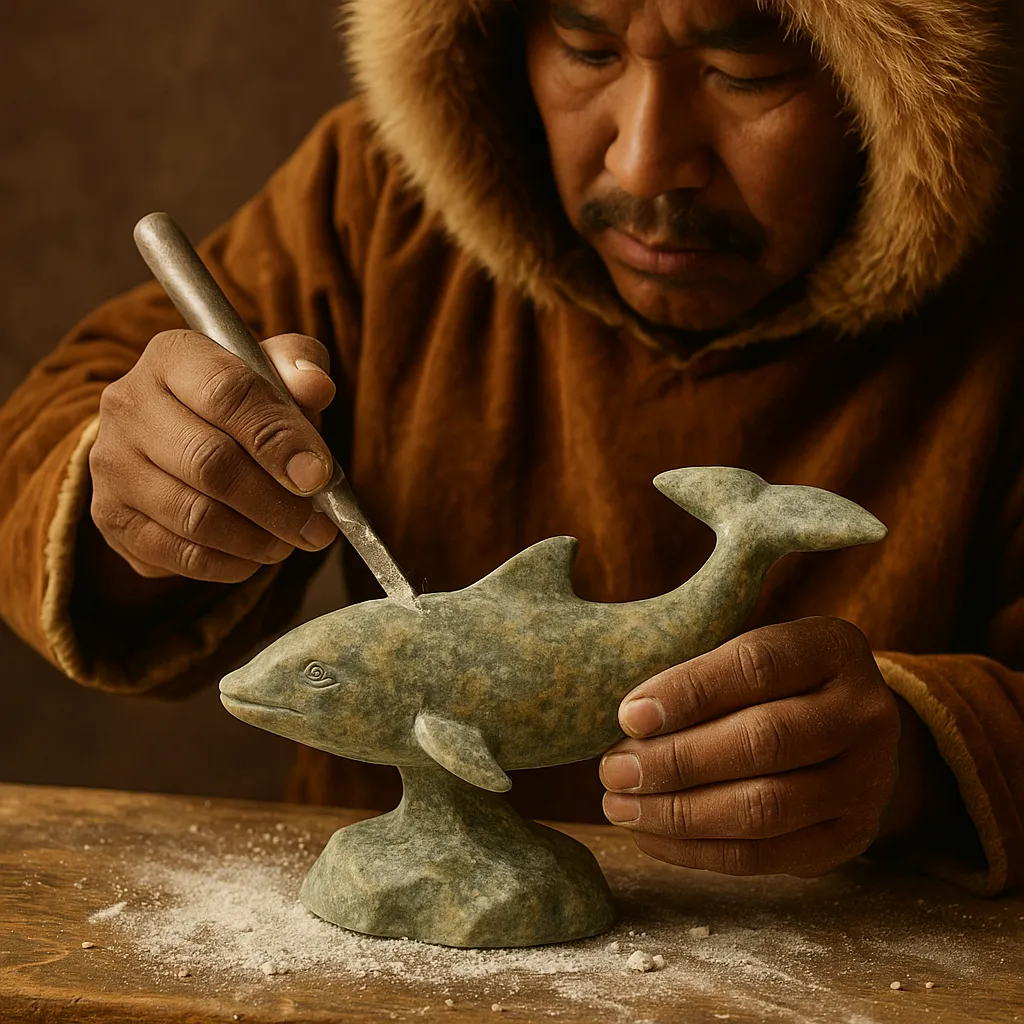
Inuit Carving
History and Meaning
Inuit communities across the Arctic regions have long carved ivory, stone, and bone into tools, animals, and spirits. Carving served both artistic and utilitarian purposes, with deep spiritual associations.
Symbolism
Many pieces depict the transformation of humans and animals, reflecting Inuit cosmology and survival in harmony with nature.
Today
Inuit carving thrives through artist cooperatives and showcases across Canada and Alaska. Notable carvers include Joe Talirunili and Pauta Saila, known for their expressive, enduring styles.
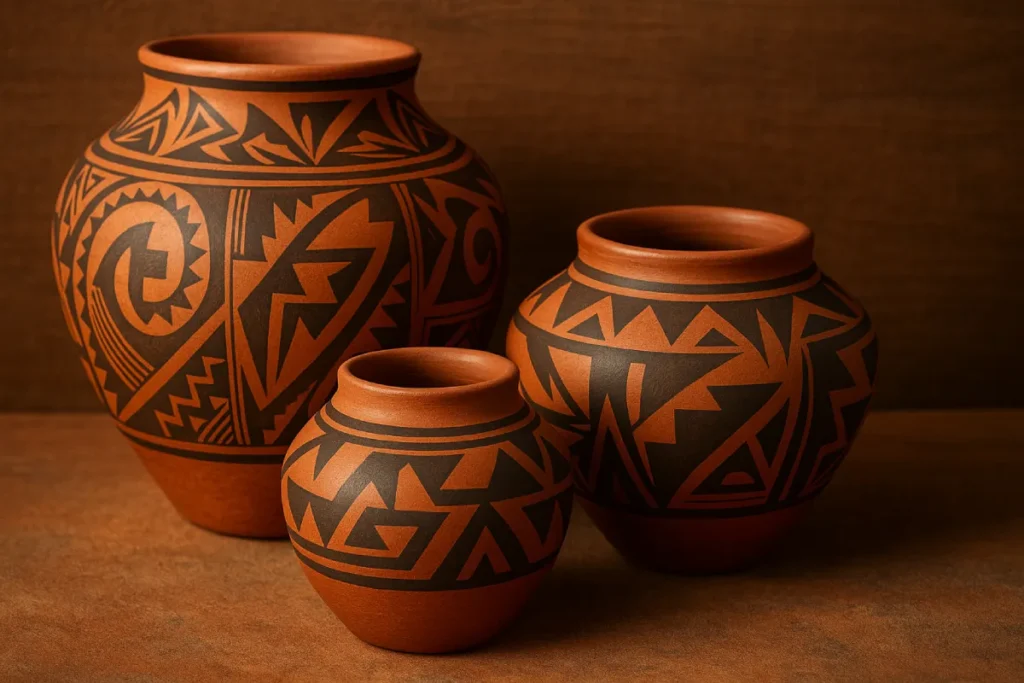
Pueblo Pottery
History and Meaning
Pueblo peoples such as the Hopi, Zuni, and Acoma have created pottery for over a thousand years, using hand-coiled clay and traditional firing methods.
Symbolism
Common motifs include rain clouds, birds, kiva steps, and spirals representing life cycles. Pottery often plays a role in ceremony and food storage.
Today
Famous artists like Maria Martinez (San Ildefonso Pueblo) elevated Pueblo pottery to international acclaim. Today, families pass on techniques to sustain cultural knowledge and community economies.
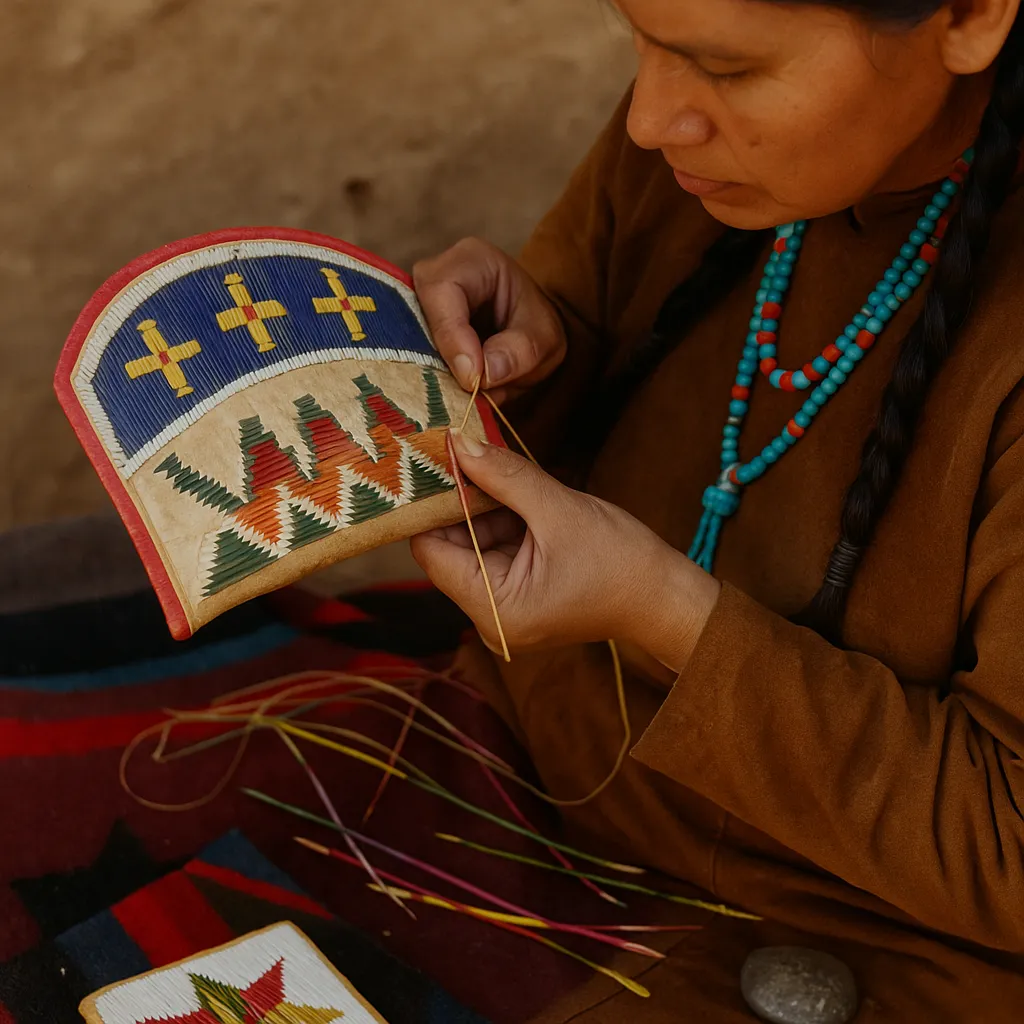
Plains Quillwork
History and Meaning
Before the widespread use of glass beads, Plains tribes like the Lakota, Cheyenne, and Arapaho used porcupine quills dyed and softened for decoration.
Symbolism
Colors and patterns often denote spiritual significance, warrior status, and identity. Quillwork is traditionally seen as a sacred practice.
Today
Efforts to revive quillwork are growing through cultural preservation projects and intergenerational workshops, with artists like Joyce Growing Thunder Fogarty leading the resurgence.
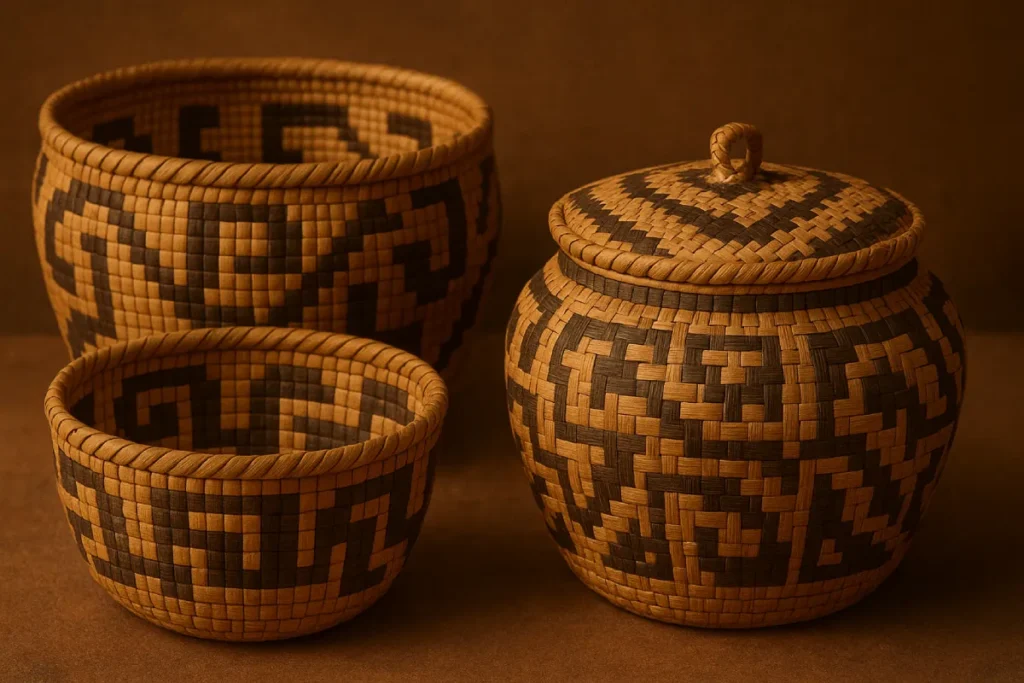
Southeastern Rivercane Basketry
History and Meaning
Tribes like the Cherokee and Choctaw used rivercane to weave baskets for food storage, ceremonial use, and trade.
Symbolism
Basket patterns represent tribal stories, star constellations, and natural phenomena like rivers and lightning.
Today
Master weavers like Mary Thompson (Cherokee) continue to teach and inspire a new generation of artists committed to restoring native plant materials and techniques.
Frequently Asked Questions
What is the significance of Navajo weaving?
Navajo weaving is both a spiritual and artistic tradition representing harmony with nature, history, and Diné cosmology. It continues to thrive as a cultural practice and collector’s art form.
How is Haudenosaunee beadwork different from other beadwork traditions?
Haudenosaunee beadwork often includes raised beading and intricate floral designs, and serves ceremonial and historical functions, especially through wampum belts.
Is quillwork still practiced today?
Yes. Though once nearly lost, quillwork has seen a revival through community education and Native artists committed to preserving the technique.
Who are some well-known Native American artists?
Prominent artists include Maria Martinez (pottery), Clara Sherman and Melissa Cody (weaving), Joe Talirunili (carving), and Karen Ann Hoffman (beadwork).
Where can I purchase authentic Native art?
Look for Indigenous-owned galleries, tribal fairs, or certified platforms that ensure authenticity and fair compensation for Native artists.
Conclusion
Native American arts are not merely decorative—they are vessels of memory, spirituality, and resistance. From Navajo looms to Haudenosaunee beadwork tables, Indigenous artists continue to honor tradition while shaping contemporary identity and expression. Supporting Native-made art is not only an aesthetic choice but a stand for cultural continuity and sovereignty.