Indian Child Welfare Act (ICWA) Explained
Why a 45-year-old federal law is still the “gold standard” of child welfare
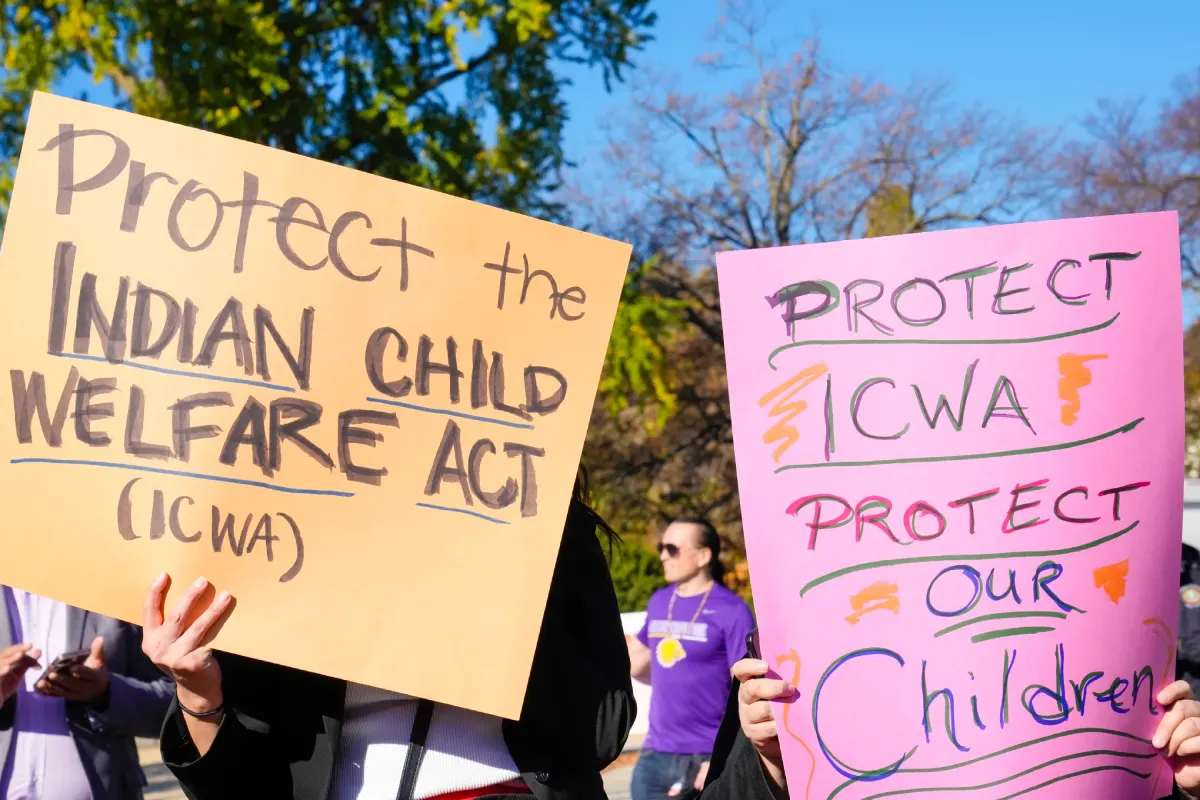
In 1978, Congress passed the Indian Child Welfare Act (ICWA) to halt the wholesale removal of Native children from their families and cultures—a practice that had persisted through boarding-school policies and the mid-century Indian Adoption Project, which placed hundreds of Native children with non-Native families in the 1950s-60s. The act established minimum federal standards for state child-custody proceedings involving an “Indian child,” redefining child welfare as a matter of tribal sovereignty as much as family law.
A Brief History of Forced Removal
- Boarding-school era (1870s-1950s) – More than 350 government-funded schools forced children to assimilate; many never returned home.
- Indian Adoption Project (1958-1967) – A BIA-Children’s Bureau partnership promoted transracial adoptions; by 1976 an estimated 25–35 % of all Native children lived apart from their families.
- Congressional hearings (1974-78) – Testimony revealed systemic bias: social workers often deemed poverty itself “neglect,” removing children without due process.
Key Provisions of ICWA (25 U.S.C. § 1901 et seq.)
| Section | What It Does | Why It Matters |
|---|---|---|
| § 1911 – Jurisdiction | Gives tribal courts exclusive authority over on-reservation cases and the right to request transfer in off-reservation cases. | Respects tribal sovereignty in family matters. (uscode.house.gov) |
| § 1912 – Due-process protections | Requires “active efforts” to keep families together, higher evidentiary standards, and qualified expert testimony before removing a child. | Sets stricter bar than mainstream child-welfare law. |
| § 1913 – Voluntary consent | Mandates written, recorded parental consent that may be withdrawn prior to final decree. | Guards against coerced adoptions. |
| § 1915 – Placement preferences | Prioritizes placement with (1) extended family, (2) other tribe members, (3) other Native families. | Maintains cultural connection. |
| § 1951 – Record-keeping | States must keep and share adoption records with tribes. | Enables children to reclaim identity later. |
Because these provisions protect culture as well as safety, 18 national child-advocacy organizations called ICWA the “gold standard” of child welfare.
Contemporary Significance & Haaland v. Brackeen (2023)
Beginning in 2017, several non-Native foster couples and three states challenged ICWA as an unconstitutional “race-based” law. On June 15 2023 the U.S. Supreme Court—in a 7-2 decision—upheld the entirety of ICWA, affirming Congress’s authority to legislate in matters of tribal sovereignty. Justice Gorsuch’s concurrence framed the ruling as “a victory for child protection, tribal sovereignty, and the Constitution.” The decision reassured tribes that their political status—not race—anchors the statute’s protections.
ICWA in Action: Success Indicators
- States that fully implement ICWA report higher family-reunification rates and fewer placement disruptions.
- ICWA’s “active-efforts” requirement is influencing broader reforms; many jurisdictions now extend similar services to all families.
- Some tribes run their own child-welfare systems under Title IV-E agreements, blending ICWA principles with federal funding.
Frequently Asked Questions
How does ICWA work in a typical case?
When a state agency files for foster-care placement of a Native child, the court must: (1) notify the child’s tribe, (2) apply the “active-efforts” test, (3) follow ICWA placement preferences, and (4) allow the tribe to intervene or transfer the case to tribal court.
Why was ICWA challenged?
Plaintiffs argued it used racial classifications and commandeered state agencies. The Supreme Court rejected those claims, recognizing ICWA as a political—tribal—classification and within Congress’s plenary power over Indian affairs.
Does ICWA only apply on reservations?
No. ICWA covers any state-court child-custody proceeding involving an “Indian child,” regardless of where the child lives.
Can parents opt out of ICWA?
Parents can oppose a tribal-court transfer or voluntarily consent to adoption, but ICWA’s notice and consent safeguards still apply.
How can states strengthen ICWA compliance?
Invest in tribal-state agreements, train judges and social workers on ICWA, and fund culturally based prevention services.
Key Takeaways
- ICWA arose from a century of policies that stripped Native children from their communities.
- Its core protections—tribal jurisdiction, active efforts, and placement preferences—have become the “gold standard” for child welfare reform.
- The 2023 Haaland v. Brackeen ruling secured ICWA’s constitutionality, reinforcing tribal sovereignty for future generations.
Want to support ICWA? Learn your state’s compliance grade, advocate for funding tribal family-services, and share accurate information to counter myths that threaten this landmark law.