NAGPRA Explained: Repatriation, Consultation and the Return of Ancestors
The Native American Graves Protection and Repatriation Act (NAGPRA) is a federal law protecting Native American ancestors and specified cultural items and providing processes for their return. Enacted on November 16, 1990, it recognizes rights held by lineal descendants, Indian Tribes and Native Hawaiian organizations.
Its protections operate in two settings: collections held by covered museums and federal agencies, and discoveries or excavations on federal or Tribal lands. NAGPRA does not require the return of every Native-made object. The categories, institution involved, land status and relationship to the requesting party matter.
This guide uses “ancestors” when discussing people whose remains are involved, while retaining the legal term “human remains” where needed to explain the current NAGPRA regulations in 43 CFR Part 10.
Who must comply with NAGPRA?
For collections, NAGPRA covers federal agencies and institutions that meet its definition of a museum: an institution or state or local government agency that has possession or control of human remains or cultural items and receives federal funds. This can include universities, historical societies and private institutions as well as public museums.
The funding connection is broader than a grant to a collections department. The National Park Service’s compliance guidance and regulations include qualifying federal assistance received after November 16, 1990, directly or indirectly. Assistance to a larger entity, such as a university, can bring its museum within the law even when the money supported another purpose.
Possession or control also does not depend solely on physical location. An institution may remain responsible for a collection stored elsewhere. A museum holding material on loan can have duty-of-care responsibilities even when another institution retains control.
The Smithsonian Institution is excluded from NAGPRA’s definitions of museum and federal agency. Its repatriation activities follow the National Museum of the American Indian Act, a separate federal law.
Who can seek repatriation?
NAGPRA provides rights to lineal descendants, federally recognized Indian Tribes and Native Hawaiian organizations, with eligibility and priority depending on the category and circumstances. Native Hawaiian organizations have their own regulatory definition; they do not need to be federally recognized Tribes.
A lineal descendant is someone who traces ancestry to a known individual through traditional Native American kinship systems or the common-law system of descent. General Native ancestry alone does not establish that relationship. Nations and organizations act through their authorized representatives; an individual’s Tribal citizenship does not automatically authorize them to speak for the Nation. These distinctions are set out in the NPS NAGPRA glossary.
What ancestors and cultural items does NAGPRA cover?
NAGPRA distinguishes human remains from four categories of cultural items. The following are abbreviated descriptions of the regulatory definitions; classification requires the relevant evidence and Native American traditional knowledge.
| Legal category | Meaning in brief |
|---|---|
| Human remains | Physical parts of the body of a Native American individual, subject to the definition’s qualifications. The rules also address remains mixed with other materials or incorporated into objects. |
| Associated funerary objects | Funerary objects connected to removed human remains whose location is known. Objects made exclusively for burial purposes or to contain human remains are always associated funerary objects, regardless of whether the related remains exist or can be located. |
| Unassociated funerary objects | Funerary objects outside the associated category that meet the required evidence standard linking them to remains, specific individuals or families, or culturally affiliated burial sites or areas. Examples include objects connected to remains that were not removed or whose location is unknown. |
| Sacred objects | Specific ceremonial objects needed by traditional religious leaders for present-day practice of traditional Native American religion. Age, beauty or general spiritual significance alone does not establish this category. |
| Objects of cultural patrimony | Objects of continuing importance central to a Native American group, including a subgroup such as a clan or ceremonial society. They must have been considered inalienable by the group when separated from it; an individual caretaker could not independently transfer them. |
An item can be culturally important without meeting one of these definitions. Voluntary returns, other laws and negotiated agreements may offer additional routes. A museum catalogue label alone should not substitute for consultation about what an item is and what responsibilities accompany it.
Consultation and cultural affiliation
Consultation requires an exchange of information, open discussion and joint deliberation in good faith. Institutions must seek and consider the consulting parties’ views and strive for agreement. Sending a notification letter is only one possible step in that process.
The regulations require deference to Native American traditional knowledge and recognize it as expert opinion. Cultural affiliation rests on a reasonable connection based on shared group identity. Relevant information may include geography, acquisition history, kinship, oral tradition, language, historical records and other evidence.
Under 43 CFR § 10.3, cultural affiliation does not require exhaustive studies, additional research or uninterrupted continuity through time. Reasonable gaps in the available information do not, by themselves, prevent a determination. Institutions should not impose scientific certainty as the standard for recognizing a connection.
How the museum repatriation process works
Museums and federal agencies use two related procedures. Both involve consultation, written determinations and public notice, but the order of a repatriation request and notice differs.
Ancestors and associated funerary objects: the inventory process
The institution compiles information, invites consultation and completes an inventory incorporating the consultation results and cultural-affiliation determinations. It then submits a notice of inventory completion for publication in the Federal Register.
Under § 10.10, written repatriation requests are considered following publication. A request submitted earlier is dated as of publication. The institution must respond no earlier than 30 days after publication and no later than 90 days after receiving the request. If the request meets the criteria, the institution proceeds toward repatriation, subject to rules for competing requests and other specified circumstances.
Other cultural items: the summary process
For unassociated funerary objects, sacred objects and objects of cultural patrimony, the institution prepares a summary of potentially relevant holdings and initiates consultation. An eligible party can submit a written repatriation request after the summary is compiled.
Under § 10.9, the institution must respond within 90 days. A qualifying request generally leads to a notice of intended repatriation. This procedure also addresses an institution’s assertion of a legally defined right of possession, which it must prove, and competing requests. Unlike the inventory process, the initial request precedes this notice.
For both procedures, a written repatriation statement relinquishes the institution’s possession or control. The institution then consults with the receiving party about custody and physical transfer. Legal repatriation and the date ancestors or belongings physically leave an institution are therefore distinct steps.
What did the 2024 regulations change?
The revised regulations took effect January 12, 2024. The Department of the Interior’s announcement emphasized Tribal and Native Hawaiian authority, deference to Indigenous Knowledge and clearer procedures. The revisions also eliminated the former “culturally unidentifiable human remains” category.
An express duty of care requires museums, federal agencies and Hawaiʻi’s Department of Hawaiian Home Lands to safeguard covered ancestors and cultural items in their custody or possession or control. Under § 10.1(d), they must:
- Consult about appropriate storage, treatment and handling.
- Make a reasonable, good-faith effort to incorporate and accommodate Native American traditional knowledge in that care.
- Obtain free, prior and informed consent from the relevant lineal descendants, Tribes or Native Hawaiian organizations before allowing exhibition, access or research.
The NPS duty-of-care guidance (PDF) explains that consent is not required simply to compile an itemized list from existing information or initiate consultation. Consent is required for covered access or research, including analysis intended to generate additional information. An unanswered invitation is not consent, and NAGPRA does not require new scientific research to complete an inventory.
What does the January 10, 2029 deadline cover?
Under § 10.10(d)(3), museums and federal agencies must consult and submit updated inventories by January 10, 2029, for human remains or associated funerary objects previously listed in an inventory but not published in a notice of inventory completion before January 12, 2024.
This is a specific inventory-update deadline, not a universal deadline for physical return or permission to postpone other duties. Separate deadlines apply to newly acquired or newly located holdings, notices and requests. Museums that meet the requirements may request an inventory extension; approval is not automatic, and the request requires consent from a majority of consulting parties.
What happens after a discovery on federal or Tribal land?
NAGPRA also governs discoveries and excavations on federal or Tribal lands. For this purpose, Tribal lands include all land within reservation boundaries, dependent Indian communities and specified lands administered by Hawaiʻi’s Department of Hawaiian Home Lands. Land ownership alone may not resolve which rules apply.
Under the discovery rules in § 10.5, a person who knows or has reason to know of a discovery must immediately report it in person or by telephone to the appropriate official and required additional contact. Written documentation must follow within 24 hours, and reasonable efforts must be made to secure and protect the discovery.
If an activity such as construction threatens the discovery, it must stop immediately. It must not resume until the date specified in the appropriate official’s written certification. The required contacts depend on the land: they may include the responsible Tribe, federal land manager, Department of Hawaiian Home Lands and potentially affiliated Native Hawaiian organizations or Tribes.
Planned excavation requires written authorization and applicable permits. Section 10.6 requires written Tribal or Native Hawaiian organizational consent for excavation on Tribal lands and establishes the federal-land authorization requirements, including consultation and a plan of action.
Anyone encountering possible human remains should avoid moving, cleaning or collecting them and promptly contact the responsible authorities. Share location information privately with those authorities; do not publish images or precise locations. Outside federal or Tribal lands, state and local discovery laws generally apply first. Later possession or control by a covered museum or federal agency can still trigger NAGPRA’s repatriation requirements.
Returning ancestors means restoring responsibilities
The National Association of Tribal Historic Preservation Officers places NAGPRA within the struggle to reclaim ancestors and cultural items after Native people were denied the ability to exercise those rights. For communities, a return can involve relatives, burial obligations and responsibilities that continued throughout an institution’s possession.
Institutions should plan for the staff time, funding and relationships meaningful consultation requires. Records, transportation arrangements and privacy protections need attention alongside legal deadlines. After repatriation, the regulations require consultation about physical transfer and protection of sensitive information identified by the receiving party, consistent with applicable law.
The receiving descendants, Nation or Native Hawaiian organization should guide the discussion of care and community protocols. NAGPRA’s procedures help restore their authority over ancestors and belongings whose significance extends far beyond a collection record.
Sources reviewed October 15, 2026. Consult the linked regulations and National NAGPRA Program guidance for the requirements governing a particular case.
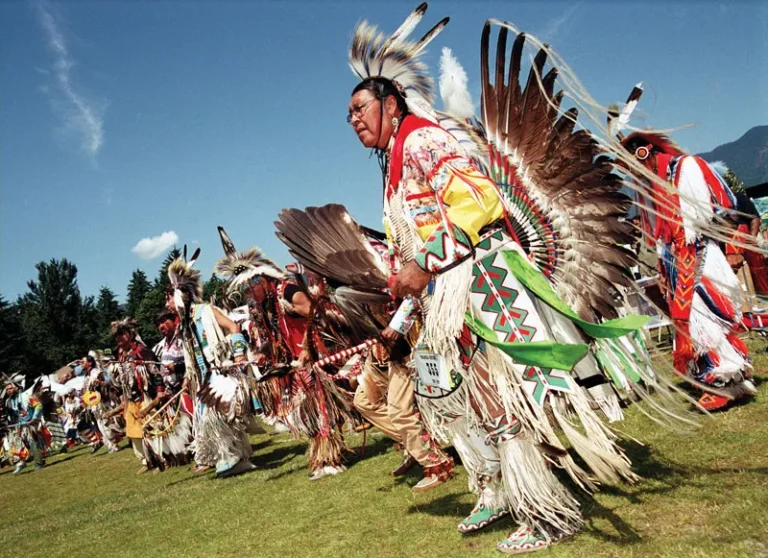
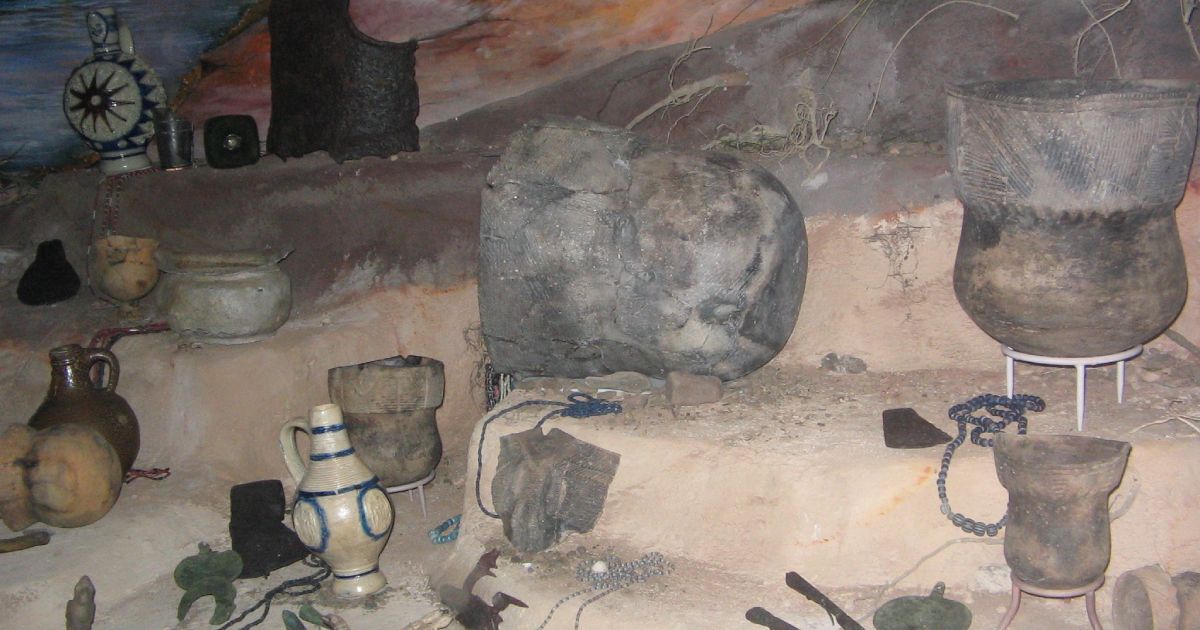
Image by US Census, Ruhrfisch – Self-photographed, CC BY-SA 3.0, https://commons.wikimedia.org/w/index.php?curid=1851064