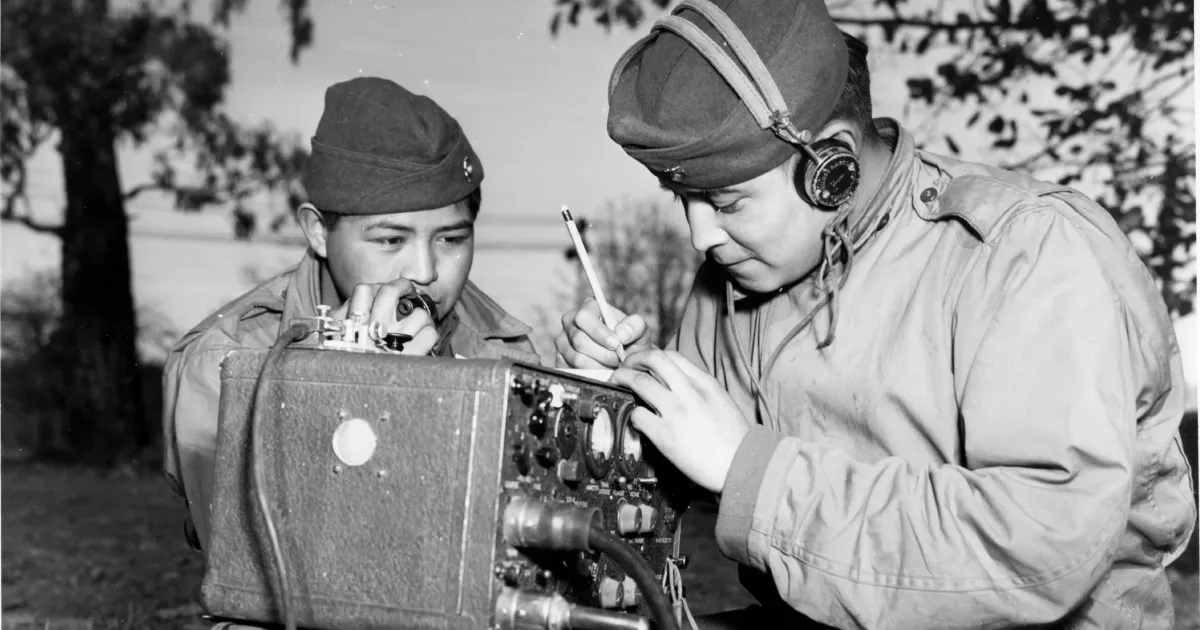
Navajo Code Talker Museum Plan Draws Questions Over Consultation and Control
New Mexico’s plan to build a nearly $20 million Navajo Code Talker museum is moving forward amid questions from descendants about whether the project was developed with sufficient community consultation.
The state announced August 14 that the museum would be constructed at Navajo Preparatory School in Farmington. Funding will cover construction and exhibits about the language, military service and legacy of the Navajo Code Talkers.
The Navajo Preparatory School Governing Board of Trustees unanimously approved an agreement with the state in May. The school will manage the finished museum, while five New Mexico agencies are participating in its development, according to the Indian Affairs Department’s official announcement.
The project could provide a long-awaited institution dedicated to the Diné Marines who used their language to create and operate a battlefield communications system during World War II.
But some Code Talker descendants say the state’s plan does not reflect the larger museum envisioned by their families—and that they learned about the Farmington proposal only after architectural firms began contacting them.
A different museum than families envisioned
For years, Code Talkers, descendants and Navajo Nation leaders pursued a museum at Tse Bonito, near Window Rock.
Chevron donated approximately 200 acres there in 2009. Earlier plans contemplated a museum, veterans center, archive and research facilities on the Navajo Nation.
The Farmington proposal is a different project at a different location.
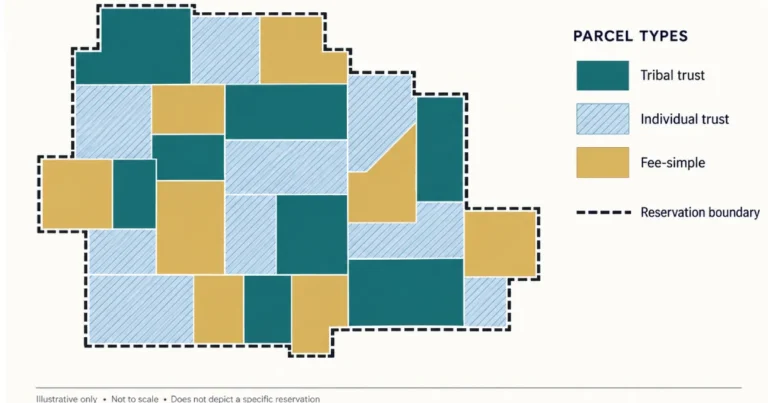
The state describes Navajo Preparatory School’s campus as Navajo Nation land. The campus is in Farmington, outside the reservation’s exterior boundary, and its precise trust or ownership status should be described carefully in final publication.
Zonnie Gorman, daughter of original Code Talker Carl N. Gorman and a historian of the program, called the new approach an “overstep.” She and Laura Tohe, daughter of Code Talker Benson Tohe, said descendants should have played a greater role before the state selected the site and advanced the design process.
Their concerns were documented in an August 18 report by New Mexico In Depth and The Associated Press.
Tohe has also raised concerns about Farmington’s history of violence and discrimination against Navajo people. She argues that a museum drawing visitors and economic activity to the city must confront that history rather than treating location as a neutral decision.
The descendants are not opposing the preservation of Code Talker history. Their objection concerns what institution should carry that history, where it should stand and who should control its interpretation.
Nearly $20 million in state funding
New Mexico appropriated almost $10 million for a Code Talker museum between 2019 and 2025. Approximately $279,000 had been spent by April 2026, according to records examined by New Mexico In Depth.
Gov. Michelle Lujan Grisham allocated another $10 million in 2026 and used a line-item veto to remove language requiring the project to be built in McKinley County, where Tse Bonito is located.
Some existing appropriations are approaching statutory expenditure deadlines, creating pressure to move the project forward.
State Sen. Shannon Pinto, whose grandfather John Pinto was a Navajo Code Talker, said urgency also reflects a desire to complete meaningful progress while two Code Talkers remain alive.
Gov. Lujan Grisham said the United States owes the Code Talkers a profound debt for their language and service.
Speed, however, can conflict with consultation. Pinto acknowledged that more time could have allowed greater participation by descendants.
Who will own and operate the museum?
Ownership has become another point of scrutiny.
During an August 18 meeting of the New Mexico Legislature’s Indian Affairs Committee, lawmakers questioned state officials and Navajo Prep administrators for approximately 90 minutes about contracts, consultation, financial oversight and eventual ownership.
The state will own the project during construction and transfer it to Navajo Preparatory School after completion. New Mexico is also expected to cover annual operating expenses—estimated at approximately $600,000—for an initial period before responsibility passes to the school.
State Sen. Angel Charley, a citizen of the Pueblo of Acoma, questioned whether Navajo Prep would have sufficient oversight of contractor payments and budget decisions before assuming control of the asset.
State Rep. Patricia Roybal Caballero asked why the Navajo Nation itself would not own the museum.
That distinction reaches beyond property paperwork. The institution controlling a museum ordinarily makes consequential decisions about artifacts, archives, exhibits, language, research access and how history is presented to the public.
Navajo Prep Head of School Shawna Allison Becenti told legislators that descendants would be consulted during exhibit design. She also said the project would include a Diné bizaad language institute and student-leadership program.
Those components partially reflect a compromise proposed by Gorman, Tohe and other descendants. They suggested creating a language-focused educational space with a major Code Talker exhibition while preserving the possibility of a more comprehensive national museum at Tse Bonito.
The state had not publicly accepted that compromise as of August 18.
The story must be told accurately
More than 400 Diné Marines are generally understood to have trained as Navajo Code Talkers, although researchers caution that the precise number is not settled.
Their system was more sophisticated than simply substituting Navajo words for military equipment. It combined Diné language knowledge with specially developed vocabulary, spelling conventions and communications procedures.
A museum presents an opportunity to correct simplified accounts that treat the language as an exotic wartime instrument while overlooking the intellectual work of the Marines—and the contradiction that the United States relied on a Native language after federal institutions had attempted to suppress Indigenous languages.
The immediate question is no longer whether New Mexico will invest in preserving that history. The state has committed the money and selected a partner.
The unresolved question is whether the resulting institution will be shaped by the Code Talkers’ families and the Navajo Nation—or primarily by a state timetable established without them.