Protecting Sacred Sites & Environmental Justice
How tribal nations are reshaping U.S. land, water, and climate policy
On every front of the modern climate movement you will find Indigenous nations defending homelands that double as sacred geography—the places where ceremonies, origin stories, and ecological knowledge converge. From halting crude-oil pipelines under the Missouri River to blocking copper mines in Arizona’s high desert, these battles are about more than conservation; they are struggles for sovereignty, religious freedom, and inter-generational survival.
Sacred Lands under Siege—2020-2025 Snapshots
| Site & Tribe(s) | Conflict | Current Status |
|---|---|---|
| Standing Rock / Missouri River(Lakota, Dakota) | Dakota Access Pipeline crosses ½ mile upstream of reservation; threatens water & burial sites. | Pipeline still operating, but Standing Rock appealed a 2025 court dismissal while an updated Environmental Impact Statement is pending. |
| Bears Ears National Monument, UT(Hopi, Navajo, Ute, Zuni) | Oil, gas & uranium leases encroached on cliff dwellings and petroglyphs. | 2022 co-management pact gives five tribes equal authority with BLM/USFS on 1.9 million acres—first of its kind. |
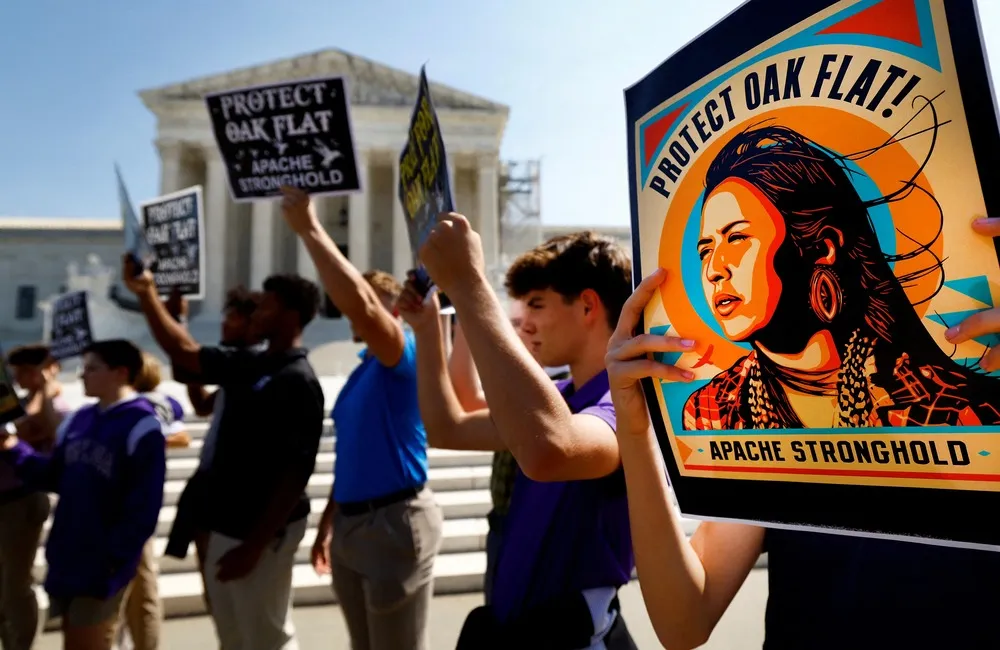
| Oak Flat (Chi’chil Biłdagoteel), AZ(San Carlos & White Mountain Apache) | Land swap would create a two-mile-wide copper pit, destroying a sacred sunrise-dance site. | 9th Circuit (2024) allowed transfer; Apache Stronghold appealed to SCOTUS, which declined review in 2025; activists now press Congress for repeal of the swap. |
These flashpoints echo earlier victories, such as the National Bison Range’s return to the Salish-Kootenai (2022) and the Klamath River dam removals now underway in California.
Why Sacred Geography Matters to Tribes
- Spiritual Law – Places like Bears Ears are “medicine bundles” on a landscape scale; ceremonies lose power if relocated.
- Traditional Ecological Knowledge (TEK) – Millennia-old fire, hunting, and planting practices keep forests resilient and rivers cool for salmon.
- Treaty Obligations – Many 19th-century treaties guaranteed access to fishing, hunting, and gathering sites “in perpetuity.” When land is polluted or fenced off, the U.S. is in breach.
- Cultural Continuity – Language, song, and kinship systems reference specific mountains, springs, or petroglyph panels; erasure severs identity.
Legal Tools in the Sacred-Site Arsenal
| Statute / Doctrine | How It Helps | Limits |
|---|---|---|
| American Indian Religious Freedom Act (1978) | Declares federal policy to protect Native access to sacred sites and ceremonies. | Lacks enforcement teeth—courts call it “policy, not mandate.” |
| Religious Freedom Restoration Act (1993) | Allows tribes to sue when federal action “substantially burdens” religion (invoked at Oak Flat). | 2024 9th Circuit ruled land transfers don’t equal coercion, exposing gaps. |
| National Historic Preservation Act §106 | Requires agencies to consult tribes on projects affecting cultural properties. | Advisory only; agencies can still approve projects after consultation. |
| Treaty Fishing & Water Rights – e.g., Boldt Decision (1974) affirmed a 50 % salmon share for Northwest tribes. | Enforcement depends on courts & political will; climate change stresses resources. | |
| NEPA & Clean Water Act | Tribes challenge inadequate Environmental Impact Statements (Standing Rock). | Can delay, but not always stop, projects. |
Indigenous Leadership in Climate Justice
Standing Rock’s #NoDAPL camps became a blueprint for 24/7 pipeline blockades and helped mainstream the slogan “Water is Life.”
Yurok & Karuk tribes drove the largest dam-removal project in U.S. history on the Klamath River, prioritizing salmon over hydropower.
First Nations in British Columbia halted the Northern Gateway pipeline (2016), influencing global divestment movements.
Youth plaintiffs in Montana’s Held v. Montana used treaty stewardship concepts to win a landmark 2023 climate-rights case.
Water, Hunting & Fishing Rights
- Water is a sacred relative, not a commodity—a worldview front-and-center at Standing Rock.
- Treaty-reserved hunting/fishing rights (e.g., Boldt) bind federal and state agencies to protect habitat; when drought or pollution degrades those resources, tribes can litigate.
- Groundwater & aquifer depletion in the Southwest pits tribal senior water rights against industrial agriculture, foreshadowing the next wave of conflicts.
Frequently Asked Questions
Why can’t tribes simply perform ceremonies elsewhere?
Sacred sites are as specific as St. Peter’s Basilica or Mecca; their power derives from geology, stories, and ancestral presence that cannot be replicated.
Do sacred-site claims block all development?
No. Many tribes support renewable-energy or tourism projects if they respect cultural protocols and offer co-management or revenue sharing.
Did the American Indian Religious Freedom Act stop desecration?
AIRFA set policy goals but courts say it creates no enforceable right; tribes must rely on stronger laws like RFRA, NHPA, or specific treaty clauses.
How can non-Native allies help protect sacred places?
Support tribal-led bills, amplify calls for free, prior & informed consent, donate to legal-defense funds, and follow visitation rules at cultural sites.
Is co-management the same as Land Back?
Co-management (e.g., Bears Ears) shares decision-making but retains federal title; Land Back involves full tribal ownership or legislative trust transfers.
Key Takeaways
- Sacred-site defense is inseparable from environmental justice—protecting landscapes also safeguards treaty rights, drinking water, and global biodiversity.
- Legal victories like Bears Ears co-management and the Boldt fishing-rights precedent prove tribal stewardship benefits ecosystems and local economies alike.
- Yet gaps in laws like AIRFA and recent rulings on Oak Flat show the fight is far from over.
Next time you hike a national monument or turn on your faucet, remember the Indigenous nations whose ancestors consecrated that ground—and whose descendants continue to defend it for everyone’s future.