The Trail of Tears: History, Impact, and Modern Legacy
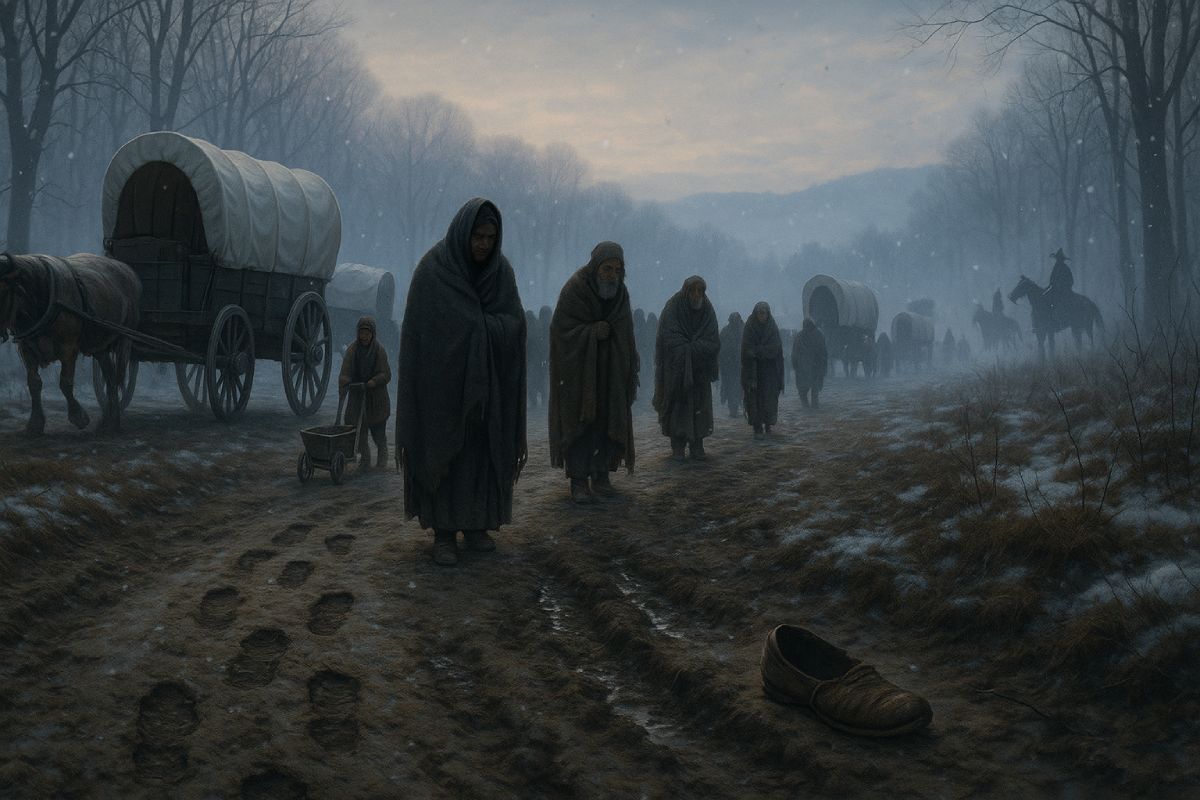
In the winter of 1838–1839, thousands of Cherokee men, women, and children were forced from their homes and made to march west under military guard. Exposure, starvation, and disease turned the roads into a graveyard. That journey—and parallel removals of the Choctaw, Chickasaw, Muscogee (Creek), and Seminole—became known as the Trail of Tears: a series of state-sanctioned expulsions that reshaped the demographic, political, and moral landscape of the United States.
Definition. The Trail of Tears refers to the forced removals of multiple Native Nations from their southeastern homelands to “Indian Territory” (present-day Oklahoma) during the 1830s.
Thesis. This article explains the historical roots of removal, traces the legal and military machinery that enabled it, recounts the human toll, and examines how its legacy continues to shape sovereignty, public memory, and Native life today.
Historical context: Seeds of removal
The Five Civilized Tribes
By the early 1800s, the Cherokee, Chickasaw, Choctaw, Muscogee (Creek), and Seminole were established societies with written laws, constitutional governments, farms, and—among the Cherokee—bilingual literacy and a national newspaper. Many adopted certain European-American practices while maintaining distinct identities and sovereign polities.
Economic and political pressures
Two accelerating pressures converged:
- Cotton expansion. The global cotton boom and plantation slavery drove demand for fertile southeastern lands.
- Gold discovery. The 1829 find near Dahlonega, Georgia intensified settler encroachment and state efforts to extinguish tribal land rights.
The Indian Removal Act (1830)
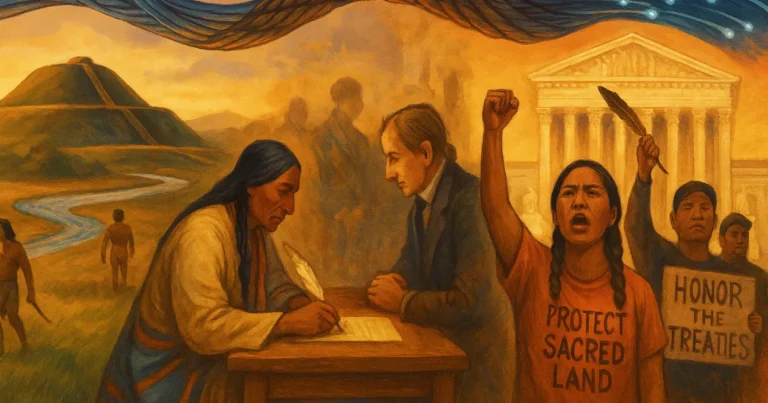
In 1830, Congress passed—and President Andrew Jackson signed—the Indian Removal Act, authorizing land-exchange treaties that pushed Native Nations west of the Mississippi. While presented as “voluntary,” the policy operated under duress, backed by federal power and state harassment. It set the legal and political stage for mass dispossession.
Historical context: Seeds of removal
The Five Civilized Tribes
By the early 1800s, the Cherokee, Chickasaw, Choctaw, Muscogee (Creek), and Seminole were established societies with written laws, constitutional governments, farms, and—among the Cherokee—bilingual literacy and a national newspaper. Many adopted certain European-American practices while maintaining distinct identities and sovereign polities.
Economic and political pressures
Two accelerating pressures converged:
- Cotton expansion. The global cotton boom and plantation slavery drove demand for fertile southeastern lands.
- Gold discovery. The 1829 find near Dahlonega, Georgia intensified settler encroachment and state efforts to extinguish tribal land rights.
The Indian Removal Act (1830)
In 1830, Congress passed—and President Andrew Jackson signed—the Indian Removal Act, authorizing land-exchange treaties that pushed Native Nations west of the Mississippi. While presented as “voluntary,” the policy operated under duress, backed by federal power and state harassment. It set the legal and political stage for mass dispossession.
Aftermath: Rebuilding in Indian Territory (Oklahoma)
Arrival and reconstruction
In the West, Nations rebuilt governments, schools, and farms, negotiating new treaties and relations with neighboring tribes and the federal government. Yet the promised security of a western homeland proved temporary.
Later federal policies eroded communal land bases:
- Allotment under the Dawes Act (1887) broke up tribal lands into individual parcels, enabling massive land loss to non-Native buyers.
- The Curtis Act (1898) further undermined tribal governments in Indian Territory, paving the way to Oklahoma statehood (1907) and deeper jurisdictional complexity.
Impacts on other Nations
- Choctaw. First to be removed (1831–1833); some called it a “trail of tears and death,” a phrase that later generalized to all removals.
- Muscogee (Creek) & Chickasaw. Endured their own forced migrations, factional stresses, and rebuilding efforts.
- Seminole. The Seminole Wars in Florida saw determined resistance; many were still compelled west, while some survivors remained in the Everglades.
Modern legacy: Cultural and political impact today
Intergenerational trauma
Removal is not just a historical event; it’s an ongoing social determinant. Displacement, family loss, and political disenfranchisement contribute to health disparities, educational hurdles, and economic barriers. Healing initiatives—language revitalization, ceremony, mental-health programs—are essential responses led by the Nations themselves.
The Trail of Tears National Historic Trail
Designated within the National Trails System in the late 20th century, the Trail of Tears National Historic Trail links routes, sites, museums, and memorials across several states. It supports local stewardship, curriculum materials, and public programs that connect visitors with the landscapes of removal and survival.
Political and sovereignty issues
The federal failure to honor treaty obligations during the Removal era informs present-day demands for treaty enforcement, tribal jurisdiction, and land recovery. For deeper context, see our guides: [What Is Tribal Sovereignty?] and [The Land Back Movement].
Educational outreach and remembrance
Tribal governments, cultural centers, and schools teach the full history of Removal—centering Native voices, survivor accounts, and community knowledge. Annual commemorations, youth leadership programs, and preservation of historic sites ensure remembrance is active, not passive.
Frequently Asked Questions
What was the primary cause of the Trail of Tears?
The Indian Removal Act of 1830, signed by President Andrew Jackson, authorized forced relocation from the Southeast to lands west of the Mississippi, driven by settler demand for land.
Which Native American Nations were forced to move?
Primarily the Five Civilized Tribes: Cherokee, Chickasaw, Choctaw, Muscogee (Creek), and Seminole.
How many people died on the Trail of Tears?
Estimates vary, but approximately 4,000 Cherokee died from exposure, disease, and starvation, with additional thousands lost among the other removed Nations.
Where did the Trail of Tears end?
In Indian Territory, chiefly present-day Oklahoma.
What is the modern legacy of the Trail of Tears?
A living legacy of intergenerational trauma, ongoing efforts at remembrance and education, and renewed advocacy for treaty rights, sovereignty, and land recovery (see What Is Tribal Sovereignty? and The Land Back Movement).
Conclusion
The Trail of Tears was not an accident of nature; it was policy. It dispossessed sovereign Nations to satisfy a land-hungry republic, yet it did not end Native lives or futures. Today, the governments descended from those who walked west continue to legislate, educate, and lead—asserting sovereignty, revitalizing languages, and teaching the next generation. Remembering the Trail of Tears is an act of responsibility: to witness truth, uphold treaty rights, and support Native Nations on their own terms.