Indigenous Chefs, Restaurants and Food Projects to Know
There is no single Indigenous cuisine. Foodways grow from particular Nations, homelands, seasons, trade networks and family knowledge. Contemporary Indigenous chefs work in many forms: restaurants, catering, food education, producer networks, nonprofit programs and recovery services.
This guide is a selective resource, not a ranking. Each entry has current public work and a verified Nation or community affiliation. Diners should use the linked official page to confirm location, reservations, hours and access before traveling; restaurant information changes faster than the cultural and organizational work described here.
Indígena by Owamni connects dining with NATIFS
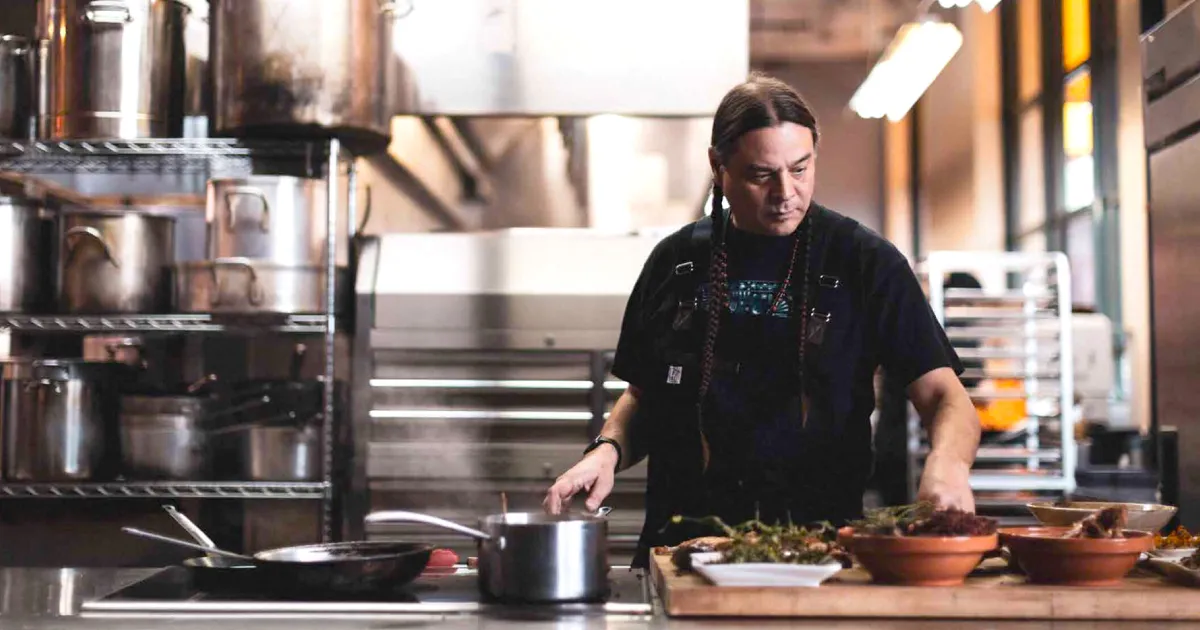
Chef Sean Sherman, Oglala Lakota, founded the North American Traditional Indigenous Food Systems organization, known as NATIFS. The organization’s public biography confirms that affiliation. In June 2026, NATIFS opened Indígena by Owamni at the Guthrie Theater in Minneapolis, carrying forward the culinary approach of Owamni in a new public location. The menu centers Indigenous ingredients and avoids colonial ingredients such as wheat flour, dairy and cane sugar. Current visitor information is on the restaurant’s official site.
The restaurant is only one part of the work. NATIFS operates the Indigenous Food Lab, provides training and education, and supports Indigenous food producers. Its current locations page helps readers distinguish the nonprofit’s programs from a single dining room. Use the current Indígena name rather than directing readers to the former Owamni location.
Wahpepah’s Kitchen centers Kickapoo food and education
Crystal Wahpepah is a registered member of the Kickapoo Tribe of Oklahoma and the chef-owner of Wahpepah’s Kitchen in Oakland, California. Her public work includes catering, education and partnerships as well as restaurant service. Dishes change with season and availability, so coverage should describe the restaurant’s approach instead of presenting one menu item as timeless or representative of every Native cuisine. Check the Wahpepah’s Kitchen website for current service.
Wahpepah’s biography describes a career built around Indigenous food systems and community nourishment. In 2026, the First Americans Museum also announced her as a consulting chef, extending that work into museum food programming. Her official biography is the best source for her affiliation and professional background.
Tocabe links a restaurant and a Native producer marketplace
Ben Jacobs, a citizen of the Osage Nation, co-founded Tocabe in Denver. Tocabe operates a restaurant and catering business while its marketplace distributes products from Native and Indigenous producers. That combination makes the project more than a dining recommendation: it creates a route for consumers and institutions to buy directly from identified producers. The Tocabe website links the restaurant, catering and marketplace.
Coverage of Tocabe should name the producers when possible. “Native ingredients” is too broad if the business has already identified who grew, harvested or made a product. Direct attribution helps readers follow the supply chain and avoids turning Indigenous sourcing into a marketing aesthetic.
Café Gozhóó connects culinary work and recovery
White Mountain Apache chef Nephi Craig is the executive chef of Café Gozhóó and coordinator of the Nutritional Recovery Program at the Rainbow Treatment Center in Whiteriver, Arizona. The café and program connect culinary training, recovery and community health. A current Library of Congress biography confirms Craig’s roles.
This is not simply a destination restaurant story. Journalism should not turn a treatment program or its participants into a tourist experience. Readers can learn from the publicly shared model while respecting patient privacy, local access rules and the program’s primary purpose.
Wild Bearies funds mentorship through food work
Chef Elena Terry, a member of the Ho-Chunk Nation, founded Wild Bearies in Wisconsin. The nonprofit’s leadership page identifies Terry as executive chef and founder. Wild Bearies uses catering, community meals, garden work and educational programming to support mentorship and healing. Terry’s organization describes food as a way to build relationships and create opportunities for Indigenous youth and community members. Its services page explains how catering revenue supports that broader mission.
A nonprofit food project should not be evaluated only like a restaurant. Useful questions include who the program serves, how participants are supported and whether a purchase or donation advances community-defined goals. Wild Bearies’ public materials, rather than a generic dining directory, provide that context.
Pyet’s Plate combines private dining and teaching
Pyet DeSpain is a member of the Prairie Band Potawatomi Nation and is also Mexican American. Through Pyet’s Plate, she works as a private chef and offers classes, workshops and public culinary programming. Her biography presents both parts of her heritage rather than asking audiences to place her work in one narrow category. Read her official profile for current offerings and background.
Private-chef and educational services are different from a walk-in restaurant. Readers should inquire through the official site and not publish event locations, private client information or workshop details that the business has not made public.
How to support Indigenous food work responsibly
Order or book through official channels, credit the chef and Nation accurately, and buy from named producers when possible. Confirm whether a location welcomes the public before visiting. Do not call every dish traditional, pre-contact or medicine; those terms require a source and may carry community-specific meanings.
Finally, treat a meal as part of a relationship rather than a checklist of exotic ingredients. These projects show different models of Indigenous leadership: nonprofit training, restaurant hospitality, producer distribution, recovery work and culinary education. Their differences are the point.